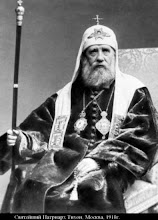
Церковные ВѢХИ

Extra Ecclesiam nulla salus. Outside the Church there is no salvation, because salvation is the Church. For salvation is the revelation of the way for everyone who believes in Christ's name. This revelation is to be found only in the Church. In the Church, as in the Body of Christ, in its theanthropic organism, the mystery of incarnation, the mystery of the "two natures," indissolubly united, is continually accomplished. -Fr. Georges Florovsky

ΟΡΘΟΔΟΞΙΑ Ή ΘΑΝΑΤΟΣ!

ΟΡΘΟΔΟΞΙΑ Ή ΘΑΝΑΤΟΣ!
§ 20. For our faith, brethren, is not of men nor by man, but by revelation of Jesus Christ, which the divine Apostles preached, the holy Ecumenical Councils confirmed, the greatest and wisest teachers of the world handed down in succession, and the shed blood of the holy martyrs ratified. Let us hold fast to the confession which we have received unadulterated from such men, turning away from every novelty as a suggestion of the devil. He that accepts a novelty reproaches with deficiency the preached Orthodox Faith. But that Faith has long ago been sealed in completeness, not to admit of diminution or increase, or any change whatever; and he who dares to do, or advise, or think of such a thing has already denied the faith of Christ, has already of his own accord been struck with an eternal anathema, for blaspheming the Holy Ghost as not having spoken fully in the Scriptures and through the Ecumenical Councils. This fearful anathema, brethren and sons beloved in Christ, we do not pronounce today, but our Savior first pronounced it (Matt. xii. 32): Whosoever speaketh against the Holy Ghost, it shall not be forgiven him, neither in this world, neither in the world to come. St. Paul pronounced the same anathema (Gal. i. 6): I marvel that ye are so soon removed from Him that called you into the grace of Christ, unto another Gospel: which is not another; but there be some that trouble you, and would pervert the Gospel of Christ. But though we, or an angel from heaven, preach any other gospel unto you, than that which we have preached unto you, let him be accursed. This same anathema the Seven Ecumenical Councils and the whole choir of God-serving fathers pronounced. All, therefore, innovating, either by heresy or schism, have voluntarily clothed themselves, according to the Psalm (cix. 18), ("with a curse as with a garment,") whether they be Popes, or Patriarchs, or Clergy, or Laity; nay, if any one, though an angel from heaven, preach any other Gospel unto you than that ye have received, let him be accursed. Thus our wise fathers, obedient to the soul-saving words of St. Paul, were established firm and steadfast in the faith handed down unbrokenly to them, and preserved it unchanged and uncontaminate in the midst of so many heresies, and have delivered it to us pure and undefiled, as it came pure from the mouth of the first servants of the Word. Let us, too, thus wise, transmit it, pure as we have received it, to coming generations, altering nothing, that they may be, as we are, full of confidence, and with nothing to be ashamed of when speaking of the faith of their forefathers. - Encyclical of the Holy Eastern Patriarchs of 1848

За ВѢру Царя И Отечество

За ВѢру Царя И Отечество
«Кто еси мимо грядый о нас невѣдущиiй, Елицы здѣ естесмо положены сущи, Понеже нам страсть и смерть повѣлѣ молчати, Сей камень возопiетъ о насъ ти вѣщати, И за правду и вѣрность къ Монарсѣ нашу Страданiя и смерти испiймо чашу, Злуданьем Мазепы, всевѣчно правы, Посѣченны зоставше топоромъ во главы; Почиваемъ въ семъ мѣстѣ Матери Владычнѣ, Подающiя всѣмъ своимъ рабомъ животь вѣчный. Року 1708, мѣсяца iюля 15 дня, посѣчены средь Обозу войсковаго, за Бѣлою Церковiю на Борщаговцѣ и Ковшевомъ, благородный Василiй Кочубей, судiя генеральный; Iоаннъ Искра, полковникъ полтавскiй. Привезены же тѣла ихъ iюля 17 въ Кiевъ и того жъ дня въ обители святой Печерской на семъ мѣстѣ погребены».
Showing posts with label Uniatism. Show all posts

Wednesday, May 26, 2010

UNIA.The Dorian Horse of Papism-Catholic crimes against Orthodox Christians.

The Dorian Horse of Papism

By Archim. Gen. Raptopoulos

From the book "Papism and early fighters of Orthodoxy" 2nd Issue
Orthodox Brotherhood of Saint Xeni


From:http://www.impantokratoros.gr

"Beware of the false prophets, who come to you dressed in sheepskins, while within they are wolves (Mark 6:15)

What is the meaning of this word, Unia? This word is Polish meaning union. So, the one that belongs to Unia is called Uniate. Every Uniate has his life's purpose to draw the Orthodox Christians to the falsehoods of Papism. If however this is what a lay Uniate wishes, that much more does the Uniate clergy.

With great yearning the Pope seeks to subordinate the Orthodox under his jurisdiction. To his falsehoods. He wishes that he become the head of all the Church. This yearning he had for a very long time. Since the 6th century. Since then. He has a yearning especially since he officially separated from the Orthodox Church in 1054. Since then!! And what didn't he try to succeed in his goal! But he succeeded in nothing. So in his embarrassment in what he should have done better and more effectively, for this he created the Unia.

The beginning of the Unia was founded at the Lateran Council of 1215 and in the Bull of Pope Innocente 4th . Nevertheless, officially and somehow, the Unia was created in Poland by two Jesuits, Possevin and Skarga. These two monks put in place the Unia in Poland. And this to latinize the Orthodox of Poland and of south-west Russia. In this they were helped by the king of Poland, Sigismundus 3rd who was brought up by the two Jesuits until his 21st year of age.

Under the protection of Sigismundus 3rd, the two Jesuits officially set up on their satanic task. In 1587 the two Jesuits cooperated to induce the king of Poland to call the Synod at Brest in Lithuania with president the Archbishop of Kiev. The topic? The union of the Orthodox with the Papist Church. The result? Substantially nothing.

So, a second Synod was called again at Brest on Dec 2, 1594. In this the primacy of the Pope and the Filioque were recognized. This pleased the Pope. In fact two bishops were sent to Rome to declare officially the decision of the Synod to Pope Clemente 8th. However the union was not realized. For this reason the Polish king ordered in 1596 to reconvene the Synod at Brest, to officially declare the union with Rome.

And what happened?

The archbishop of Kiev with other hierarchs declared the union, but the people reacted. Clerics, aristocrats and the public led by Constantine Ostrogoski, publicly protested. They disapproved the events and declared their devotion to the early Church and to the Patriarch of Constantinople. A tragic history was then unleashed. A story that uncovered the true meaning of the Unia.

Thus the Unia is the: "Dorian Horse".

The unia looks different to what it actually is. It appears Orthodox, and why? The Unia clerics, the Uniates are dressed like the Orthodox clerics. They wear the rasa and the kalamanka. They have beards. Total appearance of an Orthodox cleric. Their Churches are in everything Orthodox. They lack those cold statues, that give the appearance and the feeling of an idolatric temple. Instead of statues they have icons. And the whole structure of the Church, inside and outside is Orthodox. The divine liturgy is performed in every language of each country in which it exists and always acts in a proselytizing manner. The same divine liturgy. No simple Orthodox Christian could suspect anything different from Orthodoxy. This way our simple Christians could be advised by Uniates priests and worship in Uniate Churches.

All these constitute the Dorian horse. It is the sheepskin. Inside the Dorian horse hide the men of the Pope. The fanatic Latins hide inside, whose goal is to subordinate every Orthodox to the Pope. To latinize them. To murder the Orthodox faith, the only true faith. Under the nice sheepskin hide wolves. And those wolves are the mortal enemies of Orthodoxy. They are the camouflaged Frankish priests. They are as they are called in the 1989/24-3-1907 encyclical of the Patriarch Joakim 3rd "wolves in the form of sheep". Wolves that we must beware as we were forewarned by our Lord Himself. Who doesn't remember His words? "Beware of the false prophets, who come to you in sheep's clothing, inside though they are wolves (Matt 6:15). They are wolves and you understand this when you hear them during liturgy commemorating the Pope of Rome. Him, that breathes abysmal hatred against the Orthodox. Him, who as we shall see is guilty of everything evil.

Force

The Uniates, crafty men of the Pope, use this as a means to proselytize Orthodox Christians to the falsehoods of Papism. They use the Dorian horse. They use the sheepskin. They use the "camouflage". They use craftiness and deceit. However, if these means do not prove adequate, then they revert to the use of force. With a thousand and two ways they force the Orthodox to worship the Pope.

There are three recent characteristic occasions, that have happened in cities of Slovakia which the Director of the Holy Synod Publication, John Hatziphotis, reveals with specific introduction.


The First Event

In the city of Mihalovce, the Uniates applied psychological and physical force on the Orthodox bishop John. They took over his Church and the Bishopric and forced him to move with all his bishopric to an old tavern. Groups of Uniate monks cut off the water, fuel and electricity, thus destroying his electronic equipment that were at the Bishopric. The same Bishop John, suffered a heart attack and was transferred to the Branov Hospital.

Second Event

In the city of Medgilaborce on 23-10-1991, the Uniates with a following of 80 policemen entered the Orthodox Church and removed all the Orthodox icons.

Third Event

In the city of Stropkov on 11 January 1992, the Uniates and Roman Catholics together started to destroy the house of the Orthodox priest, where in a room was a small Church used by the parish. They destroyed the roof, cut off the electricity and telephone and finally they evicted the priest, who now performed the services in a small wooden house, where the faithful brought some icons, which they guarded carefully so that the Uniates wouldn't take them and burn them.

The Slaughter and Executions

Which slaughter and executions should we first report? And from when shall we start? This though we say: The Unia drips blood. Blood from so many of her innumerable victims who refused to worship the Pope and accept his falsehoods. But let us note some typical bloody events that shame the Unia of the Pope.

In Poland

The first blood was poured by the Unia in Poland and south -west Russia. The Polish king Sigismundus through the prompting of the two Jesuits, Possevino and Skarga, founders of the Unia, in Poland in 1587, when he realized that through the pseudo-synods of Brest in Lithuania, he accomplished basically nothing, he declared in 1596, the persecution of the Orthodox who refused to surrender to the Pope. A river of blood was poured by this persecution. The representative of the Patriarchate of Constantinople Archimandrite Nikiphoros was arrested and thrown in prison where he died of hunger. The representative of the Patriarchate of Alexandria to Poland, Kyrill Lukaris and later Patriarch of Alexandria, just managed to escape and thus avoid imprisonment and death. In this persecution therefore, the first one that Sigismundus declared with the prompting of the Uniates, some Orthodox were murdered, others were exiled and others were tortured. All the Churches and holy monasteries of the Orthodox were turned over to the Uniates. The Unia then had destructive intentions for all the Orthodox in Poland and south-west Russia.

It is characteristic the description of the ever memorable Metropolitan Germanus of Thyatera on this persecution. "From the Orthodox some were expelled, some had their arms and legs smashed, others were bayoneted and others were killed at the stake, while the women had their breasts cut off while their children were burnt on skewers.
Czecoslovakia

When the communists took over Czechoslovakia, the Papist Uniates found then the opportunity to attack the Orthodox Christians with awesome savagery. Let us hear the Metropolitan Dorotheos of Prague and all Czechoslovakia, describe the vandalisms by the Uniates in the following areas.

•1. Litmanova, in the area Star- Loumbova: The Church was destroyed and a concerted and systematic persecution was unleashed on the Orthodox.

•2. Klenova, in the area of Houmene: Durung the Pascha of 1969, the Uniates fired at the Church.

•3. Stopkov, in the area of Svintik: The Uniates destroyed the Church. They climbed on the bell steeple and broke off the Orthodox triple Cross. They brought down the priest's house and threw his furniture on the street and destroyed it.

•4. Tsekov, in the area of Trembosov: They took over the Church by force during the Divine Liturgy. The priest performing the Liturgy was beaten up so badly that he needed long hospital care. And this was the least. The worst was that the priest did not manage to complete the Divine Liturgy.

•5. Malee Zalouzitce, in the area of Mihalovce: In this village there were 42 Orthodox and 28 Uniate families. The Uniates and the Catholics gathered 3000 followers from the county to destroy the Orthodox Church. The Orthodox defended their Church and protect it from desecration, but lots of blood was spilled. Even though a lot of Orthodox blood was spilled and covered the road and the Church compound, it did not stop the Uniate "priests" from stepping in and entering the Church of the Orthodox, to perform their Liturgy.

•6. At Kousmitce, in the area of Trembisov: The Church was destroyed, the priest was severely beaten by the fanatical Uniates. They beat him mercilessly and with no pity, and was then sent to the city. At the same time the Uniates were shouting to hang him!


The Metropolitan of Prague vainly protested to the Vatican. The Vatican kept quiet. What could it say since it created the Unia and since it blesses its crimes in the Orthodox countries? And the Hierarch of Czechoslovakia noted: "The fact of the silence of the Vatican speaks for itself".

In Serbia.

Here in this country, as the ORTHODOX PRESS wrote in November of 1961, "the biggest slaughter of the Orthodox since the coming of our Lord Jesus Christ was executed for the benefit of Papism.

And who were the butchers?

Who else but the Papist Uniates? They are the specialist butchers of those who do not submit to the Franks but wish to die Orthodox. Thus the Papist Uniates, known as Ustasi, on April of 1941, after the overtaking of Jugoslavia by the Germans and Italians they acted as they wished. However it was the Vatican that ordered them to action. Their leader the infamous Ante Pavelitz, was named with the blessing of the Vatican and of Mussolini. So then, fully ready and allied with the Germans and Italians, they started their macabre task. They entered north-west Jugoslavia and they started the slaughter. Firstly with the priests. All the Orthodox priests of the area were rounded up, were tied with wires to temporary crosses and were then executed mainly by stoning. They then invited the Orthodox people to convert to Catholicism, under the threat of death. Then 800,000, from children of the first grade in elementary school to old people, gave one and only answer: "NO. We wish to die for the Orthodox faith of our ancestors". The Uniates then gave the signal for the general slaughter. 800,000 Orthodox were killed after great tortures. They died but did not succumb. They died but they did not become Catholics. They died but they did not worship the Pope. May the memory of these 800,000 Orthodox martyrs be eternal.


In THE Ukraine.

"In THE Ukraine, the Uniates confiscated so many Orthodox Churches, that the Orthodox Church there had so few churches for her needs. The savagery and hatred of the Uniates against the Orthodox was expressed in various ways. We provide here one event. One day the Uniates arrested the Orthodox vicar who was earlier a Uniate and later returned to Orthodoxy. Revenging his return to Orthodoxy, these wolves in sheepskins took the Orthodox cleric and drowned him in the river".

Where is therefore the love of the Pope, of the Vatican, of the Roman Catholic Church when it commits so many crimes with her infamous Unia? What is the meaning of the famous theological dialogue, when the Pope continuous to maintain this detachment of death, the Unia? Let us not be deceived. The Pope wishes to subordinate the Orthodox to his falsehoods or to exterminate them.


http://orthodox-world.pblogs.gr/2008/10/unia-the-dorian-horse-of-papism-catholic-crimes-against-orthodox.html

Saturday, March 13, 2010

Tymoshenko adopted PR technologies for election campaign from notorious sectarian

11 March 2010, 17:23
Tymoshenko adopted PR technologies for election campaign from notorious sectarian, head of Ukrainian Orthodox Church press service believes

Kiev, March 11, Interfax – The Yulia Tymoshenko Bloc used cult methods of work at the last presidential elections, head of the Ukrainian Orthodox Church press service Vasily Anisimov believes.

"Even Tymoshenko's manners remind of Maria Davy Christos, she's nice looking, and she doesn't blink when speaking and speaks on the melt of breakdown as being unable to stop. She doesn’t defend her opinion, but rather attacks opponents, always accuses, gives insulting characteristics, accelerates fears," Anisimov said in his interview to the Radonezh radio.

According to him, Tymoshenko's election campaign as well as her Bloc's work had a significant element of "exalted messiahnism."

"The Yulia Tymoshenko Bloc adopted symbols of the White Fraternity, all members dressed in white, I even saw at the parliament that the whole fraction wore white shirts," Anisimov said.

"Besides, she as a true Orthodox Christian started her pilgrimage to Jerusalem shrines from the prayer at the Western Wall," head of the church press service said.


http://www.interfax-religion.com/?act=news&div=7023

Wednesday, March 10, 2010

Кардинал УГКЦ Любомир Гузар намерен обратиться к новому президенту Украины с призывом соблюдать Конституцию

10 марта 2010, 17:45
Кардинал УГКЦ Любомир Гузар намерен обратиться к новому президенту Украины с призывом соблюдать Конституцию
--------------------------------------------------------------------------------


Кардинал УГКЦ Любомир Гузар намерен обратиться к новому президенту Украины с призывом соблюдать Конституцию. Об этом он заявил 9 марта в Одессе, отвечая на вопрос о том, возрастет ли в Украине влияние УПЦ МП в связи с приходом нового президента – Виктора Януковича, сообщает "Религия в Украине".

"Мы теперь будем специально обращаться к новому президенту Украины, чтобы он точно придерживался Конституции. А Конституция говорит, что перед ней все религиозные организации, все Церкви, равны и имеют такие же самые права", - отметил Любомир Гузар.

По его словам, "это важно для мира, для единства внутри нашей державы".

"Это очень и очень важно. Чтобы не началась внутренняя суматоха, когда один "равнее" другого и не все равны перед Конституцией", - заявил кардинал Гузар.

"Мы с этим обратимся к господину президенту", - добавил он.


http://portal-credo.ru/site/?act=news&id=76712&cf=

Tuesday, March 2, 2010

Парижская семинария, или православное МГИМО. Есть ли опасность окатоличивания для православных студентов?

МОНИТОРИНГ СМИ: Парижская семинария, или православное МГИМО. Есть ли опасность окатоличивания для православных студентов, обучающихся в инославной среде?
--------------------------------------------------------------------------------


Последнее время все только и говорят, что о парижской семинарии: есть ли действительно опасность окатоличивания для православных студентов, обучающихся в инославной среде, или наоборот, они там только закалятся? Предлагаем вам посмотреть на семинарию своими глазами, послушать рассказ ректора и прожить два дня вместе со студентами:

Первые искушения

8 января 2010 года бывший студент парижской семинарии Андрей Серебрич (на фото вверху второй слева) опубликовал в интернете открытое письмо, в котором обвинил руководство семинарии в недостаточно критическом отношении к западной традиции. Инославное окружение, обучение в Католическом институте -- все это дало основание Андрею заподозрить "неладное". В своем письме он утверждает, что семинаристов лишают возможности посещать православный приход в Париже, принуждают целовать руку католическим священникам и брать у них благословение, навязывают "явно неправославные учения и воззрения" которые "преподаются как неоспоримые". В пример Андрей приводит учение о filioque, относительного которого, как он понял из занятий по догматике, у Православной Церкви "нет однозначного мнения". Недавно из семинарии был отчислен один из студентов -- Георгий Арутюнов. Андрей Серебрич утверждает, что поводом для этого послужило бескомпромиссное отстаивание Георгием православной позиции.

Ректор семинарии опровергает обвинения Андрея Серебрича, как не соответствующие действительности. "Никто никогда не заставлял студентов семинарии целовать руки католическим епископам, а тем более брать у них благословение. Кстати, я не видел, чтобы хоть кто-то из них это делал, -- пишет в частности о. Александр (Синяков) в ответном письме. -- Обвинение в том, что в семинарии якобы проповедуется учение о filioque безосновательно. В смущение Андрея Серебрича привело то, что, комментируя трактат святителя Василия Великого "О Духе Святом", я указывал на отрывок, на который ссылаются в своем учении католики. Однако мне также приходилось указывать на отрывки Священного Писания, на которых основываются ариане и в этой ереси меня еще не обвинили. Студент Георгий Арутюнов был исключен из семинарии указом архиепископа Корсунского Иннокентия от 1 декабря 2009 г. по просьбе большинства преподавателей семинарии за провокационную деятельность. Причем этот студент до сих пор живет в семинарии со своей семьей: Владыка Иннокентий разрешил ему остаться до 15 апреля".

Канцлер семинарии архиепископ Корсунский Иннокентий, комментируя открытое письмо, процитировал слова Евангелия от Луки (12:1): "берегитесь закваски фарисейской, которая есть лицемерие" и с сожалением заметил, что "этот поступок -- типичный пример ревности не по разуму и незрелости. Наш долг строго держаться православной традиции -- нельзя впадать ни в радикальное "фарисейство", как в случае с Андреем, но и ни в либеральное "саддукейство". И то, и другое Господь осуждает в Священном Писании".

"Гарантией "неокатоличивания" в инославной среде является твердая вера самих студентов и преданность матери-Церкви. Человек действительно преданный своей Церкви не будет бояться встречи с представителями других конфесссий и с секулярным миром, особенно живя в православном окружении, как в нашей семинарии, -- считает ректор. -- Как бы мы ни относились к католикам, в современном мире мы не можем избежать встреч с ними. Объективное знание учения других христианских Церквей очень полезно как в пастырском служении на Западе, так и в межхристианском и межрелигиозном диалоге".

Можно ли жить в католическом окружении и не подпасть под влияние католицизма? Своим опытом делятся протоиерей Николай Озолин, настоятель Спасо-Кижского патриаршего подворья в г. Петрозаводске, иерей Андрей Кордочкин, настоятель храма Рождества Христова в г.Мадриде и игумен Арсений (Соколов), настоятель Всехсвятского прихода в Лиссабоне, Португалия:

Протоиерей Николай Озолин (родился, вырос и получил образование во Франции): Попасть во Францию совсем не значит попасть в католическую среду. Французское общество воспринимает себя как постхристианское, основанное исключительно на светских гуманистических принципах, так что опасности "окатоличивания" для студентов там нет. Исповедовать Христа в современной Франции -- это большой подвиг, гораздо больший, чем сегодня быть христианином в России, и если молодой человек будет честен с собою и верен своей традиции, его всегда будут уважать в католической среде, именно как носителя православной традиции. О Православии в Европе знают довольно мало, в том числе и среди католиков. Так что познакомиться с ним из первых рук им самим будет очень интересно.

Иерей Андрей Кордочкин, настоятель Христорождественского прихода в Мадриде. Испания:

Можно ли жить в католическом окружении и не "окатоличиться"? Чтобы ответить на этот вопрос, мне придется вспомнить себя шестнадцатилетним.
Первые шаги в Церкви я начал делать в родном Петербурге. Александро-Невская Лавра, храм Спаса Нерукотворного на Конюшенной площади. Затем во мне возникло желание поступать в семинарию, я планировал уехать на учебу в Америку; мне хотелось получить опыт церковной жизни, не искалеченной советским режимом. Но Господь судил иначе – меня пригласили на три месяца в бенедиктинскую школу-интернат на севере Англии. У монастыря есть свой колледж в Оксфорде, где обучаются около 30 студентов – монахи и миряне. Я приехал в этот колледж на несколько дней, и получил приглашение получить университетское образование в Оксфорде. Правда, для этого мне необходимо было, по окончании школы в России, вернуться на год в ту же школу-интернат. Отец Генри, директор колледжа, посоветовал встретиться с епископом Диоклийским Каллистом, крупнейшим специалистом по патрологии в университете. "И еще", сказал о. Генри, "здесь есть один студент из России, тебе стоит увидеться с ним. Он пишет диссертацию с владыкой Каллистом, его зовут отец Иларион Алфеев". Эти две встречи укрепили мое решение остаться на учебу в Англии. Не могу сказать, что решение далось мне просто: в полях Северного Йоркшира мне казалось, что все самое важное – Церковь, семья, друзья, – осталось в Питере, а я оказался в Англии выключенным из жизни – надолго или навсегда.

И тогда я впервые начал молиться всерьез.

...У каждого православного человека есть опыт первого близкого соприкосновения с монашеской жизнью. Троице-Сергиева Лавра, Оптина Пустынь, Валаам. Я же вспоминаю небольшой монастырь в сорока милях от школы, недалеко от города Уитби. Деревенские автобусы, дорога чрез поля, холодный ветер – море совсем рядом! Вот и монастырь; если не увидеть крест на карнизе, можно и не догадаться, что это не просто обычная ферма, из которой он и возник. В одном крыле монастыря жила старенькая русская монахиня, мать Фекла, в другой – архимандрит Ефрем, пожилой англичанин, когда-то принявший монашество на Афоне. За монастырем – могила матери Марии, швейцарки, основательницы монастыря. В монастыре холодно, особенно зимой. Небольшой храм, всего несколько человек на воскресной Литургии. Монастырь давал мне силу, я чувствовал себя православным человеком, я понимал, что я не один.

Кроме монастыря, были приезды в Оксфорд, и богослужения в православном храме на улице Кэнтербери. Два епископа, греческий и русский, теплые и личные отношения с ними, чай для всех прихожан после Литургии, – после церковного Петербурга многое было в диковинку. В течении еще трех лет учебы в Оксфорде я регулярно ходил в этот храм, некоторое время живя через дорогу от него.
Затем – год в Лондоне. От Ноттинг Хилл Гейт, где я жил, пешком вдоль Гайд Парка до иезуитского Хитроп Колледжа, где я учился – минут двадцать. А если идти пешком через парк – Успенский собор. Воскресенье. Вот митрополит Антоний, как обычно, подходит к престолу, выходя из своей квартирки за алтарем. "Blessed is the Kingdom…"

Таким образом, в течении пяти лет я жил и учился в католическом окружении, четыре года с бенедиктинцами, и год – с иезуитами. При этом, я не только не "окатоличился", а напротив, именно в эти годы, как мне ясно сейчас, я сформировался как православный человек, который желает посвятить жизнь служению Церкви Христовой. Для думающего человека пребывать в чужой традиции – стимул глубже осмыслить свою. Но что значит "чужой"? Ведь жизнь в католической Церкви не сводится к обсуждению filioque и примата Папы. Я вспоминаю, как отец Генри в Оксфорде за каждым ужином прислуживал за столом студентам и гостям. "Кто хочет быть большим между вами, да будет вам слугою"; такой подход к жизни мне куда ближе, чем чинопочитание и обслуживание собственного авторитета как основная форма отношений с окружающим миром, которая в Церкви выглядит особенно нелепо. Близкое знакомство с Западом не позволяет отмахнуться от важных вопросов о сути христианства; если в реальной жизни католики оказываются непохожими на тевтонских рыцарей из фильма "Александр Невский", приходится думать своей головой, не опираясь на привычные православному сознанию образы.

Конечно, можно занять позицию полной изоляции по отношению к католическому миру, разделить вселенную на "своих" и "чужих", адаптируя к квазиправославному мировоззрению советские страхи "мировой закулисы" с непременным филиалом в Ватикане. Можно запретить студентам, готовящимся к принятию священства, учиться на западе. Однако митрополит Иларион (Алфеев) когда-то справедливо заметил: "В Русской Церкви ... существует паническая боязнь всего западного, всего инославного и иностранного. Руководство наших духовных учебных заведений не любит посылать людей учиться заграницу, в особенности на Запад, из страха, что студенты там "окатоличатся". Но какова цена Православия, если оно "окатоличится" при первой же встрече с Западом? Если студенты "окатоличатся", виноваты в этом прежде всего преподаватели православных духовных школ: это они не сумели воспитать студентов в православном духе. Приведу простой пример. Среди украинских священников, которые в последние годы перешли в униатство, есть немало выпускников российских духовных школ. Их никто не посылал на Запад, воспитывали их в духе непримиримости и фанатизма, а вот — они взяли и "окатоличились"! Значит, проблема не в том, что мы пошлем студентов учиться куда-то не туда, а в том, что мы сами их учим чему-то не тому".

Едва ли от знакомства с другими людьми человек может стать беднее. "Окатоличиться", или же, наоборот, занять непримиримую фанатичную позицию по отношению к католическому миру, может лишь человек, страдающий от невежества. Поэтому я благодарю Бога за тот опыт, который Он мне дал, и я уверен, что человек, у которого есть вдумчивое и глубокое отношение к своей вере и любовь к Православию, не откажется от него никогда.

Тем, кто едет учиться на Запад – богословию и не только – могу сказать: это драгоценный опыт. Иногда полезно оказаться за пределами Родины и увидеть ее со стороны, чтобы понять процессы, происходящие дома. Западная система образования стимулирует самостоятельное мышление, умение анализировать информацию, способность убеждать собеседника четкими, ясными аргументами. Уважение к собеседнику, культура общения – не добродетель, а норма в Западном обществе. Великобритания в этом отношении является особенной страной. У нас зачастую презрительно относятся к этимкачествам, обвиняя Запад в подмене "духовности" "воспитанностью". Но когда заявка на духовность сочетается с хамством, с унизительным отношениям к людям, едва ли ее можно воспринять всерьез. Вспоминается, как архимандрит Софроний Сахаров, ученик прп. Силуана Афонского, описывал в одном из писем, какое сильное впечатление на него произвели присущие англичанам чувство такта и уважения к другим людям.
Православная жизнь в диаспоре зачастую отличается от привычных нам форм, и здесь есть чему научиться – открытости миру, готовности людей, многие из которых прошли нелегкий путь к Православию, "дать ответ с кротостью и благоговением" (1 Пет. 3.15) тем, кто еще делает первые шаги в храме. То, что русским людям вначале кажется лишь связью с Родиной, оказывается несравненно бóльшим; именно в Церкви нам даруется небесная Родина, которую богослужение называет "вожделенным отечеством".

Игумен Арсений (Соколов), настоятель Всехсвятского прихода в Лиссабоне, Португалия:

Открытию в Париже православной семинарии можно лишь порадоваться. Париж бы когда-то славен своей богословской школой. Но ведь богословским школам свойственно рождаться и умирать. Свято-Сергиевский институт, увы, почти весь остался в прошлом. Новое время требует новых решений. Парижская семинария, будем надеяться, станет со временем не только передовой богословской школой, но и очень важной площадкой для диалога Православия с западным христианским миром и с западноевропейским обществом. Это необходимо для консолидации здоровых церковных сил Европы в противостоянии секуляризации, здесь мы с римо-католиками естественные союзники.

Опасения, что, дескать, студенты семинарии могут подпасть под католическое влияние и "окатоличиться", совершенно пусты. Второй десяток лет несу церковное служение в Европе - в Италии, в Испании, в Португалии - и нигде никогда слыхом не слыхивал ни о каком переходе в католичество наших студентов. В католичество переходят как раз те, кто никуда не ездит и не учится, например православные верующие западных областей Украины. А вот те, кто не боится диалога с Западом, во встечах с ним лишь ещё крепче утверждается в верности Православию, в верности своей матери-Церкви. Так что, опасения, к счастью, беспочвенны.

От нашей лиссабонской общины поступил в Парижскую семинарию один молодой человек. Поскольку у него уже есть семья и трое малых детей, учится он на экстернате, что предполагает поездки на сессию четырежды в год. Он, брат Валентин - наша первая португальская ласточка. Надеюсь, в будущем и другие молодые люди и девушки из наших португальских общин возревнуют о получении богословского образования. Им теперь не надо будет ехать в Россию или на Украину. Прямо здесь, в Европе, они смогут получать богословское образование. Поэтому, открытие Парижской семинарии не может не радовать.

Екатерина СТЕПАНОВА

"НЕСКУЧНЫЙ САД", 25 февраля 2010 г.


http://portal-credo.ru/site/?act=news&id=76497&cf=

Monday, March 1, 2010

On The Ukraine, Pogroms, Nationalism, Rusins, Russia, Galicia & Quackery

Let's begin to answer people unfortunately misled into spouting the typical "Ukrainian" nationalist line of nonsense and quackery. Firstly, pogroms in Tsarist Russia were not state sponsored, but local phenomena which had occured for centuries, normally sparked by religious or economic concerns, but in the late imperial period, some of the culturally traditional populace acted in political violence, in response to the radical ideas of revolutionaries and some in the press who happened to be Jewish. The whole Jewish community was unfortunately scapegoated and these events only led to their further radicalization and revolutionary fervor.

Petlura et al. did indeed at least turn a blind eye to pogroms, if not outright call for them, and they in turn became massacres, as opposed to the street violence of the Tsarist era. It was a systematized policy that was carried out as revolutionary violence in areas of the Ukraine under his control. Some today maintain that it was his military commanders going rogue, but Petlura was known for his heavy handedness in regard to dealing with his subordinates, his personal anti-semitism, and he never once spoke out in opposition to these acts, but frequently praised these very same commanders after they had "committed their deeds of valor for the independent Ukraine."

The word "pogrom" is an old Russian word generally meaning massacre or atrocity and is first commonly used in the Primary Chronicles in connection with the Mongol conquest of Rus'.

As far as "Ukrainian nationalism" in the Soviet Ukraine is concerned, it was STATE SPONSORED, and Lenin made it a point to inaugurate a systematic programme of "ukrainoznavstvo" throughout the Ukraine to uproot "counter revolutionary tendencies" and to "liberate the Ukrainian people from imperialistic bourgeois thinking."

RUSIN nationality, which is what WAS HISTORICAL was uprooted and attacked vociferously by the Soviets and their Ukrainian nationalist lackeys for decades until today where Rusin, once commonly greeted as an ethnic appelation historically throughout the region, now to some only means those of Carpatho Rusyn heritage.

"Ukrainians" did not suffer as a group in Tsarist Russia, as they were treated as ANY OTHER RUSSIANS, and many times occupied the highest posts in Russian society and had done so since Perejaslavl' when the Ukraine began to be reunited with Rus'. The books which were banned by the Tsar' in the mid nineteenth century were printed on Austrian territory and disseminated by newly created "Ukrainian nationalist" organizations with the express intent of fomenting insurrection, the creation of a new "nationality," and the union of this territory to the Austro-Hungarian empire. "Ukrainians" were not killed by Tsarist Russia, nor were they even sought out, for they represented a SMALL MINORITY, alienated from the ethnically RUSIN population, whose origins were anything but "Ukrainian" as the initial impulse for the movement came from GREAT RUSSIAN NARODNIKS, Dragomanov and Kostamarov, who felt the Little Russian populations to be so "atavized" in their eyes, that if they created a "nationality" for them in their "state of nature," these Great Russian narodniks wanted to test Rousseau's and other political philosopher's thinking at the time to see what "primative peoples" would do and how they would congregate.

Thus, "Ukrainian nationalism" was formed under the genuine auspices of Great Russian chauvinism with an utter contempt for the "Ukrainian" people. Kostamarov and Dragomanov were neither imprisoned nor harmed in any way--they were exiled to Austria where they continued their work in the creation of the "Ukrainian nationality" UNDER STATE SPONSORSHIP for the Austrian government, which feared the RUSIN AWAKENING which began shortly after the Russian army aided the Austrians in putting down the Hungarian revolution and Rusins came into contact with FREE RUSSIANS from the Russian Empire and began seeking All Russian unity and pan-Slavism.

What was suppressed and met by violence, pogroms, concentration camps and public executions as well as mass arrests was the Rusin Awakening IN AUSTRIA HUNGARY. The "Ukrainian nationalists," the Uniate church and the Austrian secret police were the perpetrators.

The Russian Brotherhood in Lvov, which had existed for over three centuries was closed and "Ukrainian national organizations" put in its place. Rusin newspapers and presses were either coopted or suppressed with acts of state sponsored political violence and executions. Return to Orthodoxy was punishable by imprisonment. Having a book printed in cyrillic left one open to summary arrest.

Then came the famine of the 1910s in Austrian occupied Russia where the people suffered from hunger. The Tsar mobilized aid and relief for the suffering Rusin populations in Austria only to have it stopped at the border, for UKRAINIAN NATIONALISTS had impressed upon the Austrian crown the need to "halt russophile propaganda." The Tsar' had the aid restamped as coming from the Austrian crown and distributed by its agencies to feed his Russian people undergoing Austrian occupation. During the war, the Rusins of Austria greeted him with the title "kormilets," ie he who feeds us.

It was "Ukrainian nationalists" mercilessly sponsoring famine and artificially worsening it at the beginning of the twentieth century for their quack and ahistorical notions of nationality.

While when the First World War came, "Ukrainian nationalists" and the Uniate church denounced "russophiles" and "Orthodox sympathizers" and all of "Rusin nationality" to the Austrian government, whereupon thousands were rounded up into the first concentration camps like TALERHOFF and tortured, executed, starved to death, maimed, etc. "Ukrainian nationalism" played an ugly role there as well in STATE SPONSORED POGROMS.

While the Austrian role in creation and promotion of the FICTIONAL "Ukrainian nationality" was so pronounced that even radicals like Hrushevsky were put upon to change the names of their works, eg his opus "A History of the Ukraine" WAS INITIALLY TITLED "A HISTORY OF RUS'" until the Austrian secret police and "Ukrainian nationalist" organizations impressed upon him the need to "stop russophile/Rusin" propaganda and CHANGED THE TITLE WITH ALOT OF "Ukrainian nationalist" editing added.

So totalitarian states and ideology? Oh yeah, in spades,IN BLUE AND YELLOW THAT IS--it wasn't until the mid 1930s that "Ukrainian nationalism" fell out of favor with Stalin, and then because the Vatican and Hitler had picked up on it and were using it for propaganda purposes more effectively than the Bolsheviks were.

As far as the "golodomors" are concerned, they were state sponsored and their effects were artificially worsened by the government, but were tactics learned by the Bolsheviks from Austria and the Ukrainian nationalists!

While the famines of 1932-33 were a SOUTHERN RUSSIAN PHENOMENON not limited to the Ukraine, but to all of Southern Russia and the Volga region. Why, Lenin in the 1920s had orchestrated just these types of famines in the Kuban and along the Volga using them as revolutionary violence, where many of "Ukrainian" sensibilities like Petlura and Vynnichenko found them to be appropriate and effective "in combatting counter revolutionary tendencies" and "overcoming the prejudices of the Russian Orthodox church."

It seems that artificial famine wasn't anything that "Ukrainian nationalists" frowned upon until it was employed against them.

The war against NEP and the Kulaks happened throughout Russia. Whereas, the Ukraine in 1932-33 was even more russophone and less "Ukrainian conscious" than it is today. The population saw itself generally as RUSSIAN or RUSIN, with only the younger generation, in minority, gravitating toward Bolshevik sponsored "Ukrainian nationalism." While there wasn't even a set "Ukrainian language" to speak at the time (There still isn't as it continues to "update its lexicon" and "derussify," ie removes elements inherited from its Middle Ruthenian parent, every six months).

Galicia, Bukovina, Carpatho Russia are historically territories known as CHERVONAJA RUS' = RED RUSSIA. They are NOT part of the territory of the Ukraine. Their populations are historically NOT "Ukrainian" and called themselves HISTORICALLY RUSIN or OUTRIGHT RUSSIAN.

Most "Ukrainian" Canadian settlers are from these territories. They are not Ukrainians historically or even ethnically, but a RELATED Russian sub-ethnos.

The word "Ukraina" means a borderland, frontier, disputed territory which was applied to the territory in question after the Mongol conquest AND WAS NEVER USED IN REFERENCE TO IT DURING THE ERA OF KIEVAN RUS' as the word "ukraina" implies an uncivilized wilderness territory and the territory in question during the Kievan era was by no means "uncivilized" but was more developed and populated than the Western Europe of its era.

Use of the term "ukraina" begs the question "UKRAINA CHEVO?!" "RUSI!!!" is the answer. In other words, a "Ukraine of what?" Of "Russia." A frontier of Russia. That is the historical understanding of this territory. Galicia was not a frontier as it had retained its civilization from Kievan times so it would NOT AT ALL be considered part of the "Ukraine."

Whereas, the "Ukrainian" appelation was historically REGIONAL, not national. It became such under hostile and quack currents. To correct it and apply an ethnic accuracy to it, one would accurately write "Ukraino-Rus'" and "Ukraino-Rusin" as taxonomical labels for the territory and its people. That would be historically accurate.

But in the end, "the Ukraine" and "Ukrainians" cannot escape the historical fact of their place historically as one branch of the ONE RUSSIAN PEOPLE on historically RUSSIAN territory.

R M Malleev-Pokrovsky

"Моя ясная и решительная позиция по отношению к экуменизму, папизму и глобализму, к обновленцам мешает отдельным лицам в Сербской Церкви".

"Моя ясная и решительная позиция по отношению к экуменизму, папизму и глобализму, к обновленцам мешает отдельным лицам в Сербской Церкви". Записка епископа Рашко-Призренского Артемия
--------------------------------------------------------------------------------

Обвиняют меня бездоказательно и недоказуемо, что учиняю раскол в Сербской Православной Церкви (Еп. Григорий), в организации покушения на своего секретаря (Еп. Афанасий Евтич), в финансовых злоупотреблениях (Митр. Иоанн и др.), в неуважении к Святейшему архиерейскому собору и синоду (Митр. Амфилохий, Его Свят. Патриарх Ириней), в...

А я лишь желал и желаю уважения канонических принципов, Устава СПЦ, канонических полномочий епископа и неприкосновенности его прав, которые в моём случае находятся под угрозой уже пять лет. Я желал услышать ответы на некоторые вопросы, недоумения, неясности...

Вместо этого получал только решения, директивы, декреты, приказы, которые прямо нарушали как канонический порядок Церкви Православной, так и права Нас как епархиального Архиерея.

В чём проблема? В том, что более десяти лет последовательно и упорно борюсь за свой народ на Косове и в Метохии и за Косово и Метохию в Сербии. Такая позиция и заинтересованность мешали режиму Слободана Милошевича, сегодняшнему режиму Бориса Тадича и особенно международному сообществу в осуществлении идеи создания так наз. Независимого Косова как второго албанского государства на Балканах.

И ещё: Моя ясная и решительная позиция по отношению к экуменизму, папизму и глобализму, к обновленцам в церковной практике и богословии (Игнатий Мидич) мешала и мешает отдельным лицам в Сербской Православной Церкви, которым эти принципы и цели близки и над осуществлением которых они работают.

И так все, кому каким-либо образом я мешаю в осуществлении их нечестивых целей, объединившись, вместе нападают на меня, готовые устранить с места, на котором нахожусь, или - физически меня уничтожить.

Знаю, что все мои предшественники на престоле Епархии Рашско-Призренской, как и весь сербский народ на Косове и в Метохии, веками страдали и страдают по попущению Божьему. Неудивительно, что и я разделяю их судьбу.

Гонители мои могут лишить меня Епископского Престола, даже и Епископского Чина, могут объявить меня больным, престарелым, даже сумасшедшим (что уже сделал Савва Янич), могут совершить и многие другие беззакония, которых я не в состоянии и представить. Всё вынесу с помощью Божией.

Однако, не могут заставить меня учинить раскол и раздрать свято-саввский хитон Сербской Православной Церкви, не могут меня загнать ни в объятия папы римского, ни в объятия экуменистов европейских, ибо я со своих позиций не намерен отступать.

Потому, молитвенный вопль: "Буди, Господи, милость Твоя на нас, якоже уповахом на Тя". Аминь.

Епископ Рашско-Призренский и Косовско-Метохийский

+ АРТЕМИЙ


http://portal-credo.ru/site/?act=news&id=76456&cf=