
THE HISTORICAL DESTINY OF THE RUSSIAN CATHOLIC TRADITION OF THE BYZANTINE RITE
1917 – 1991
(the point of view of a Russian Uniate Ksenz)
By Sergey Golovanov
Fr. Sergey Golovanov (b. 1968) is pastor of Saints Cyril and Methodius Catholic parish of the Byzantine-Slavonic rite in Sargatskoe (Omsk region), studied History in Saransk (Russia), Catholic theology in Ivano-Frankivs'k (Ukraine) and Eichstatt (Germany), married, 4 children, and apostate from the Orthodox Church and heretic.
Address: 70 let Oktiabria 14/2-81, Omsk 644123 Russia,
E-mail: sergiusg@rol.ru
The Russian Exarchate
In May of 1917, Metropolitan Andrey Szeptytski[1] convened the first Russian Catholic synod. Seven fathers of the Byzantine tradition took part in this synod: Ivan Deubner[2], Alexey Zerchaninov[3], Evstafiy Susalev[4], Diodor Kolpinskiy[5], Gleb Verhovskiy[6], Leonid Feodorov[7] and Trofim Semiatskiy[8]. Many of them described themselves as Orthodox Catholic priests. Szeptytski founded the Exarchate of the Russian Greek Catholic church in Russia and appointed Fr. Leonid Feodorov as the first exarch in May of 1917. In the time of the synod Vladimir Abrikosov[9] was ordained to the priesthood by Szeptytski. Several Latin-rite Bishops and clergy were also present as observers. The Russian Orthodox Catholics (Catholics of the Byzantine rite, according to the Roman definition) received official canonical status. Fr. Leonid Feodorov as protopresbyter depended upon Metropolitan Szeptytski as the delegate of the Pope of Rome and never became part of the canonical structure of the Roman Catholic Latin-rite church in Russia. The exarchate contained only 8 priests and no more than 100 laymen. The canonical independence of Russian Byzantine Catholics from the great Roman Catholic Latin-rite church in Russia underlined the unique dignity and identity of Russian Orthodox tradition, which entered into communion with the Pope of Rome, as the successor of St. Peter. The exarchate received civil recognition from the provisional government in August of 1917. The reproach often made by Russians that the Catholic Church was a Western, foreign organization was thus removed.
In 1921 the new structure in Russia was recognized by the Congregation for the Oriental Church in Rome as the Apostolic Exarchate of the Byzantine rite, with its seat in Moscow, and Leonid Feodorov had the dignity of Apostolic Protonotary. After converting to Catholicism at the beginning of the 1900s, he had rather romantic views about the future Catholic mission in Russia: to send intelligent, catholicized, Russian proselytes to Roman seminaries, to train a new generation of highly educated Catholic priests who were celibate, to set up Catholic parishes in Russia and to entice believers from Orthodox parishes. This process would force the Russian Orthodox Church to begin negotiations with Rome about a new union. At first, Leonid Feodorov admired the refined manners of celibate Latin priests and looked down on a profane, married Orthodox clergy. After returning to Russia in 1914, he had many contacts with Orthodox priests and monks. He understood then that it was only through the desire of the Russian Orthodox clergy themselves, despite their many moral defects which were described in classical Russian fiction, that real unity between the Churches was possible. It was impossible to convert Orthodox believers without their pastors. The idea of church unity must be born in Russia, and must be realized by Russian clergy, and not be imported into Russia by foreigners. However, he was pessimistic about the possibility of a rapid reunion between Catholicism and Orthodoxy. He thought that Roman theology was slowly becoming more receptive to the ideas of liberal Protestantism and really did not have many points of contact with Eastern theology.
He saw that the most important task of the small exarchate was to give witness to the possibility of renewing the communion with Rome and at the same time saving the Orthodox tradition. However, the Russian Orthodox did not trust Feodorov, viewing him as an agent of Latin religious aggressors. They expected that all Russian Catholics would soon transit into the Latin rite. The Orthodox pastor in Moscow, Fr. Sergiy Mechev[10], ironically compared the Byzantine-Slavonic rite with a preparatory group for outsiders[11].
The Latin-rite clergy used the period after the February Revolution in 1917 to take historical revenge against Russian Orthodoxy and it began a campaign of agitation against the Russian Orthodox Church, viewing it as a product of the Eastern Schism. Feodorov and his followers condemned this Latin proselytism and prohibited the clergy from calling Orthodox laymen to convert to Catholicism. The Polish Latin-rite clergy described Feodorov and Abrikosov as «the fanatics of oriental rite»[12] in his reports to Roman Curia and ignored them.
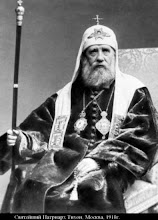
In 1922, Feodorov began an ecumenical dialog with the Patriarch of Moscow, Tikhon Belavin[13], and several Orthodox bishops. They were open to talking to the Roman Apostolic See, but were afraid of the activity of Latin missionaries, who made use of the current historical circumstances to escalate their mission work among the Russian Orthodox. Unfortunately, the beginning of this dialog was completely destroyed by the improper activities of the Polish clergy in Russia, who converted several hundred former Orthodox to Roman Catholicism. Finally, the dialog between the Russian Orthodox and Catholics was interrupted by the Soviet secret police OGPU[14], who arrested Patriarch Tikhon, Exarch Feodorov and their followers. The Communist repression against the Church was one of the worst persecutions of Christians that the world has yet known. This made the natural development of the Catholic Byzantine tradition in Soviet Russia impossible. Many followers of Feodorov were forced to emigrate abroad.
Approaches to Church unity
After his deportation from Soviet Russia, metropolitan Edward von Ropp[15], the head of the Roman Catholic Latin-rite hierarchy, published many articles in Catholic journals, where he described the full collapse and destruction of Russian Orthodoxy. He appealed for the Roman Curia to make use of the favorable political conditions to solve radically the problem of the return of the Russian schismatics to Catholic unity with the See of Rome and, first of all, suggested sending missionaries into Poland, Lithuania and other liberal countries for active apostolic work and forced proselytism. These countries were liberal and had ethnic East Slavonic minorities, who was an Orthodox by religion and came from the Russian Empire. He suggested the program of biritualism as first step to mission into Soviet Russia: using Catholic priests, who were celibate and would celebrate the Liturgy in both rites, Latin and Byzantine. After high-level meetings of Vatican officials in 1920, the program was accepted for realization[16].
Exarch Leonid Feodorov wrote many letters to Cardinals and prelates of the Roman Curia to persuade them from proselytism and from taking advantage of the difficult situation of Orthodoxy to attempt to force a union with Rome. He mobilized his followers, who criticized the biritualist proposals of von Ropp. Fr. Gleb Verhovskiy and Dmitriy Kuz'min-Karavaev[17] wrote articles against the idea of biritualism, which actually threatened any possibility of a reunion of Russian Orthodoxy with the Roman Catholic Church[18]. Von Ropp's ideas were based on a traditional Polish viewpoint that saw Russia as behind the times and as a despotic Eastern country, which the Polish genius must fertilize with Western civilization and lead under the control of the See of Rome.
After much discussion in the Catholic press, the proposals of von Ropp were declined. Roman officials took note of the ideas of a French expert in Russian questions, Michel d'Herbigny, SJ[19]. He was an heir of the Russian Jesuit Ivan-Xavier Gagarin[20], and his followers. Fr. Gagarin didn't know Orthodoxy in practice. He wrote in his works that Roman Catholicism was a foreign profession in Russia. He assumed that Roman Catholic missionaries (par excellence priests from intellectual religious orders) must transit into the Byzantine rite in Russia. Then they must found seminaries with a high level of education for converted Russians. A new generation of celibate Russian Catholic clergy would be destined for success among the literati under circumstances of a passive Orthodox clergy. The proposals of Fr. Michel d'Herbigny, SJ, opened the door to the active participation of foreign clergy in the Russian mission.
In 1923, the Dominican Fathers opened St. Basil's Seminary in Lille (France) for Russian proselytes. The seminarians were directed into obligatory celibacy and wore Latin cassocks. Only three Russians (Spasskiy[21], Dlusskiy[22] and Richter[23]) out of thirty reached ordination in the Latin rite (and, under condition, in the Byzantine rite, according to the decree of the Apostolic See). Unfortunately, Spasskiy was died from tuberculosis in 1930. Dlusskiy had a Russian-Polish origin and suffered from a bifurcation of spiritual conscience. Richter had German origins and locked like a typical Latin clergyman. He wore a soutane and shaved his beard, as in the Latin tradition. Russian emigrants never perceived such priests as «Russian popes», but rather as Latin agents in Russian society.
The Jesuit mission in Istanbul in 1920s
In 1920, the superior general of the Society of Jesus ordered Fathers Baille[24], Janssens[25] and Tyszkiewicz[26] to go to Georgia. The war prevented the Jesuit missionaries from reaching their goal and stopped them in Istambul, where there were many thousands of Russian refugees. All Russians felt anxious and feared an attack by the Bolsheviks or extradition back to Soviet Russia. With the cooperation of the occupational administration of the Entente, the Jesuits organized relief action among Russians. Lois Baille, SJ, founded St. George's Residential School for orphans. He appointed a Russian Latin-rite priest, Sipiagin[27], as director of the school. Sipiagin came from a family with mixed Russian-Polish origins. He was enthusiastic about the Latin rite and Western culture. Stanislas Tyszkiewicz, SJ, set up a hostel for Russian proselytes. He taught the Catholic Catechism. The proselytes passed an examination after several months, repudiated Orthodoxy, made a profession of Catholic faith and communicated at a Latin-rite Mass. The Jesuits stimulated the transit of Russians into the Latin rite. Tyszkiewicz enrolled paid secret informers among Russians to control the situation. He had many secret contacts with persons among the Orthodox intelligentsia and suggested making conversion to Catholicism a condition of any financial help. Many Russians angrily rejected the unbecoming proposals of Tyszkiewicz. Fr. Sergiy Bulgakov[28] was disappointed in Catholicism after the meeting with Tyszkiewicz: the great universal idea of St. Peter's ministry boiled down to mere proselytism. Tyszkiewicz was a Pole by origin and wrote many articles under the Russian pseudonym, Serge Bosforoff, where he called on Russians to convert to the Roman Catholic Church. He used the emigrants who received charitable help for his own purposes. He wrote a provocative «Open letter of the Thirty Russian Catholics to Orthodox Metropolitan Anastasiy Gribanovskiy», and used the names and signatures of those Russian people whom he had aided. This scandalous action compromised the idea of Catholicism among Russian intellectuals, who had sympathized with it earlier in the spirit of the philosopher, Vladimir Soloviev[29].
In 1922, Fr. Gleb Verhovskiy came to Istanbul at the direction of the Oriental Congregation. He set himself at variance with Tyszkiewicz owing to such improper methods of missionary activity and urged the conservation of Byzantine-rite status for all Russian proselytes. The Jesuits made Fr. Verhovskiy's situation very moral uncomfortable, and obliged him to leave Istanbul.
The most scandalous action committed by Tyszkiewicz involved sending a group of Russian young people to study in France and Belgium with stipendiums from the Catholic Church. Tyszkiewicz came from a very aristocratic family, and normally tended to give excessive importance to other aristocrats. He appointed a former courtier and aristocrat, Nikolay Burdukov, as a curator of the group. All the Russian settlement in Istanbul was scandalized and moved to laughter by this appointment. Nikolay Burdukov was famous in high society as a sodomite with the telling alias «princess Mescherskaya»[30].
Relations between Russian exarchate and Russian apostolate abroad
In 1921-1923, Diodor Kolpinskiy, Gleb Verhovskiy, Trofim Semiatskiy and Vladimir Abrikosov left Soviet Russia any way they could. They felt anxious and got into contact with Roman Catholic structures abroad. They felt that Roman Catholic authorities were under the idée fixe of making use of the temporal weakness of Russian Orthodoxy to carry out active mission work among its members. In 1926, Gleb Verhovskiy left the Russian apostolate for a ministry among Ukrainians in the USA. Both Diodor Kolpinskiy and Trofim Semiatskiy, discouraged by the use of unsuitable methods in the apostolate, left the Catholic Church and re-entered Orthodox jurisdictions.
Fr. Vladimir Abrikosov was deported by the Soviet regime in the famous «ship of philosophers» in 1922. He was in touch with many Russian intellectuals abroad. He came from an old Moscow merchant family and found credence in many circles of Russian emigrant society. In October 1922, he had an audience with Pope Pius XI. He gave His Holiness a collective letter from group of some famous Orthodox laymen. They wrote:
«Do not put the holy work of the union of the churches in Russia into the hands of people and nations which are alien to us, with whom there exists a mood of hostility and discord, which has not yet been forgotten, either by us, or by them. Their culture is alien to the Russian people, and their religion carries a gloomy and even hostile tone in itself»[31].
Pope Pius XI answered Fr. Vladimir Abrikosov that the Apostolic See would take immediate action and hope for realization of one of his own commands.
Fr. Vladimir Abrikosov was recognized by Mons. Jules Tibirghien[32], an official of the Oriental Congregation, as the procurator (representative) of the Russian Exarchate at the Roman See.
In his letters to Rome, Exarch Feodorov directed Abrikosov to visit leading prelates in the Roman Curia to dissuade them from undertaking active mission among Russian emigrants. After the death of Mons. Jules Tibirghien, to his ministry was appointed the rector of the Pontifical Oriental Institute, Michel d'Herbigny, SJ. He annulled the appointment of Fr Abrikosov as procurator and suggested that he leave Rome. Abrikosov refused, under instructions from Exarch Feodorov. Then d'Herbigny invited former Russian officer, Baron Igor' von der Launitz, to Rome. After a few weeks, von der Launitz wrote a delation to the prefecture of police that Abrikosov was an agent of the Soviet intelligent service OGPU, who was spying in Rome. Simultaneously, d'Herbigny visited the most important cardinals of the Roman Curia and informed them about the charge of espionage against Abrikosov. Franz Cardinal Fruewirth, OP[33], protected Abrikosov against these accusations. Mons. Umberto Benigni[34] wrote a letter to Prime Minister Mussolini with counter charges against the practice of Michel d'Herbigny and the policy of the Jesuits against Russia. In the event, Baron von der Launitz was extradited from Italy. Abrikosov continued to follow his mission. He agreed with the leader of the Russian legitimists, Grand Prince Kirill Vladimirovich Romanov, that in the eventual restoration of the monarchy in Russia, the Russian exarchate would be recognized as one of the national churches, but the Roman Catholic Latin-rite Church would be recognized only as a foreign confession. Prelate Giuseppe Pizzardo[35] defamed Abrikosov for political involvement and incompetence. In 1926, after receiving information from d'Herbigny about the intention of abolishing the Exarchate and of dismissing Exarch Leonid Feodorov, an intention that was, in fact, never realized, Fr. Vladimir Abrikosov left Rome for Paris[36].
Almost no priests of the Russian Exarchate took part officially in the Catholic apostolate among emigrants. The spiritual succession from Exarch Feodorov and the founders of the Russian Orthodox church in union with Rome was dropped. The next Russian apostolic work abroad forfeited any national Russian nature. The activity of Roman Catholic missionaries was not a continuance of the work of the Russian exarchate, but a full break with its ecumenical approaches.
Pro Russia
In 1925, Pope Pius XI founded a special Russian commission with Luigi Cardinal Sincero[37] at its head. However, real dominance over its activity was held by the relater of the commission, Fr. Michel d'Herbigny SJ. None of the native Russian clergy participated in the commission from it's beginning. It declared that it wanted to organize relief for Russian emigrants. The Russian society felt that such philanthropic activity disguised the spiritual intentions of the Roman Catholic Church. The more the Catholic press wrote about the pure hopes of the Catholics of giving disinterested aid to Russian refugees, the more the Russians feared the Catholics. This was in keeping with the Russian mentality. The Russians are a universal people, cosmopolitan by their nature. They are normally open to all Western inspiration. They borrow on their own what they want from Western culture. However, the propagation of ideas and structures from outside into Russian space is received with natural resistance by Russians. All beautiful things that come from the 'Western cultural space' without permission and invitation by Russians is connected at the back of their minds with aggression and interference. Nothing rallies the Russians more than foreign intervention, such as the Napoleonic War and the Second World War.
Metropolitan Andrei Szeptytski criticized the methods of the activities of the Russian commission in his letter to cardinal Sincero. He wrote that its incompetent methods attracted the attention of the most dishonorable Russians, who entered the Catholic Church only upon the condition of constant financial aid. This turned away from Catholicism honorable people who had sympathized with it earlier in Russia.
Due to the advice of Andrey Szeptytski, a sole Russian, Fr. Sergiy Verigin[38], was invited to participate in the commission Pro Russia, but he was the most passive and pessimistic priest of all the Russian Catholic fathers. As a result, Szeptytski became an unwelcome person in Russian affairs. Fr Michel d'Herbigny, SJ, wanted to isolate him from having any influence on Russian emigrants. D'Herbigny did not accept the synod of the Russian Greek Catholic Church of 1917 and even tried to abolish the Russian Exarchate canonically through the Secretariat of State. Thus, the acts of the conference of Russian Catholic clergy held in 1930 did not refer to the names of either Exarch Feodorov or Metropolitan Szeptytski generally. D'Herbigny thought of himself as the founder of Russian Catholic work, and of the conference of 1930 as the first synod of the Russian Catholic Church.
The commission explored the situation of the emigrants in Europe and waited for the Orthodox clergy, owing to their loss of social status and sources of income, to get in touch with Catholic authorities. However, the Russian Orthodox church structures found aid from many Protestant organizations (and ever from Free Masons) and did not move to the Catholic Church.
Michel d'Herbigny, SJ, provided constant financing for Russian Catholic work from sources of the Apostolic See. In the 1920s, several Orthodox priests entered the Catholic Church, but soon many of them were disappointed and left it.
The commission opened the door to wide participation in Russian work by foreigners, Latin by spiritual identity, despite the opposition of many Russian Catholics. Michel d'Herbigny promised that the foreigners would study the Byzantine-Slavonic language well and be fully integrated into the Russian national identity. The foreigners would only be «skirmishers» for a prospective Russian Catholic Church of the Byzantine rite.
The Russian Catholics in Moscow and Saint Petersburg identified themselves as Orthodox Catholic Christians. The famous Russian philosopher Vladimir Soloviev used the collocation «Orthodox Catholic profession» to describe the attitude of those Orthodox Christians who accepted the primacy of Rome. Latin Catholics, however, recognized the word «Orthodox» as indicating the «Eastern Schism» and rejected the use of this word in the Russian apostolate. It was impossible for foreign priests to describe themselves as 'Orthodox.' It meant apostasy for them. For the Russian Christian, on the other hand, the word «Orthodoxy» meant «the confession of Seven Ecumenical Councils and the Eastern Fathers». The retraction of the word «Orthodox» by the members of Russian Catholic work meant a denial of their Byzantine heritage for Russian emigrants. In practice, all the arrangements made by the Pontifical Russian commission compromised any idea of unity of Russian Orthodoxy with See of Rome in the opinion of the emigrants. It is unreasonable to reproach the experts of the commission with this. They were all Latin and thought in habitual categories of a great mission by the West to illuminate the wild East and convert it from darkness.
In 1930, the first bishop of the Russian rite was ordained. He was a Lithuanian member of the Marian order, Fr. Petras Bucis MIC[39]. After his ordination, he depended on the Pontifical Russian Commission and did not have any real jurisdiction. It was a typical Roman ecclesiastical model before the Second Vatican Council. D'Herbigny looked upon the Russian church as a satellite of the Latin Patriarchate with its own rite and with a ritual bishop at its head.
Bucis was well-known in Saint Petersburg as a Latin priest and professor of Catholic theology. Russian emigrants were astonished, when he changed into the vestments of a Russian bishop. In 1933, bishop Bucis reconverted to the Latin rite and left Rome for Lithuania after resignation of his protector Mgr.d'Herbigny. Despite its situation, the Russian Apostolate developed further according to the strategies of d'Herbigny.
Participation of Latin orders
Principally, it was members of Latin-rite religious orders that were involved in the Russian apostolate. The Russian Catholic movement was fragile and needed financing for publishing and for other missionary activities. Many orders had their own sources of financing their activities. Some orders which were on the decline needed a new sphere of activity and financial support from the Roman Curia.
Exarch Feodorov had tried to adjust the apostolate to accommodate the interests of the religious orders, but eventually rejected this idea. His representative, Fr. Vladimir Abrikosov, refused to co-operate with any of the religious orders. He thought they had their own interests, which conflicted with those of the apostolate and with those of Russia generally.
The Society of Jesus played the most leading role in the Russian catholic apostolate abroad, despite the great prejudice against the Jesuit order in Russian intellectual circles. The Jesuits attributed this to the influence of political propaganda under the Monarchy and the Soviet Regime. In reality, such judgments by the government never had any essential significance among the Russian intelligentsia. The Society of Jesus had the greatest opportunity to manipulate the Russian apostolate due to their control over the Russicum, the Pontifical College of St. Teresa. Several members of the apostolate said, there are only two parties in it: the Jesuits and the non-Jesuits. The Society of Jesus put up own money in the apostolate and provided their members wide possibilities to establish churches of Byzantine rite and to publish religious literature in Russian. Prof. Constantin Simon, SJ, a very able researcher, has written in his publications that the General of the order Wlodzimierz Ledochowsky[40] was actually against the idea of wide participation of the Jesuits in the apostolate, but eventually agreed to it in the spirit of obedience[41]. It was an unsuccessful choice for the order. The Jesuits were brilliant intellectuals, who directed well a modern Latin-rite apostolate. They as many of Roman Catholics identified universal Christian heritage with the tradition of Latin Church. They ignored well-established liturgical forms, and were inclined to modernize and to transform the Byzantine liturgy. They broke up the Byzantine tradition into doctrine, on the one hand, and ritual, on the other. While doctrine was unchangeable, a rite was secondary. The Jesuits sensed in the Russian apostolate a Byzantine pattern which camouflaged Latin doctrine. However, for the Russian Orthodox mind, it is impossible to separate a truth from a rite. An important part of the Orthodox heritage was unfixed in any written code and transferred from generation to generation by married clergy. The Jesuit specialists in the Orthodox liturgy did not embrace all aspects of this heritage. I think, the Jesuits never used all arsenals of Byzantine Liturgy[42]. The liturgical ministry of the Jesuits and their pupils created the impression of a naive imitation of Orthodox worship. When the Russian Orthodox seen occasionally liturgical ministry of the Catholic priest, they noted overstrung atmosphere and absence of many habitual Orthodox ceremonies (blessings, kisses, kowtows) which the Catholics thought as unimportant. Therefore, many Roman Catholics ironically named these Western Fathers as «disguised as Russian popes».
The Marian fathers made use of Jesuits methods in China: they founded Catholic residential schools for emigrant children. Then they met with the children's parents and propagated Catholicism unobtrusively. The religious orders had a special interest in upbringing of orphans. They could be potential candidates for their order. As a rule, after their studies, the Russian candidates for the religious life entered the order, which had controlled the school.
The Benedictines were more careful and accurate in their celebration of Byzantine worship. They were also more correct in their ministry. They didn't develop a mission attack on Orthodox believers, but celebrated the Byzantine liturgy for themselves and prayed for the unity of the Church.
The religious orders played an important role in the Russian apostolate. However, they were involved in a competition with Russian Catholics, which is not typical of the Russian ecclesiastical tradition. The first generation of Russian Catholic clergy, Dlusskiy and Richter, sympathized with the Dominican fathers, while the others sympathized with the Benedictines. The clergy, who graduated from the Russicum, sympathized with the Jesuits, and tried to attract all Russian believers by the spiritual exercises of St. Ignatius Loyola as the culmination of all Catholic spirituality generally.
Mission impossible
The new generation of clergy after the foundation of the Russicum was composed most all of Byelorussians, who reidentified themselves with Russian nationality, and of pure Europeans. Step-by-step, the proportion of Europeans increased. In the 1950s, the percentage of Russians in the Russicum was reduced to zero. The graduates of the Russicum had no relations with Russian society. The Oriental Congregation directed them towards the areas of the Russian Diaspora under the jurisdiction of local Latin-rite bishops, i.e. they were members of the Latin Patriarchate. These celibate Russian priests lived together with their Latin colleagues. Normally, the Russian emigrants lived in close community and recognized the priests from the Russicum as merely being disguised as Russian popes, as part of a hostile Latin world.
The mission tactics of the Catholic priests of Byzantine-Slavonic rite were simply the result of naivety. They researched the situation of the Orthodox communities in the area: jurisdiction, number of churches and clergy, sources of income, schools and relief service[43]. They visited the churches, met with Orthodox parishioners, bought Orthodox newspapers and books. These intelligence activities were attracted the attention of Orthodox pastors. In their sermons, they alerted their parishioners about the danger of Catholic proselytism. The Catholic priests informed the Oriental Congregation about the situation and its vital needs. The Congregation tried to finance their activities in any way. All the Russian settlement was hostile to the active beginning of the mission. Any kind of Catholic activity was considered to be negative.
The principal task of the Catholic priest was to organize Byzantine Catholic parishes for those Russians who officially converted to Catholicism. The priest tried to found any discussion clubs, religion libraries or research centers, devoted to question of Church unity. A few local Russians visited the lections and awaited the distribution of money. They saw Byzantine Catholic parishes as portals, which led to such things as grants, education and employment. The Orthodox clergy blocked all the efforts of Catholic missionaries to meet with emigrants with the purpose of propagating Catholicism among them. The ministry of the foreign clergy looked bleak against the background of the ceremonious worship of traditional Russian popes, whose ancestors had been clergymen for generations.
Unfortunately, none of the regularly educated Catholic priests of the Byzantine Slavonic rite could create a perfect Russian church community. Many official Russian Catholic parishes consisted of Latin-rite members who were interested in the Byzantine rite and Russian culture. Russian emigrant society did not consider them as being part of it.
Before the Second World War, many members of the Russian Apostolate were feeling great weariness. The mission was on the skids. The last hope was for the collapse of Communism in the USSR and the opening of its borders. Catholic romantics believed that Christianity in the Soviet Union had been completely destroyed, Russian people wait for priests and that they must go there to preach the gospel of Jesus Christ.
Tragedy in the time of the Second World War
After the beginning of the Second World War on 1st September 1939, several Jesuits of the Byzantine rite tried to infiltrate into the USSR. They underestimated the power of the NKVD, which was one of the strongest secret police services in the world. All approaches by these priests were discovered. The Soviet agents had a detection list of 32 persons, who had links with the Russicum. As a result of many special detection arrangements, the NKVD agents arrested 11 people on the list between 1939 – 1948. Two of them, Jerzy Moskwa, SJ[44], and Jan Kellner[45] were executed in 1941. Other priests were deported to jails and camps in the GULAG Archipelago. Two biritualist priests, Helwegen[46] and Bourgois, SJ[47], were in Moscow, but celebrated only the Latin-rite Mass. Fr. Pietro Leoni, SJ,[48] stayed in Odessa, where he had a ministry for local Roman Catholics. He had permission for spiritual activity from the Soviet administration of the city. After several celebrations of the Byzantine liturgy, the local Orthodox bishop, Sergiy Larin, took note and laid information against him with the MGB. Leoni was accused and convicted of being a «spy of the Vatican». He behaved well in the jail and was a heroic example for other prisoners in his resist to Stalin's regime.
The tragedy for many members of the Russian Catholic apostolate lay in the heroic 'epos' - that the Russicum was a seminary for martyrdom: the graduates of the Russicum were fated to go to the USSR to die at the hands of Stalin's killers. In reality, the Oriental Congregation never issued a decree which directed all the graduates of the Russicum to infiltrate into Soviet Russia. Such a heroic 'epos' was really demanded against the background of the common failure of strategy in the Russian mission. Soviet propaganda supported the 'epos' and complained about the Russicum as a training centre for spies.
Mission among Displaced Persons
At the time of the Second World War, many Soviet people were deported to Western Europe as army prisoners and workers in the German military industry. Later, the American occupational administration named them DPs (displaced persons). The clergy of the apostolate wanted to meet with them to preach Christianity. The Rector of the Russicum, Philippe de Regis, SJ[49], visited camps for Soviet prisoners and refugees. He had many positive impressions. He thought that the consciousness of the former Soviet citizens was open to Catholic ideas. They had been brought up free of the influence of Orthodoxy. Their spiritual senses were like a «tabula rasa». The Russians listened attentively to the Catholic priests and were interested in Catholicism. They were very loyal to Western civilization. Their character differed from the feelings of Russian emigrants of the 1920s. The first emigrants spoke a lot about the national identity and dignity of the Russians and waited for the renewal of Russia to return there. Many of the DPs, however, did not want to return to the USSR. They did their best to stay in Europe, or even better, to emigrate to America. Fr. Philippe de Regis ,SJ, preached very successfully and many Russian DPs officially converted to Catholicism. This raised hopes of the imminent conversion of many Russians from this second wave of emigration. Many foreign priests supposed that they should propagate the Latin rite for those Russians who didn't know Orthodoxy. Fr. Pavel Grechishkin[50] warned them against such euphoria. He knew for a certainty that Russians could reach Catholicism only through Orthodoxy. In 1947, the Russian Catholic mission among DPs in Argentina collapsed. Dozens of Russian proselytes, who had converted to Catholicism in Italy, left the Catholic Church and joined Russian Orthodox parishes after arriving in Buenos-Aires. Several Byzantine Catholic priests returned from Argentina to Europe without any results. The clergy of the apostolate continued to work in the camps for refugees. They protected them from extradition to the USSR, where camps of Archipelago GULAG waited for DPs, and helped them to find shelter and employment in Europe and America.
Fear of the Russians
After the end of Second World War and the setting up of the Iron Curtain, many people in the West feared a new push by the Soviet Union. The clergy of the apostolate understood that Russian space was closed and found new avenues of activity. Several priests worked as experts in Russian affairs in universities and state organizations. Others left the apostolate and transferred to Latin-rite parishes.
After the victory in the World War, a wave of Soviet patriotism overtook the Russian Emigration. The Soviet government announced in advertisements the repatriation of post-revolution emigrants to the USSR. Several Russian Catholic priests tried to get Soviet passports for an eventual trip[51]. Only Fr. Grigiry Cvintarny, however, made use of this possibility and was repatriated to the USSR. He reconverted in Orthodoxy, transferred into the jurisdiction of the Moscow Patriarchate and was sent to the Far East. In the 1950s in Irkutsk, he met with two young men, Alexander Men'[52] and Gleb Yakunin[53], whom explained Catholicism to him. Unfortunately, there is no information about further life of Fr. Grigory.
The Catholic authorities thought that the destiny of Russian Catholicism was connected closely with Western civilization and considered visits to Soviet Embassies as a betrayal of the West and consequently of the Roman Catholic Church. They treated the Russians very reservedly, being afraid that among all the groups of emigrants there could be agents of the Soviet secret service, the MGB. Normally, the Catholic authorities did not confide in Russian members of the apostolate. They appointed foreign instructors to help and secretly track the Russians. In the case of any leakage of confidential information, the prime suspects were the Russians. In reality, these were unreasonable suspicions. The religious superiors were non-professionals in this sphere. Fr. Antoine Wenger, AA, in his research, «Rome et Moscou 1900-1950,» wrote that Soviet intelligence services enrolled only Europeans that were clear of suspicion as secret agents.
After the reinforcement of the Soviet regime in Eastern Europe, many people escaped to the West. They told stories about the barbarity of Soviet solders. All Europeans were afraid of the danger of a Soviet invasion of the West. They identified «Soviet» with «Russian» and were afraid of all Russian people in general, without reference to their politics.
In 1946, foreign members of the Russian apostolate: Philippe de Regis, SJ, Paul Malleux, SJ[54], Theodore Belpair, OSB[55], Christopher Dumont, OP[56], had unofficial consultations in the Russicum and argued that they should have contact with the Orthodox jurisdiction without the participation of Russian Catholics[57]. They thought that the Russian Catholics tied them down and were a barrier to union. They hoped for a successful dialog with Orthodoxy on their own account. This showed complete ignorance of the Russian mentality. The Orthodox Christians thought: if the Roman Catholics have betrayed their own Catholics, they will betray us even more.
Conflict in the Apostolate
In the Holy Year of 1950, all the Catholic clergy of the Byzantine-Slavonic rite took part in a common pilgrimage to Rome. They were given a common audience by Pope Pius XII, who gave moral support to the Russian apostolate and described Russian Catholics as «true Orthodox». A joint conference of clergy and active laymen of the apostolate took place in the Russicum. All the participants listened to a report by Fr. Pavel Grechishkin from Paris, which had the effect of a bomb. He described the crisis of the apostolate as a conflict between proselytism carried out by foreign (i.e. non-Russian) members and a reunion approach used by several Russian members. Grechishkin underlined the full fiasco of Latin unionism among Russian emigrants. He called for a rejection of proselytism. He advised all foreign members to desist from any Byzantine liturgical ministry and to turn their attention to educational activity and to relief service among the emigrants. The report by Grechishkin was not published in the official Russian Catholic press[58]. Negative answers to it were published in an official bulletin in Rome[59].
In 1954 the Russicum celebrated a quarter of a century of its activity in an atmosphere of uncertainty. The spiritual father of the Russicum, Stanislas Tyszkiewicz, SJ, declared that the aggressive propaganda of Soviet atheistic issues argued for the necessity of the Russicum in the current political situation. It was a fragile argument, for all Russian papers, both nationalist and communist, criticized the Russicum.
Fr. Pavel Grechishkin replied:
«The collapse of the whole idea of the Russicum, its ill-fated ideology, its plan of the enslavement of Russia and of Russians by annexation, by proselytism, by breakdown of the Orthodox Church etc. is obvious. The 25th Anniversary of this collapse should dispose the Jesuit Fathers to quit the arena of unionist projects in Europe, and with all their own plans, methods, ways of work, and all their dilettantism, and to turn their attention to Africa and Africans, whom by a cruel irony they muddled with Russia and Russians»[60].
The Jesuits and foreign members of the Apostolate were upset by the criticisms of Grechishkin, who was the pastor of the sole Russian Catholic parish, which consisted of ethnic Russians. They complained about them to the Roman Curia and boycotted his liturgical activities. This led to serious health problems for Grechishkin. In 1964, after two medical operations, he celebrated the last Liturgy in Paris and retired to Switzerland. In the 1950-60s, several active Russian priests of the first wave of emigration left the Apostolate: Fr. Sergiy Obolenskiy[61] transferred to the Headquarters of NATO as a civil expert on Communism and on the USSR, Fr. Andrei Urusov, SJ[62], reconverted to the Orthodox Church.
In 1959, first Russian bishop Andrei Katkov, MIC[63], was ordained. He had had a Catholic formation and education according to the mission plan of d'Herbigny. He had entered Catholic elementary school, converted to Catholicism and joined the Marian Congregation, which ran the school. He didn't have real jurisdiction over the clergy, such as his ancestor archbishop Alexander Evreinov[64] had had. He was only a ritual bishop too. The real dominance over the apostolate was held by the rector of the Russicum, who was appointed by the Superior General of the Jesuits.
From unionism to ecumenism
After the Second Vatican Council, the Russian Apostolate was reactivated in co-operation with the Orthodox Church. The Council decree «Unitatis redintegratio» reaffirmed the honor of the Orthodox Churches which were not in communion with the See of Rome. A delegation of the Moscow patriarchate visited the Russicum for the first time in 1963 and officially admired the the chanting. At the head of international affairs of the Moscow Patriarchate was metropolitan Nikodim Rotov[65], who visited Rome every year and was interested in Latin spirituality. In 1965, he met with Fr. Paul Mailleux, SJ, who was appointed Rector of the Russicum and the delegate of the Superior General of the Jesuits in connection with members of the Byzantine rite. Fr. Mailleux was admired by Metropolitan Nikodim who considered him as a key person in a believable unity of The Roman Catholic Church with the Moscow Patriarchate. Metropolitan Nikodim postulated the convergence of Moscow with Rome on the rejection by the Catholic mass-media of all criticism of the Soviet system's state atheism and a refusal of any support of religious dissidents in the USSR (most of all, of the underground clergy of the Ukrainian Catholic Church, which had been dissolved by the Soviet regime in 1946).
Following arrangements between Metropolitan Nikodim and Fr. Mailleux, there began an intensive ecumenical exchange. Catholic clergy visited the holy places and educational institutions in the USSR and met with their Orthodox colleagues. Orthodox students came to Rome and entered the Pontifical universities[66] (Unfortunately, after Perestroika, documents came to light that revealed that they had all been agents of the KGB, who had special mission)[67]. In 1969, Metropolitan Nikodim celebrated the Holy Liturgy in Saint Anthony's Church at the Russicum. Many foreign members of the Apostolate were present in the Church and took Holy Communion in expectation of the imminent reunion of the Russian Orthodox Church with the Roman See.
In 1970, the last conference of the Russian Catholic apostolate took place in Rocca di Pappa. The president of the conference was the Visitator of the Oriental Congregation, Bishop Andrei Katkov, MIC, who spoke with great enthusiasm about his visit to the USSR, his visit to the Holy Trinity Lavra in Zagorsk and his personal meeting with Russian Patriarch Alexiy 1st[68] in Odessa. Fr. Chrysostom Blashkevich, OSB[69], had doubts about the reliability of this ecumenical dialog and the real interest of the Orthodox Christians.
Fr. Chrysostom saw that Catholic ecumenism was also engaged in a dialog with the Protestant communities and that the development of Catholic theology was tending towards desacralisation, demythologization and other ideas of Protestantism, all of which are absolutely alien to Orthodoxy[70]. Fr. Paul Malleux, SJ, read the great report, «Our relations with the Moscow Church», where he explained the formidable obstacles faced by the Russian Orthodox Church in the USSR and made an apology for the political opportunism of Russian Orthodoxy during the Soviet regime. He called on everyone to trust Metropolitan Nikodim and to help the Russian Orthodox Church in the evangelization of the USSR. After the conference, the activities of the Russian Catholic centers were transformed in an ecumenical direction. After the early death of Metropolitan Nikodim Rotov during a papal audience in 1978, the ecumenical arrangements with the Moscow patriarchate gradually disappeared.
Only the Russian Catholic publishing house «Zhizn' s Bogom» (Life with God) continued the distribution of unionist literature in the spirit of Exarch Leonid Feodorov. Due to the collaboration with this publisher of Fr. Anthony Ilc[71], Fr. Cyril Cozina[72] and Ms. Irina Posnova[73], the traditions of Russian Orthodox Catholicism revived the times of official ecumenism and were able to return to Russia after Perestroyka. Fr. Georgiy Roshko[74] was the last Visitator of Russian Catholics of the Byzantine rite abroad in 1978-1992. After the beginning of the policy of liberation in the USSR by Mikhail Gorbachev, Fr. Roshko tried to appeal to Catholic authorities to renew the canonical structure of the Russian exarchate in Russia. Officials of the Oriental congregation were closed to this idea, probably because of the undoubted failure of proselytism among Russian emigrants after the Revolution of 1917.
Conclusion
The Roman Catholic authorities in the 1920s had a romantic view of the possibility of gaining control over Russian Orthodoxy by the mission activity of educated Catholic priests of the Byzantine rite. The ecumenical approaches of Exarch Leonid Feodorov and his followers were rejected as beside the purpose. The clergy of the exarchate did not find their place in the new mission structures, and the spiritual succession in the Russian Catholic tradition was interrupted.
The educational institutes of the Roman Catholic Churches trained a new generation of the highly-educated clergy of the Byzantine Slavonic rite. Although they apparently ministered the same rite as the Russian Orthodox Church, they actually sought the latent promotion of Latin spirituality and of a Roman ecclesiastical model into Russian cultural space. The strategy of propagating Catholicism among Russian emigrants to entice them into the Roman Catholic structure finished with full failure in the 1930s-1950s, despite passable financing of the mission and the high level of professional training of the clergy. As a result, the Russian emigrants were adjusted against Roman Catholicism in more level, than the Russians (homo soveticus) in the USSR!
One of the positive results of the mission, however, was the contemplation of the Byzantine heritage by Roman Catholics, which has facilitated ecumenical rapprochement. In the 1960s-1980s, most parishioners of the Russian Catholic missions were non-Russians and Roman Catholic by origin. Another good result is that due to the structures of the Russian Catholic Apostolate, the Russian Catholic tradition abroad survived the times of the Soviet regime, and returned to Russia after Perestroika.
After the Second Vatican Council, the Russian Catholic apostolate was transformed into ecumenical structures in cooperation with the official ecumenists of the Moscow Patriarchate. Despite the seeming success of the dialog in 1960-1970s (the campaign of strategic disinformation of the KGB in really), its results were completely revised after 1989. The relations between the Moscow Patriarchate and the Roman Catholic Church were thrown away and are situated now in the Dark Ages. The problem of unity between the Roman and Moscow ecclesiastical traditions still awaits a solution.
SOURCES AND LITERATURE
The Archive sources:
APV = Archive of Prince Petr Volkonskiy (Paris, L'wow)
ECM = Archive of the Ecumenical centre Muilliyarvi (Espo, Finland)
SBL = Archive of the Slavonic library in Lyon (France)
Literature:
Anastasio = Anastasio di Odessa arch. Pospettive die riconciliazione tra il Patriarcato di Mosca e la Chiesa di Roma. – Roma, 1994.- 163 p.
Ciszek = Ciszek W., Flaherty D. Z Bogiem w Rosji.- Warszawa: Oficyna Przeglądu Powszechnego, 1990.- 438 s.
Feod = «S terpen'em my dolzhny nesti krest svoj...»: dokumenty i materialy o zhizni i dejatel'nosti blazhennogo svjaschennomuchenika ekzarha Leonida (Fedorova): SPb.: Kerigma, 2004.- 505 s.
Szep = Mitropolit Andrej Sheptic'kij: zhittja і dіjal'nіst'. - T.І Cerkva і cerkovna ednіst'. Dokumenti і materіali 1899-1944. - L'vіv: Svіchado, 1995.
Korolevskij = Korolevskij C. Metropolie Andre Szeptyzkyj 1865-1944.- Roma, -429 p.
Mailleux = Mailleux P. Entre Rome et Moscou. L'Exarque Leonide Feodoroff.- Bruge: Desclee de brouwer, 1966 – 183 p.
Michulec = Michulec K. SJ La concezione e la promozione della Chiesa second oil pensiero di P. Stanislao Tyszkievicz SJ (1887-1962) Roma: Pontificium Institutum Orientale, 2001.- 132 p.
Scolardi = Scolardi G.-P. Et ... ils me firent Russie.- Nice, 1978.-300 p.
Simon I = Simon C., SJ Russicum. Pioneers and Witnesses of the Struggle for Christian Unity in Eastern Europe. - Book 1: Leonid Feodorov, Vendelin Javorka, Theodore Romža.- Roma: Opere Religiose Russe, 2001.- 181 p.
Simon II = Book 2: The First Years 1929-1939.- Roma: Opere Religiose Russe, 2002.- 280 p.
Vasiliy = Diakon Vasiliy OSB Leonid Fedorov: Zhizn' i dejatel'nost'.- Rim, Studion, 1966.- 834 s.
Wenger = Wenger A. Rome et Moscou 1900-1950.- Paris: Desclee de brouwer, 1987 – 684 p.
Articles:
Berg L. Zur Psychologie der Katholiken Russen//Ex Oriente- Mainz: Grünewald Verlag – 1927.- S. 31-51.
Coudenys W. Dr. Between Catholicism and Orthodoxy: Religious Life of Russian Émigrés in Belgium Between the World Wars. - Katholieke Universiteit Leuven. – INTERNET
Gstrein H. 75 Jahre Russucum – Was nun?//G2W, № 12,2004.- S.16-18
Michulec K. SJ Stanislaus Tyszkiewicz//Diakonia, vol. XXVIII, num. 2, 1995,- p. 136-147.
4-Nov-05
[1] Andrey Szeptytski, OSBM (1865-1944) – was born in Polish aristocratic family of Ruthenian origin. In 1900-1944 was Greek Catholic Metropolitan of L'wow (Lemberg) in Galicia (Austria – Poland – USSR).
[2] Ivan Deubner (1873-1936) was born in ethnic German family in Russia, was baptized in Orthodox Church. In 1903 was in touch with Metropolitan Szeptytski in L'wow, was ordained a Russian Catholic priest and celebrated Liturgy in underground before 1917. After legalization, he participated active in religion life before arrest by the OGPU in 1923. Killed by a criminal in exile.
[3] Aleksiy Zerchaninov (1848-1933) – was born in family of an Orthodox priest. In 1896 converted to Catholicism officially and was persecuted by Orthodox authorities. After legalization in 1905 lived in Petersburg and celebrated Liturgy in Roman Catholic Chapel. After 1923 was in exile.
[4] Evstafiy Susalev – was born in family of Oldritualist (Oldbeliver) Russian Orthodox family, was ordained an Oldritualist priest. In 1907 converted to Catholicism and enrolled as secret agent of the policy. In 1917 was dismissed from Exarchate by Feodorov.
[5] Diodor Kolpinskiy(1892-1932) – was born in a Orthodox family, in 1911 converted to Latin rite Catholicism with his family, and leaved Russia for studies in Rome. In 1915 was ordained a Latin priest and ministried in Petersburg. In 1917 transited to Byzantine rite, after 1920 emigrated.
[6] Gleb Verhovskiy(1888-1935) - was born in a Orthodox family, studied in Academy of Art in Petersburg. In 1909 converted to Catholicism in L'wow. Studied theology in L'wow, Innsbruck and Engien (Belgium). In 1914 was ordained a Byzantine priest in Istanbul and ministried in Petersburg. In 1917 was with mission in Ukraine, after 1920 emigrated.
[7] Leonid Feodorov (1879-1935) – was born in Petersburg, studied in the Orthodox Academy. In 1902 converted to Catholicism in Rome. In 1911 was ordained a Catholic priest of Byzantine rite. In 1917 was appointed the Exarch. In 1923 was arrested by Soviet regime and was in exile before 1933. Beatified by Pope John Paul II in 2001.
[8] Trofim Semiatskiy (1859-1940?) – was born in Ukrainian catholic family. In 1904 leaved Russian Empire for L'wow. In 1914 was ordained a Byzantine priest in Istanbul and ministried in Russian Empire, after 1920 emigrated, live in Prague.
[9] Vladimir Abrikosov (1880-1966) – was born in Moscow in rich family, studied in Oxford. In 1909 converted to Catholicism together with his wife Anna. In 1922 was deported from Soviet Russia, lived in Rome and Paris.
[10] Sergiy Mechev (1892- 1941) – famous Russian Orthodox Pastor in Moscow, son of starets Fr. Aleksiy Mechev. In 1929-1941 was in exile, where was martyred. He was canonized by Moscow Patriarchate in 2000.
[11] Feod, 262
[12] A citation from secret report of Mgr. Budkievicz to Rome in 1922: Tali pacto res, quae ad mentem Ecclesiae unitis viribus fieri debeat, dividitur in contrarias partes, quarum altera repraesentatur a fanaticis ritus orientalis, Fiodorof Petropoli et Abricosof-Moscoviae, altera vero a sacerdotibus latinis et ceteris sacerdotibus ritus orientalis, qui exarchae sui fanaticum errorem non sequuntur. See: Feod, 270.
[13] Patriarch Tikhon Belavin (-1925) – first Russian Patriarch after restoration of Patriarchal See in Moscow in 1917. Canonized by Moscow Patriarchate in 1989.
[14] Soviet secret police, which founded on 20th of December 1917, had followed abbreviations in history: CheKa, OGPU, NKVD, NKGB, MGB, KGB. Modern Russian secret police names the FSB.
[15] Edward von Ropp (1851-1939) – was born in aristocratic German-Polish family. In 1917 was appointed Metropolitan of Mogilev, in 1919 was arrested by the CheKa and deported from Russia. Lived in Poland, where worked in unionist projects of Latin-rite Church.
[16] Simon II,25
[17] Dmitriy Kuz'min-Karavaev (1886-1959) – was born in aristocratic Orthodox family, took an active part in Socialist movement. In 1920 converted to Catholicism, in 1922 was deported from soviet Russia, studied theology in the Greek College in Rome. In 1927 was ordained a Russian Catholic priest, ministried in Belgium, Paris and Rome.
[18] Feod, 456-462
[19] Michel Bourguignon d'Herbigny, SJ (1880-1957) – was leading Vatican expert on Russia during the pontificate of Pius XI. Since 1933 was retired.
[20] Ivan Gagarin, SJ (1814-1882) - was born in aristocratic family, entered to diplomatic cervices. In 1843 stayed abroad, converted to Catholicism, entered to the Jesuit Order. He lived in Paris and researched questions of Church unity.
[21] Alexander Spasskiy (1894-1930) – emigrated from Russia via Istanbul, where converted to Catholicism.
[22] Vladimir Dlusskiy (1895-1967) – emigrated from Russia in 1920, converted to Catholicism in Prague in 1925 and entered to St. Basil Seminary. He ministered among Russian emigrants in Berlin.
[23] Viktor Richter (1899-1976) - emigrated from Russia via Tunis, where converted to Catholicism, studied in Lille, was ordained a Latin-rite (under condition of Byzantine rite) priest and ministered in Namur and Meudon (near Paris).
[24] Lois Baille, SJ (1858-1925) – French Jesuit, who worked at the Russian apostolate.
[25] Jean-Baptist Janssens, SJ – Belgian Jesuit, General superior of the Order after 1942.
[26] Stanislas Tyszkiewicz SJ (1887-1962) – was born near Kiev (Russian Empire) in Polish aristocratic family. He was an active Roman Catholic missionary among Russian emigrants and famous theologian.
[27] Alexander Sipiagin (1975-1941) – Russian catholic priest, one of active members of the Russian apostolate, ministered in Belgium, Poland and Rome.
[28] Sergiy Bulgakov (1971-1944) was born in family of an Orthodox priest, took an active part in Marxist movement. He was one of leading philosophers and economists in Russia. In 1918 was ordained a Russian Orthodox priest. Since 1922 – in emigration in Prague and Paris.
[29] Vladimir Soloviev (1853-1900) – one of the famous Russian philosophers, in 1896 converted to Catholicism according in Byzantine rite.
[30] SBL, file № 9 F9.
[31] Arbuzov A.D., Urusov S. Pis'mo pape Piju XI otnositel'no russkoj katolicheskoj missii//Logos № 48, 1993.- S.141.
[32] Jules Tibirghien (1867-1923) – was born in France, studied in Rome. He was one of leading Vatican experts in Oriental questions.
[33] Andrew Franz Cardinal Frühwirth, O.P. (1845-1933) - Chancellor of Apostolic Chancery, Cardinal-Priest of S. Lorenzo in Damaso, Titular Archbishop of Heraclea.
[34] Umberto Benigni (1862-1934) – Apostolic Protonotary, advisor of Secretary of the State.
[35] Giuseppe Cardinal Pizzardo (1877-1970) – in 1917 appointed Secretary of Roman Curia, in 1937 was elevated to Cardinal.
[36] APV, document 441.
[37] Luigi Cardinal Sincero (1870-1936) - official of Roman Curia, Cardinal-Bishop of Palestrina.
[38] Sergiy Verigin (1968-1938) - was born in Persia in family of a Russian diplomat. In 1889 was ordained a Russian Orthodox priest. In 1907 converted into Catholicism. In 1910 -1929 was Rector of Russian catholic church San-Lorenzo ai Monti in Rome.
[39] Petras Pranciskus Bucys, MIC (1872-1951) – was born in Russian Empire in Lithuanian family. In 1915, he jointed to Marian Fathers. In 1927-1933 and in 1939-1951 was the General of the congregation.
[40] Wlodzimierz Ledochowsky (1866-1942) – was born in Austria-Hungary in aristocratic Polish family. The Superior General of the Jesuits in 1915-1942.
[41] Simon I, 58
[42] Author of the article is famous with many priests of the apostolate and visited many Russian catholic churches abroad. He never seen at their service right kowtows in front of icons or altars, ministrants never took blessing from a priest for dressing into liturgical vestments and never kissed a hand of the priest. It were very simply, but very memorized things for Russians.
[43] SBL, file «Russian Catholics», Letter of Fr. George Roshko, 30 Jun 1956.
[44] Jerzy Moskwa, SJ (1910-1941) – was born in Swiss in Polish-Georgian family, enter to the Jesuit Order and ministered in Poland. In 1939 was arrested by the NKVD agent and executed.
[45] Jan Kellner(1912-1941) – was born in Austria-Hungary, studied in the Russicum. In 1941 was arrested by the NKVD agent and executed.
[46] Frans Marie Helwegen (1919-1945) – was born in the Netherlands, studied in the Russicum, was in mission in Lithuania. In 1944 was arrested by the Gestapo and in 1945 executed.
[47] Charles Bourgeois, SJ (1887-1963) – French Jesuit, who active participated in the Russian apostolate. After 2nd WW begun mission in South America.
[48] Pietro Leoni (1909-1995) – was born in Italia, entered to the Jesuit order. In 1941-1943 was in the USSR as military chaplain. In 1945-1955 was prisoner of soviet regime. After liberation ministried in Italia and Canada.
[49] Philippe de Regis, SJ (1897-1954) – French Jesuit, one of active participant of the Russian apostolate, Rector of the Russicum in 1933-1945.
[50] Pavel Grechishkin (1898-1965?) – was born near Char'kov (modern Ukraine) in family of Orthodox priest. Since 1920 was in emigration in Europe. In 1921 was ordained an Orthodox priest. In 1930 believed in verity of Catholic church and converted. In 1931-1945 was Rector of Russian catholic mission in Vienna, then in Paris. In 1964 retired.
[51] Аnastasio, 75.
[52] Alexander Men' (1935-1990) – was born in Moscow in Jewish family. He was baptized together with his mother. In 1960 was ordained a Orthodox priest. He was one of famous Russian Orthodox priest in USSR, archpriest, active missionary, who persecuted by the KGB. On 11 of September 1990 was killed by unknown killer.
[53] Gleb Yakunin – famous Orthodox priest and religious dissident in USSR.
[54] Paul Malleux, SJ (1905-1983) - Belgian Jesuit, one of active participant of the Russian apostolate and ecumenical movement, Rector of the Russicum in 1965-1977.
[55] Theodore Belpair, OSB (1882-1968) - Belgian Benedictine , one of active participant of the Russian apostolate, abbot of Chevetoghne Monastery in Belgium.
[56] Christopher Dumont, OP (1898-1991) – French Dominican, one of active participant of the Russian apostolate, director of ecumenical centre «Istina» in Paris.
[57] SBL, file B3F7D11, Letter of Yu. Maklakoff to Fr. De Regis, 12th of June, 1947.
[58] Nash prihod, № 10, 1951.- P. 5-39
[59] Osvedomitel'nyj biulleten', № 4, 1951.
[60] SBL, Letter of Fr. Grechischkin to Fr. Roshko, 29th of February 1956.
[61] Sergiy Obolenskiy (1909-1992) – was born in Yasnaya Polyana (manor of Russian writer Leo Tolstoy). Emigrated from soviet Russia in 1925, stidied in Russicum. In 1940 was ordained a Russian Catholic priest. In 1950s escaped from activity in the apostolate.
[62] Andrei Urusov, SJ (1914-2002) - was born in Russian aristocratic family. Emigrated from soviet Russia, studied in Russicum, entered to the Jesuit order. In 1946 was ordained a Russian Catholic priest. He ministried in the Jesuit mission in China and USA. In 1966 left the Order and Catholic Church, founded Russian Orthodox centre in Oregon.
[63] Andrei Katkov, MIC (1916-1995) – was born in Irkutsk, emigrated with parents to China. Studied in the school of Marian Fathers, converted to Catholicism and entered to the Marian Congregation. In 1944 was ordained a Russian Catholic priest. In 1959 was ordained Catholic Bishop and appointed the Visitator of Russian Catholics, in 1978 retired.
[64] Archbishop Alexander Evreinov (1877-1959) – was born in aristocratic family in Petersburg. He served in Ministry of Foreign Affairs, retired and converted into Catholicism, graduated from the French College in Rome and ordained a Catholic priest. He normally practiced Latin rite. In 1936 was ordained a Catholic bishop of Byzantine rite without real jurisdiction. He worked in the Secretariat of the State.
[65] Nikodim Rotov (1929-1978) – was born in Ryazan', made rapid carrier in Russian Orthodox Church. In 1963 appointed Metropolitan of Leningrag. Active participant of World ecumenical movement.
[66] Gstrein H. 75 Jahre Russucum – Was nun?//G2W, № 12,2004.- S.18.
[67] Several former Russian Orthodox students admired by Catholic Byzantine Liturgy in Russicum officially, but after returning to Moscow named it as «the show of the clowns»
[68] Alexiy Simanskiy (1877-1970) – Patriarch of Moscow in 1945-1970.
[69] Archimandrite Chrysostom Blashkevich, OSB, (1915-1981) – was born in Russian Orthodox family. In the first days of the 2nd WW was recruited into the Red (Soviet) Army, where turned his coat and served as interpreter in the German army. In 1945 converted into Catholicism and entered to Benedictine Order. He was dean of the Monks of Byzantian rite in Nideralteich Abbey (Germany).
[70] ECM, the reports of Conference in Rocca di Pappa, 1970.
[71] Antony Ilc (1923-1998) – Slovenian Catholic priest, one of active participant of the Russian apostolate, Rector of Russian Catholic mission in Brussel.
[72] Cyril Cozina (1925-2004) - Slovenian Catholic priest, one of active participant of the Russian apostolate, Rector of Russian Catholic mission in Brussel
[73] Irina Posnova (1914-1997) – was born in Kiev in family of Russian Orthodox historian Mikhail Posnov. Emigratet to Bulgaria, converted to Catholicism in Belgium in 1945, one of active participant of the Russian apostolate.
[74] Fr. Georgiy Roshko (1915-2003)- was born in Nice in Russian noble family. In 1933 converted to Catholicism and received French citizenship with name George de Rochceau. Studied in the Russicum, in 1943 ordained a Catholic priest, one of active participant of the Russian apostolate.
http://vselenstvo.narod.ru/library/histdest.htm


 Всесвятому митрополиту Китийскому кир кир Хризостому
 Далее, в упомянутом Синодальном Окружном послании, ведется речь о "единстве всех" в соответствии с первосвященнической молитвой Господа ("да будут все едино"). Но почему в данном документе искажается смысл Священного Писания и согласное святоотеческое истолкование вышеназванного текста, где единство понимается исключительно как единство в Истинной Вере? На протяжении уже тысячелетия ведется богословский диалог с папистами, но они не выказали хотя бы малейшего смирения и подлинного покаяния, или, иными словами, стремления возвратиться к Единой, Святой, Кафолической и Апостольской Церкви. Кто же не понимает того, что действительная цель и истинное желание папистов состоит в том, чтобы православные в конечном итоге предали бы Единственную Истину, и мы бы подчинились космополитическим намерениям папоцезаря Понтифика?
 Важно в конечном итоге заметить и тот факт, что все достоуважаемые священники храмов Кипра получили окружное послание и будут его зачитывать христолюбивому народу во время Божественной литургии на большие церковные праздники: а) Воскресение, 16.5.2010, когда совершается память 318 Отцов I Вселенского собора и б) в Воскресный день 30.05.2010, на праздник Святых Отцов.
  В заключении мы выражаем вновь нашу душевную скорбь по поводу принятого официального решения Священного Синода в отношении приема Папы. Мы смиренно полагаем, что этот прием происходит не случайно, им косвенно, и это более чем очевидно, делается признание положения папы и его в высшей степени обмирщенного двуличного поведения, а ожидаемая от этого якобы национальная польза развеется как пар. Мы испытываем большую боязнь за то, что это в конечном итоге, как ожидается, причинит лишь вред для народа Кипра и нанесет удар по авторитету нашей Церкви.
 Визит Папы Римского на Кипр начнется 4 июня. Он прибудет на остров по приглашению президента Кипра Димитриса Христофиаса и главы Кипрской Православной Церкви Архиепископа Хризостома. Руководитель пресс-службы Ватикана о. Фредерико Ломбарди назвал визит Папы на Кипр "очень важным во многих смыслах", сообщает "AsiaNews" 3 июня.
  Архиепископ рассказал, что он сделал выговор двум архиереям Кипрской Православной Церкви, которые выступили против присутствия Папы Римского на Кипре. Архиепископ Хризостом угрожал им исключением из состава Синода: "Я призвал их вести себя прилично и уважать решения Синода, с которыми они вначале согласились". А необходимые выводы будут сделаны в конце визита, добавил он.
  Папа Римский Бенедикт XVI станет первым понтификом, который посетит Кипр, где существует небольшая католическая община. Об этом сообщает "The National" 31 мая.
 В последние годы Кипрская Православная Церковь активно налаживает контакты с Католической Церковью. И символично, что визит Папы сможет способствовать восстановлению дружеских отношений. Архиепископ Хризостом присоединится к Папе во время экуменической молитвы 4 июня в Пафосе.
 4 июня Папа Бенедикт XVI прибывает на Кипр с трехдневным визитом по приглашению главы Православной Церкви этой страны архиепископа Новой Иустинианы и всея Кипра (так звучит его титул) Хризостома II и ее президента Димитроса Христофиаса. Между тем, часть православной общественности острова, включая и нескольких церковных иерархов, протестует против посещения Папой Кипра.
 Надо сказать, что напряженность между теми, кто настроен в пользу экуменического диалога, и теми, кто его решительно отвергает, характерна не только для Православной Церкви Кипра, но и для всего Православного мира. Так в апреле 2009 г. увидел свет документ, озаглавленный "Исповедание веры против экуменизма". Документ подписали 6 митрополитов, 49 архимандритов, 22 иеромонаха, 30 настоятельниц женских монастырей и другие. В нем экуменизм был заклеймен как "христианский синкретизм", "величайшая ересь всех времён", "самое главное зло нашего времени", и содержались призывы отказаться от контактов с другими христианскими конфессиями. Авторы документа заявили, что ныне и впредь они будут противодействовать любым попыткам сближения Православия как с Католической Церковью, так и с любыми протестантскими деноминациями.
 Визит Папы Бенедикта XVI на Кипр начнется в пятницу 4 июня. В этот день понтифик примет участие в экуменической церемонии. В субботу Бенедикт XVI нанесет визит вежливости архиепископу Хризостому II и пообедает с ним. В воскресенье на Мессе будет представлен рабочий документ Синода епископов по Ближнему Востоку. Позднее будет устроен торжественный обед с участием Бенедикта XVI, членов Специального Епископального Совета по Ближнему Востоку и архиепископа Хризостома.
 4 июня папа Римский Бенедикт XVI прибывает на Кипр с трехдневным визитом по приглашению главы Православной Церкви этой страны архиепископа Новой Иустинианы и всея Кипра Хризостома II и ее президента Димитроса Христофиаса, пишет Сибирская католическая газета. Между тем, часть православной общественности острова, включая и нескольких церковных иерархов, протестует против посещения папой Кипра.
 Напомним, что в октябре 2009 г. была отменена совместная молитва представителей Православия и католичества, которая должна была состояться в православной церкви святого Георгия в Пафосе, где проходило совещание Международной смешанной комиссии по богословскому диалогу между Католической и Православной церквами. Вместе с тем, глава Кипрской Церкви тогда же назвал действия протестующих против экуменического диалога "сатанинским эгоизмом".




 Posts
Posts


