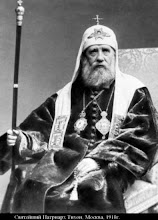
Церковные ВѢХИ

Extra Ecclesiam nulla salus. Outside the Church there is no salvation, because salvation is the Church. For salvation is the revelation of the way for everyone who believes in Christ's name. This revelation is to be found only in the Church. In the Church, as in the Body of Christ, in its theanthropic organism, the mystery of incarnation, the mystery of the "two natures," indissolubly united, is continually accomplished. -Fr. Georges Florovsky

ΟΡΘΟΔΟΞΙΑ Ή ΘΑΝΑΤΟΣ!

ΟΡΘΟΔΟΞΙΑ Ή ΘΑΝΑΤΟΣ!
§ 20. For our faith, brethren, is not of men nor by man, but by revelation of Jesus Christ, which the divine Apostles preached, the holy Ecumenical Councils confirmed, the greatest and wisest teachers of the world handed down in succession, and the shed blood of the holy martyrs ratified. Let us hold fast to the confession which we have received unadulterated from such men, turning away from every novelty as a suggestion of the devil. He that accepts a novelty reproaches with deficiency the preached Orthodox Faith. But that Faith has long ago been sealed in completeness, not to admit of diminution or increase, or any change whatever; and he who dares to do, or advise, or think of such a thing has already denied the faith of Christ, has already of his own accord been struck with an eternal anathema, for blaspheming the Holy Ghost as not having spoken fully in the Scriptures and through the Ecumenical Councils. This fearful anathema, brethren and sons beloved in Christ, we do not pronounce today, but our Savior first pronounced it (Matt. xii. 32): Whosoever speaketh against the Holy Ghost, it shall not be forgiven him, neither in this world, neither in the world to come. St. Paul pronounced the same anathema (Gal. i. 6): I marvel that ye are so soon removed from Him that called you into the grace of Christ, unto another Gospel: which is not another; but there be some that trouble you, and would pervert the Gospel of Christ. But though we, or an angel from heaven, preach any other gospel unto you, than that which we have preached unto you, let him be accursed. This same anathema the Seven Ecumenical Councils and the whole choir of God-serving fathers pronounced. All, therefore, innovating, either by heresy or schism, have voluntarily clothed themselves, according to the Psalm (cix. 18), ("with a curse as with a garment,") whether they be Popes, or Patriarchs, or Clergy, or Laity; nay, if any one, though an angel from heaven, preach any other Gospel unto you than that ye have received, let him be accursed. Thus our wise fathers, obedient to the soul-saving words of St. Paul, were established firm and steadfast in the faith handed down unbrokenly to them, and preserved it unchanged and uncontaminate in the midst of so many heresies, and have delivered it to us pure and undefiled, as it came pure from the mouth of the first servants of the Word. Let us, too, thus wise, transmit it, pure as we have received it, to coming generations, altering nothing, that they may be, as we are, full of confidence, and with nothing to be ashamed of when speaking of the faith of their forefathers. - Encyclical of the Holy Eastern Patriarchs of 1848

За ВѢру Царя И Отечество

За ВѢру Царя И Отечество
«Кто еси мимо грядый о нас невѣдущиiй, Елицы здѣ естесмо положены сущи, Понеже нам страсть и смерть повѣлѣ молчати, Сей камень возопiетъ о насъ ти вѣщати, И за правду и вѣрность къ Монарсѣ нашу Страданiя и смерти испiймо чашу, Злуданьем Мазепы, всевѣчно правы, Посѣченны зоставше топоромъ во главы; Почиваемъ въ семъ мѣстѣ Матери Владычнѣ, Подающiя всѣмъ своимъ рабомъ животь вѣчный. Року 1708, мѣсяца iюля 15 дня, посѣчены средь Обозу войсковаго, за Бѣлою Церковiю на Борщаговцѣ и Ковшевомъ, благородный Василiй Кочубей, судiя генеральный; Iоаннъ Искра, полковникъ полтавскiй. Привезены же тѣла ихъ iюля 17 въ Кiевъ и того жъ дня въ обители святой Печерской на семъ мѣстѣ погребены».
Showing posts with label Podvig. Show all posts

Tuesday, March 23, 2010

JAMAICAN RICE AND PEAS

JAMAICAN RICE AND PEAS

3 c. rice (uncooked)
1 c. dried red kidney beans
1 tbsp. thyme
1 med. size coconut
Salt as per taste
1 clove garlic
2 stalks escallion or leeks
1/4 tsp. black pepper
1 qt. hot water

Grate coconut and using the quart of hot water, express the milk by adding 2 cups of water at a time and squeezing the milk through a strainer or cheesecloth after each addition until the water is finished.
Wash peas and place the dried peas in a saucepan with the coconut milk and add the clove of garlic slightly bruised. Cook until peas are tender but not over cooked.

Add escallion or leeks, thyme, salt, black pepper and rice. Add more water if necessary in order to boil rice properly.

Cook over medium heat, covered, stirring once or twice until rice is well cooked.

Note: A very small bit of salt pork is sometimes added after the rice is boiled, but it is ommitted for fasting purposes. Do not add salt to peas before they are cooked.


http://www.cooks.com/rec/view/0,1942,153175-230203,00.html

НАСКОЛЬКО ПРАВОСЛАВНЫ ПРАВОСЛАВНЫЕ, - МНЕНИЯ СВЯЩЕННОСЛУЖИТЕЛЕЙ

НАСКОЛЬКО ПРАВОСЛАВНЫ ПРАВОСЛАВНЫЕ, - МНЕНИЯ СВЯЩЕННОСЛУЖИТЕЛЕЙ
23.03.2010 12:57


Недавний опрос, проведенный Фондом "Общественное мнение", показал, что Русская Православная Церковь пользуется очень высокой поддержкой населения.

Православными считают себя 72% населения России (это на 12% больше, чем в 2008-2009 гг), хотя полностью воцерковленных (регулярно посещающих храм и причащающихся) - только 4%, и эта цифра в последние годы не менялась. Атеистами себя назвали 11%, мусульманами - 7%, к инославным христианским вероисповеданиям отнесли себя 2% опрошенных.

С утверждением "православие необходимо России", согласны 84% опрошенных, среди них представители разных религий. Согласились с тем, что введение в школах предмета "Основы православной культуры" пойдет на пользу обществу, 62%.

"Соответствуют ли эти данные вашим впечатлениям? Чем вы объясняете такой большой разрыв между числом "номинальных" и воцерковленных православных? Как по-вашему, будет ли он в ближайшие годы сокращаться или расти, и почему?" - с такими вопросами корреспондент REGIONS.RU обратился к священнослужителям.


Протоиерей Валентин Тимаков, заместитель главного редактора Издательства Московской патриархии, счел, что 4% воцерковленных - цифра несколько заниженная.

"Но громадный разрыв между числом номинальных и воцерковленных православных действительно имеет место. И это вполне закономерно. Воцерковление - очень трудный и глубокий процесс. Здесь нужна строгая дисциплина и серьезная внутренняя работа. Многим сейчас это просто не под силу. Но от того, как пойдет этот процесс, во многом зависит будущее всего нашего Отечества", - сказал он.

"При этом само по себе внешнее соблюдение доктринальных нормативов ни к чему не обязывает. Это никак не влияет на качественную перестройку нашего общества. Нужно, чтобы изменения происходили в душах", - отметил протоиерей.

"А судить о перспективах процесса воцерковления пока сложно. Я бы сказал, что пока ситуация достаточно стабильна, и отметил присутствие положительных тенденций, - может быть, и не очень заметное. Многое зависит от самих верующих людей и от отношений Церкви с обществом и государством", - заключил он.


Протоиерей Максим Козлов, настоятель домового храма МГУ, счел данные опроса, по крайней мере, в отношении православных, вполне объективными.

"Действительно, существует очень большая "вилка" между числом людей, идентифицирующих себя с православной традицией - и реально церковных верующих. Хотя мне все же представляется, что в больших городах этот разрыв не столь велик. И сегодня тенденция такова, что чем больше город и чем выше там образовательный ценз, тем выше там процент людей не только декларирующих свое православие, но реально находящихся в Церкви", - отметил он.

"Исходя из этого, можно определить реальную задачу христианского свидетельства нашей Церкви: не столько добираться до удаленных уголков вселенной, сколько шаг за шагом приближать к реальной жизни в Церкви людей, называющих себя православными, но в головах у которых при этом мировоззренческая "каша". Именно сейчас, как мне кажется, эта задача осознана нашим священноначалием. И именно эта задача перевода людей из декларативного православия в православие реальное или будет осуществлена Церковью, или мы так и останемся хоть и более здоровым, но в абсолютных цифрах - меньшинством", - заключил отец Максим.


Протоиерей Александр Лаврин, клирик храма иконы Божией Матери "Живоносный источник" в Царицыне, выразил соменение, что процент атеистов действительно так высок.

"Настоящих атеистов, т.е. людей с четкой и активной позицией, сознательно борющихся с религией, по-моему, не больше каких-то десятых процента. Примерно столько же их было и в годы государственного атеизма. Большая часть опрошенных "атеистов", по-моему, просто религиозно индифферентные люди", - сказал он.

"А в целом данные опроса кажутся мне вполне правдоподобными. Причем большой разрыв между реально верующими и только декларирующими свою веру по соображениям этническим и культурным, существует, по-моему, не только в православии, но и в исламе. Объясняется этот разрыв, как мне кажется, тем, что реальная вера и религиозная жизнь требуют большой самоотдачи и напряжения сил - при том, что эти усилия не направлены на приобретение каких-то материальных благ", - считает священник.

"Резкого взлета религиозного энтузиазма ожидать, наверное, не стоит. Но постепенное увеличение процента по-настоящему верующих, по-моему, уже очевидно. Другое дело, что верующих, ищущих от веры не помощи в житейских обстоятельствах, а личных отношений с Богом, всегда будет очень мало. И даже при общем росте их процент всегда будет очень невысоким", - заключил отец Александр.


Священник Алексий Козливсков, клирик Богоявленского собора в Елохове, также счел данные о четырех процентах воцерковленных православных заниженной.

"Во-первых, методы и техники, используемые в социологических исследованиях, очень субъективны. Во-вторых, по каким критериям определить степень воцерковленности? Это так же непросто, как среди врачей высчитывать процент настоящих профессионалов. Мне известны результаты других социологических опросов, которые показывают, что за последние 20 лет количество воцерковленных людей увеличилось с 3 до 8%, и мне кажется, что в этих цифрах отражается реальная тенденция и перспектива", - сказал он.

"Объяснить же разрыв в количестве номинальных и воцерковленных христиан можно массовой симпатией к нравственной и культурной традиции русского православия, с одной стороны, и трудностью узкого пути воплощения этического и аскетического идеала христианства в жизни конкретного человека, с другой. Будет ли этот разрыв сокращаться или расти, во многом зависит от миссионерской активности Церкви и ее открытости людям, от искренности веры и жертвенности служения священства, и, конечно, от Господа Бога, Который Сам приводит людей к вере, покаянию и спасению", - заключил отец Алексий.


Мухаммедгали-хазрат Хузин, председатель Духовного управления мусульман Пермского края (ДУМ ПК), сказал, что искренне рад тому, что к вере возвращается молодежь.

"Я думаю, любой опрос предоставляет не точные цифры статистики, а некую тенденцию и настроение в обществе, поэтому я бы не стал безоговорочно верить данному опросу. Что касается номинальной принадлежности к религии, то у мусульман раньше никогда такого понятия не было. Ислам определяет все стороны жизни мусульманина - распорядок дня, питание, одежду, семейную жизнь и так далее. У нас даже в советское время соблюдались все традиции. Сегодня же понятие "номинальный мусульманин" имеет место, но все же верующих мусульман больше, чем неверующих", - сказал он.

"Православие же, в отличие от ислама, не определяет все стороны жизни человека, поэтому и номинальных православных больше, чем практикующих", - подчеркнул он.

"Думаю, процент воцерковленных православных будет расти. Насколько я могу судить, сегодня в церквах гораздо больше прихожан, чем "захожан", и очень много молодежи. Я вижу, что не просто так люди носят крестики, а действительно каждые выходные ходят в церкви и молятся. Это не может не радовать", - заключил Мухамметгали-хазрат.


Муфтий Чувашии, первый зампред ЦДУМ России, член ОП РФ Альбир-хазрат Крганов считает, что определить точное количество представителей тех или иных конфессий в нашей стране могла бы лишь перепись населения.

"Такая тема будет актуальна, когда пройдет перепись населения. Только перепись действительно поможет грамотно составить статистику в данной сфере", - выразил он свое убеждение.

"Мы сегодня наблюдаем такую тенденцию: люди с трудом сами решают, верующие они или нет, поэтому сложно оценить, правильные ли в данном опросе результаты. Часто к той или иной религии себя относят просто по национальному признаку. Так, 52 национальности в России считают себя мусульманскими. Не все представители этих национальностей посещают мечети, но все равно они относят себя к мусульманам", - сказал он.

"Не думаю, что верующих и не верующих стоит определять по тому, с какой частотой люди ходят в церковь или в мечеть: все-таки вера - она в душе человека. Но в последнее время люди стали более грамотными в вопросах религии. Поэтому мне кажется, процент практикующих верующих будет расти", - заключил Альбир-хазрат.


Священник Эдуард Шатов, директор центра семьи Римско-Католической Архиепархии Божией Матери в Москве, полагает, что разрыв между числом номинальных и практикующих верующих должен в ближайшие годы сократиться.

"Думаю, что данные ФОМ вполне объективны; они соответствуют тому, что предположил бы я на основе своих наблюдений", - сказал он. "Нужно вспомнить опыт нашей российской истории, который свидетельствует, что христианство в его православной версии выразило ответ на чаяние человека. В "Повести временных лет" послы князя Владимира, побывавшие на православной литургии, говорят ему: "Мы были на небесах, находясь на земле". Это и есть чаяние человека о счастье и блаженстве. С принятием этого ответа, который был дан в христианстве, связанно укоренение и развитие российской истории. А потом произошел разрыв, который не удается преодолеть по сей день. Точно то же самое происходит и в Западной Европе", - подчеркнул отец Эдуард.

"На мой взгляд, процент воцерковленных православных будет расти с каждым годом. Мы уже сейчас видим, что в церкви стало приходить больше молодежи. Думаю, с годами прихожан будет все больше и больше", - подытожил он.


Председатель конгресса еврейских религиозных организаций и объединений в России (КЕРООР) раввин Зиновий Коган надеется, что число воцерковленных россиян возрастет.

"Я соглашусь с данными фонда "Общественное мнения". Уже давно я говорил, что именно Русская Православная Церковь объединяет Россию от Курильских островов до Калининграда. Россия всегда будет верна православию. Как патриот России, я радуюсь ее успехам и всегда выступаю за укрепление нашей державы. Между евреями и русскими много общего. Нас роднит и культура, и язык, и Библия для нас священна", - сказал он.

"Безусловно, русские люди всегда будут воспитывать детей в православной культуре и надеюсь, что процент воцерковленных будет только расти", - подытожил Зиновий Львович.


http://www.regions.ru/news/2278972/

Sunday, March 21, 2010

“Holiness cannot be feigned, one must strive towards holiness.”

We offer our readers an interview held prior to the IV All-Diaspora Council of the Russian Orthodox Church Outside of Russia held in May 2006 in San Francisco, CA. The Council drew up and adopted, among other things, an Epistle to the Flock, which in particular illuminates the spiritual meaning of the process of reestablishing the fullness of brotherly communion within the one Russian Orthodox Church. The First Hierarch of the Russian Orthodox Church Outside of Russia, His Eminence Metropolitan Laurus of Eastern America and New York, in an interview granted to Igor Smykov, Chief of the Military Orthodox Mission who heads social projects for Ekonomicheskije strategii [Economic Strategies] discusses the reasons why during the first years of the Soviet state, a division occurred between the two parts of the Russian Orthodox Church, and gives his opinion on perspectives for dialog between them, explaining the mission of the Russian ecclesiastical emigration.

Your Eminence, in your opinion, how are we to view the relationship between the Orthodox Church and government in Russia today? How does the Russian Orthodox Church Outside of Russia see the political, economic and social processes taking place in Russia today?

The relationship between the Church and state in Russia were very complicated, even tragic, in the 20th century. The Bolsheviks who came to power as a result of the events of 1917 set as their goal the construction of a godless society and the cultivation of the “new man” for this society. The struggle against religion was based not only on their atheist world view, but upon an effort to eliminate a dangerous competitor in the spiritual life of the nation. The situation began to change in the late 1980’s and early 1990’s. The persecution of the Church and of believers ceased, churches and monasteries were being opened and restored and returned to the believers. Religious literature began to be disseminated. The opportunity arose to provide a religious education to children. The state does not now hinder this positive process. The conflict between Church and state has faded into the past. The government does not strive to destroy the Orthodox Church or “ghettoize” it. This is very important. Still, not all problems have been resolved, and Church-state relations in Russia must continue to be resolved and perfected. We find the ideal in this kind of relationship in the preface to the Novella 6 of the Byzantine Emperor Justinian the Great. There it states; “if the priesthood is well ordered in everything and is pleasing to God, and kingdom [the state]… is guiding and taking care of human affairs… then there will be full harmony [symphony] between them in every thing that serves the good and benefit of the human race.” After many long years, when Church-state relations bore an exclusively negative character, the experience of cooperation and joint constructiveness cannot suddenly reappear, and a great deal of work needs to be done in this regard.

The political, economic and social processes under way in Russia are viewed in a variety of ways in the Russian Church Abroad. There are many positive and negative phenomena. The monopoly of the Communist Party has collapsed along with its godless ideology, the Cold War has ended. Russia ceased to be a source of Communist peril to the world, it strives now for cooperation with its surrounding nations. On the other hand, the weakened government has led to nationalistic conflicts on almost all the borders of the former USSR. A series of regional wars has been sparked. The multi-party system has on one hand given the people an opportunity to choose freely and participate in the life of their country, and on the other hand has opened the door to many irresponsible demagogues thirsting for power.

The main negative aspects in the economy are of course high taxes, rampant corruption and crime.

The quality of life of the population and the economic indicators are very modest compared with other countries. According to official, understated statistics, 30% of Russians live below the poverty line, while a small group of the “fortunate,” the “new Russians,” are bathing in luxury. People find it hard to survive, difficult to rear children, provide for their aging parents with the dignity they deserve. Here, abroad, we see how many of the new emigres leave Russia for this very reason. They are spurred to abandon their Fatherland for the sake of stability, a decent life, well being and social justice. Many leave in order to send help to their parents, relatives and children back home. The source of the new wave of emigration is the negative aspects of economic and social life in Russia. The main goal of any government is the well being of its subjects, and not only material but spiritual, too. Yet we are still far away from well being in Russia.

What are the perspectives for dialog between the Moscow Patriarchate and the Russian Orthodox Church Outside of Russia? If possible, please explain to our readers how and why the division arose in the Russian Orthodox Church.

Many think that the reason for the division between the Russian Orthodox Church into the ROCOR and MP was the Civil War. This is untrue. The Russian people, because of the Revolution, found themselves divided. The Russian diaspora emerged, but the Russian Orthodox Church remained one. After the end of the Civil War, the bishops who found themselves abroad commemorated His Holiness Patriarch Tikhon, then his Locum Tenens, Metropolitan Kirill of Krutitsa. The main reason for the division of the Russian Church was actually the Declaration of Metropolitan Serius (Stragorodsky) of 1927. In this document, he recognized the Soviet government as a lawful Russian state which tended to the care of the people, “whose joys are our joys and whose sorrows are our sorrows.” At the same time, in accordance to an agreement he received from the Soviet state, Metropolitan Sergius requested of the clergymen abroad loyalty to the Bolshevik government. Metropolitan Sergius himself could hardly have expected that anyone abroad would heed his ukase. It was obvious that he did this to fulfill the demands of the Soviet government. Naturally, the hierarchs of the Russian Church Abroad, headed by Metropolitan Anthony (Khrapovitsky), staunchly refused to vow fealty to the Soviets, and issued a clear refusal. From that moment, relations between the Russian Orthodox Church Outside of Russia and the Moscow Patriarchate ceased. Yet this did not mean that a separate ecclesiastical organization originated in the Russian diaspora. The Russian Church Abroad always considered itself a part of the Local Russian Orthodox Church. It was in spiritual unity with Metropolitan Peter of Krutitsa, who was suffering in exile in the north. His name was commemorated in all the churches of the Russian emigration, along with the prayer for the suffering nation of Russia and for her deliverance from the bitter persecution from the godless state. For all these years, remaining true to our Fatherland, we did not recognize the state as lawful, for it went against the thousand-year world-view of our people. We went abroad in order not to submit to this government. Another reason which deepened the rift between the two parts of the Russian Church was that the Moscow Patriarchate joined the World Council of Churches in 1961, and participated in the ecumenical movement. The Russian Orthodox Church Outside of Russia condemned as heresy and anathematized the teaching that the Church divided into many branches, each of which allegedly contains a part of the truth.

By the will of God, many Russian people found themselves abroad. What was, and is, the mission of the Russian diaspora?

Yesterday and today and going forward, the main mission of the Russian church emigration is to preserve and expand the unadulterated Orthodox faith and legacy of Holy Russia in the diaspora. The main goal of the Russian Orthodox Church Outside of Russia is the salvation of the souls of its flock. But time, of course, leaves its mark on our work. In earlier years our existence was determined by the need to preserve the free nation of Russia and resist the atheistic Communism which enslaved our Homeland. With the fall of the atheist regime, such resistance lost its purpose. Now there are very many of yesterday’s Soviet people living abroad, people who were born and raised under official atheism. When they travel abroad, they often come to the Church, seeing in it their only connection with their Homeland, a place where they can meet their compatriots, and find solace in a difficult moment. But in religious terms, these people are unlearned. The often don’t know the simplest things. This is taken advantage of right and left by various sectarians, who draw in Russians who have been torn away from their Homeland into their snares. If the previous emigration was mostly church-going, the new emigration must be brought into the church, adults as well as children, and in this area, our Church has a great deal of work to do. It is the Church Abroad specifically that gives the emigres spiritual strength, uniting them, protecting them from fading away and losing the Orthodox faith, and together with the faith, the Russian culture created by Orthodox Christianity. Yet it is not only Russians who comprise our flock. By Divine Providence, being scattered throughout many nations, our Church disseminates Orthodox Christianity among the peoples around us. Work with the newly-converted is another important aspect of the work of the Russian Orthodox Church Outside of Russia. Among our flock, clergymen, the students of Holy Trinity Seminary, are representatives of the widest scope of nationalities who came to Orthodoxy from various heresies and sects. The Lord has given our Church the task of bearing witness of Orthodox Christianity to all the peoples “who know Him not,” and this mission is very important and a great responsibility.

Over the course of decades, the Russian Orthodox Church Outside of Russia refused to have contact with the Orthodox bishops of Moscow, since Metropolitan Sergius issued the declaration you mentioned in 1927 vowing loyalty of the Church to the Soviet state. What obstacles do you now see for the reunification of the two parts of the Russian Church? What is the basic mission of ROCOR in Russia at the present time?

Until recently, there has been a series of obstacles for reconciliation between the Russian Church Abroad and the Moscow Patriarchate. Some of them we already discussed. Matters which divide us have been discussed on the church-commission level. The Synod of Bishops adopted documents on these issues, and they are being passed on for consideration to the forthcoming Council of Bishops.

The main mission of the Russian Church Abroad in Russia today is to familiarize the Russian Orthodox people with the legacy of our Russian diaspora. After the Revolution, eminent theologians, hierarchs, the flowers of Russian culture found themselves abroad. The first Primate of the Russian Orthodox Church Outside of Russia was an eminent theologian, Metropolitan Anthony (Khrapovitsky) of blessed memory. Metropolitan Anastassy and Metropolitan Philaret, his successors, left a series of writings and sermons. Other bright figures in Orthodox theology were Archbishop Nikon (Rklitsky); Protopresbyter Michael Pomazansky; Bishop Mitrophan (Znosko-Borovsky); Bishop Gregory (Grabbe); Archbishop Averky (Taushev); Archimandrite Konstantin (Zaitsev); the historian ND Talberg, Professor Andreevsky and many others. It is enough to say that the most famous Russian textbook “The Law of God” was written by Protopriest Seraphim Slobodskoy, a priest in the town of Nyack, near New York City. Such renowned writers and thinkers as IA Ilyin and IS Shmelev were very close to the Russian Church Abroad. Throughout these years, theological, literary and philosophical thought flourished.

But it is not only acquainting Russians with the emigration’s history that is the purpose of our Church in Russia. The Russian Orthodox Church Outside of Russia always strove to support those forces in Russian society which stand firm in the positions of the Orthodoxy of the Holy Fathers and Russian patriotism. We wish to see the Russian Church preserve the purity and fullness of the Orthodox Christian faith, and to see the Russian state flourish and be strong, as it was under the pious Tsars.

What made the greatest impression upon you during your official visit to Russia?

I have been to Russia several times, unofficially, on a personal basis. The first time was in 1994. I was able to visit the central region of Russia, Moscow and the closest cities, with their holy sites, and also Northwest Russia—Novgorod, Pksov and St Petersburg. After that I visited Russia a few more times, in particular in the North—St Petersburg, Valaam, Solovetsky Monastery and Anzer Island.

During my most recent visit to Moscow, I was amazed by the splendor of Christ the Savior Cathedral, which was already having divine services. But I was especially struck by my visit to Ekaterinburg, to the sites where the Royal prisoners were imprisoned and martyred: Tsar-Martyr Nicholas II, his entire family and servants. The site of Ipatiev House is now the home of the grand Church-on-the-Blood in honor of All Russian Saints and the Royal Family. This is the Russian Golgotha. One can say that the entire land here is bathed in the blood of the Royal Martyrs. We were there in May, during the feast day of St Nicholas the Miracle-worker. Despite the fact that it was during the week, the Cathedral was overflowing with worshipers. There are seven churches on the premises. During Liturgy we were in St Nicholas Church, then we visited Alapaevsk and prayed where Grand Duchess Elizabeth and Nun Varvara and those with them met their martyric death. We were all thankful to the Lord for His great mercy: we were able to visit these holy places and pray there! We were also grateful that there are wonderful churches built on these sites, and that divine services are constantly being celebrated there. Worshipers come from all ends of Russia, and even abroad, year round, to pray here.

We visited Diveevo and the relics of St Seraphim of Sarov. There we prayed as we walked along the canal, we spent the night at Diveevo and went to Liturgy at the cathedral the next day. It was good to see the monastery reborn, it is adorned with renovated churches and new buildings. I was there in 1994 the first time, when the monastery was just handed over to the Church. At the time there were only 107 women living there, who rebuilt it from the ruins. Now there are some 600 monastics there.

Vladyko, Divine Providence holds something for each nation. What is the historical calling of Russia and of the Russian people? Is it possible to reestablish the Third Rome?

The idea of the Third Rome has lived in the mind of the people for many long years: “Two Romes have fallen, a Third stands, a fourth shall not be…” One might say that under the pious Tsar-Martyr Nicholas II, Russia stood as the Third Rome—the spiritual heir and sole protector of Orthodox sovereignties. Still living then were Russians who—from the Royal Court to the furthest hut—confessed Orthodox Christianity, a national Russian Orthodoxy, a patriotic world view. It was the binding force which made the Russian people united in the government and in Orthodoxy, and made Russia the Third Rome. But the tragedy of Russia was that from long ago, even from the 18th century, other, alien tendencies came to rise within the Russian people, foreign to true Orthodoxy, and taken up by atheists and revolutionaries. These dark forces, inimical to Orthodox Russia, seduced and perverted the people, and opened the path towards that horrifying era of atheism and Communism.

Will Russian rise once again as the Third Rome? Another question necessarily lies behind this one—he matter of the “symphony of powers,” of the powers of the state and the spiritual authority of the Church. But when we speak of the spiritual authority of the Church, it is important to understand what the Church represents. The emigre theologian, Protopresbyter Michael Pomazansky, would say: “If people cross themselves, make prostrations, kiss the icons, light candles, take a priest’s blessing, drink holy water, this does not mean that these people are Christians. For pagans, too, when they worship their idols, participate in rituals. A true Christian is one who has made the Gospel Law the main law of his life, who seeks to obtain the grace of the Holy Spirit. Otherwise, these are not Christians.” So it is more correct to call the Church a society of saints. Indeed, the Lord, in the Gospel, and the Apostles in their epistles call Christians “saints”: “Be holy, for I am holy.” One can say that the “symphony of powers” is the symphony of holiness and the state which bows down before holiness and protects her holy Church, and the Tsar, defending the Church, laying down the Royal Purple before Christ.

This is what it was like in newly-baptized Rus. The Illuminator and transformer of Rus’, Holy Prince Vladimir, Equal-to-the-Apostles, was able to transform his state from a pagan one to a Christian one, because he himself venerated holiness, and was able to uproot his own soul and life, “having first of good will subjected the Royal Purple to Christ,” changing from a coarse pagan to a true Christian, combining “piety with power.” The Holy Church calls Holy Prince Vladimir, Equal-to-the-Apostles, “the highest of the Russian princes,” since he was not only the progenitor of all the Russian princes, the rulers of the Russian state, but the first princely saint in a host of such holy Russian princes. Not one nation had so many holy rulers. One can say that in Ancient Rus’, almost everyone who showed himself in the ecclesiastical, political or cultural life of the country, who left a mark on its history, was a saint.

“Piety and power” were united by the son of St Vladimir, Prince Yaroslav the Wise, while Prince Vladimir Monomakh was his worthy great-grandson. It is significant that in the nation’s fables, these two Vladimir—Equal-to-the-Apostles and Monomakh—are united into the image of “Vladimir the Beautiful Sun.” Important, too, is that Elder Filofei of Eleazarov Monastery, who first proposed the concept of the Third Rome said that the idea that “Moscow is the Third Rome” can be manifested only on the condition that the ruler of the Russian land “holds the reins of the holy churches of God… a holy supporter of the Orthodox Christian faith,” that he does not overstep the holy laws laid down by his forefathers, Holy Prince Vladimir and Prince Yaroslav, who was chosen by God.

Many holy men, for instance, Joseph Volotsky, warned that if the Tsar submits to passions and exceeds his authority, then “such a tsar is not a servant of God, but a devil, and is not a tsar, but a tormentor.” Patriarch Nikon, defending the Church from temporal powers, stated outright: “If the Church submits to the powers of the world, it is not a Church but a house of men and a den of thieves.”

What relationship could the Church, which preserves holiness, have with the Satanic, god-battling state? In the 1920’s, all honest bishops and priests loyal to the Church were of one mind in recognizing their pastoral duties and services as preserving the souls of the people, who were being degraded by the incursion of materialism and the theory of class struggle, hatred and vengeance, who saw their duty not in active resistance to the Soviet state, but in passive martyrdom.

In conclusion, I would like to say the following: We must all remember that holiness cannot be feigned, one must strive towards holiness: to constantly follow Christ on the path of the Cross, and in selfless service to God and mankind. Imitating holiness will only lead to hypocrisy, in the words of St Ignatius (Brianchaninov), towards wickedness. It is very important to preserve the legacy of St Seraphim given to the nuns of Diveevo Convent: “Preserve your conscience. The conscience is what is most needed.”Otherwise, a very dangerous situation may arise in Russia: the external imitation of the “symphony” of Holy Russia by the state through deception that “symphony,” concord and mutual understanding have already been achieved. And even interchangeability, if by some circumstances the ecclesiastical and civil leadership changed hands, that no one would notice a difference, because the internal and external clergy meld more and more with the civil authorities. This path is fraught with peril. The true path is that of the Gospel, and that means the narrow path of one’s conscience, of earnestness and honesty.

Moscow-Jordanville, 2006.
Published in Ekonomicheskije strategii [Economic Strategies] magazine, No. 4, 2006.


http://www.russianorthodoxchurch.ws/synod/engdocuments/enart_mlmemory10.html

Слово в Неделю 5-ю Великого поста. О призыве Божием

Слово в Неделю 5-ю Великого поста. О призыве Божием

Св. преп. Мария Египетская
Древний Иерусалим приготовил­ся к великому христианскому празднику Воздвижения Честного Креста Господня. С раннего утра извилистые и узкие улицы напол­нились паломниками, странниками, нищими и множеством наро­да. Вся эта толпа двигалась по направлению к храму Воскресения, постепенно увеличиваясь, нарастая и ширясь по мере приближе­ния к великой церкви, чтобы присутствовать на торжестве Воздви­жения и приложиться к Животворящему Кресту. Ясное небо и яр­кие, жгучие лучи солнца еще больше оживляли и разукрашивали эту картину пестрой толпы, представлявшей смешение всех народ­ностей и возрастов, объединенных молитвенным настроением, чувством благоговения, сильной верой в Спасителя своего, добро­вольно распявшегося за человечество. Кругом храма виднелось це­лое море голов в различных уборах, и только присутствие шала­шей, шатров и палаток, белевших на площади, говорило, что здесь мир насильственно внес с собой житейскую суету и разлад в эти святые, народные чувства. Вблизи шатров двигалась веселая моло­дежь из местных жителей, имея впереди себя простую египтянку необыкновенной, поразительной красоты. Стройная, высокого роста, с шарфом на голове, с чрезвычайно длинными волосами, она привлекала к себе внимание толпы. Хотя ее свободное обраще­ние с молодежью, резкие движения и смелые речи вызывали осуж­дение паломников и богомольцев, но все невольно заглядывались на ее поразительно красивые черты лица.

Когда настал час духовного торжества, врата храма распахну­лись настежь. Весь народ устремился к храму, и египтянка, покоря­ясь общему движению, решилась тоже из любопытства идти туда же. Замотав свой длинный шарф кругом шеи так, чтобы он закрыл лицо наполовину, она вошла в толпу. От множества народа и страшной давки еле можно было дышать в середине толпы, и после многих усилий с большим трудом приблизилась она к вратам хра­мового притвора. Наблюдая отсюда за входящими, она увидела, как народ и справа и слева проникал в притвор, чего ей не удавалось достигнуть. Даже стоявшие с нею рядом подвигались вперед, но она оставалась все на том же месте. Несколько раз она напрягала все свои силы, чтобы приблизиться к входу, но каждый раз толпа отодвигалась напором назад и увлекала ее с собой. Приписывая это своему женскому бессилию, она попробовала присоединиться к другой толпе и, действительно, достигла с нею притвора, но тут по­вторилось то же самое. Из притвора шла лестница кверху, на Голго­фу, и надо было поэтому добраться до двери. Ее нога несколько раз касалась порога храма, но всегда какая-то сила отстраняла ее. Егип­тянка смутилась. Три-четыре раза пробовала продвинуться вперед, но не имела успеха. Наконец, обессилев от давки, в полном изнемо­жении, она отступила и стала в углу притвора, прислонившись к стене. Здесь она очнулась и ясно поняла, что происшедшее не слу­чайность, а какая-то сверхъестественная сила не допустила ее при­близиться к великой святыне. От стыда в ней заговорила совесть, и она сознала свое недостоинство, свою порочность, нечистоту, и в один миг вспомнилась ей вся ее греховная прошлая и настоящая жизнь. Увлеченная своею ужасною страстью, она своевольно поки­нула родителей, предалась разврату и за 17 лет ни разу не вспомни ла о Боге, о своей душе, о будущей жизни. Явилась она в Иерусалим тоже не для поклонения святым местам, а прибыла из Александрии на корабле с паломниками, среди которых было много молодых людей. Ни вид святого храма, ни земля, освященная стопами Хрис­та, ни духовное настроение паломников не остановили ее пред дурными замыслами. Только в эту минуту ее безумие и бесстыдство со всею ясностию раскрылись пред нею.

Потрясенная таким чудом и своим сознанием, она заплакала, за­рыдала, начала бить себя в грудь и от ужаса сделалась как исступлен­ная. Всматриваясь невольно в недоступный для нее путь на Голгофу, она увидела на вышине нескольких ступеней лестницы икону Бого­матери, написанную на стене. Ее открытый, ясный и строгий взор поразил грешницу, а добрая улыбка, сложившаяся в углах рта, дала ей надежду быть услышанной. Она бросилась к иконе, так как народу было уже немного, упала пред Нею на колени и, ломая свои руки от ужаса и отчаяния, воскликнула: «Матерь Божия, Ты все знаешь и все видишь! Я достойна быть отвергнутой и даже казненной! Я бросила родителей, я забыла Бога, я осквернила себя ужасной жизнию, но Христос, Сын Твой, приходил на землю спасти грешников. Ты ви­дишь, я уже наказана, оставлена всеми честными людьми, опозоре­на, обманута и одинока! Спаси меня. Испроси мне повеление войти в храм, чтобы узреть тот Животворящий Крест, на котором распялся и за меня Христос Спаситель! Будь моей Споручницей, не хочу я про­должать мою позорную жизнь, укажи мне путь, чтобы спастись!»

Подкрепленная долгою, искреннею и горячею молитвою, она встала. Вошедший в это время народ, как по чьему-то побуждению, не давая ей уйти назад, присоединил ее к себе и привел на Голгофу. От страха и волнения она еле устояла на ногах, когда увидела во­друженный Честной Крест Господень. Не обращая внимания на тес­ноту и давку, она всем сердцем устремилась ко Христу, Которого мысленно представила себе распятым, с пламенной мольбой о прощении и спасении! Точно по чьему-то дуновению у нее сразу открылись духовные очи, и она начала постигать Тайны Божий. По­няла она ясно, что Сын Божий свидетельствует ей Своими крестны­ми страданиями о том, что она не ошиблась, что Он взял с Собою на Крест все ее грехи, что она уже искуплена и прощена, если только навсегда отречется от прежней жизни и сделается Христовою. Ис­чезнувший в это время из ее сердца страх заменился не только на­деждою на спасение, но и неизъяснимою радостию. Чувство бес­предельной преданности1 и благодарности охватило все ее существо. Она не заметила, как время прошло на молитве, и насту­пила ее очередь приложиться к Святому Кресту. С трепетом упала она пред ним и облобызала его. Но народ, теснившийся в очереди, не дал ей опомниться, и она быстро была опять увлечена в толпу. Почувствовав сразу не только облегчение, но и приток необычай­ной силы, эта грешница поспешила назад, к иконе Богоматери, с благодарственною молитвою за оказанную помощь.

Еще долго молилась она, стоя на коленях пред этой чудотвор­ной иконой Споручницы грешных, и со слезами просила указания, как ей теперь исполнить данный обет. И вдруг она услышала как бы издалека говорящий ей голос: «Если перейдешь чрез Иордан, то найдешь себе полное успокоение!» — «Владычице, не оставь ме­ня!» — воскликнула она в ответ. И, повторяя эту мольбу, она покину­ла притвор. Быстро пошла она по площади, закрыв все лицо своим шарфом и не зная, где, в какой стороне река Иордан. Вдруг кто-то схватил ее за руку и, подавая три монеты, произнес: «Возьми себе!» Она тотчас решила купить себе на эти деньги три хлеба и восполь­зовалась покупкой, чтобы расспросить путь к Иордану. Продавец указал ей городские ворота, которые должны были вывести ее на дорогу. Целый день она шла, то плача, то радуясь, и к закату солнца увидела, наконец, крест храма Иоанна Крестителя, стоявшего на берегу реки. Помолясь в церкви, она пошла умыться в Иордане и за­тем вернулась в храм, чтобы причаститься Святых Тайн. После это­го, утолив голод половиною одного хлеба, она заснула, лежа на го­лой земле. Проснувшись рано утром, она отыскала небольшую лодку и переправилась на другой берег. Ее глазам открылась беско­нечная пустыня! Казалось, что в ней не только нельзя встретить че­ловека, но здесь и зверю нечем питаться. Войдя на возвышенное место, она сняла с головы свой шарф, распустила роскошные воло­сы, которые ниспадали по спине до самых пяток, и, преклонив ко­лена, с поднятыми к небу руками начала слезно молиться Богома­тери. Долго по тихой воде неслись ее воздыхания и вопли:

«Владычице, не оставь меня!» Затем она скрылась от человеческих глаз. Только по прошествии 47 лет старец-инок Зосима однажды встретил ее в пустыне ночью, эту — из великих грешниц — великую праведницу, преподобную Марию Египетскую, и видел своими гла­зами, как она на молитве подымалась на воздух, а потом, через год, как она перешла к нему по Иордану поверх воды, когда он ждал ее на том берегу со Святыми Дарами для ее приобщения.

В пятую Неделю Великого поста Святая Церковь прославляет преподобную и приводит нам на память ее жизнь — в назидание. Ныне есть еще больше людей, которые, пользуясь свободой, свое­вольно и безотчетно, наподобие несчастной Марии, ни перед чем не останавливаются и бесстрашно бросаются на неведомые им волны житейского моря, увлекаемые страстями и мечтами о приво­лье, усладе, беззаботности и славе. О, это предательское, житейское море! Оно обширно, величественно, глубоко, красиво, таинственно и невольно притягивает к себе человеческие сердца. Почти никог­да оно не бывает тихим, покойным, лазурным, а более волнующим­ся и бурным. Непрестанно вздымающиеся волны, как бы преследуя друг друга, борются между собою, шумят, переговариваются, спо­рят и пенятся какою-то злобою и ненавистию. Стремясь разрушить все, что несродственно их стихии, эти волны, приближаясь к бере­гу, к неподвижным камням и скалам, бросаются на них с какою-то яростью и страстностью, но, разбиваясь о них, как о неприступные твердыни, как о несокрушимую вечность, убегают в глубину безза­конного моря, подражая своим шумом, кипением и стоном говору и недовольству несметной человеческой толпы. Люди, отдавшиеся воле этого бушующего житейского моря, обессиленные стихией, невольно вовлекаются в его страсти, вечную борьбу и злобу. Они перестают даже мыслить о том, что противно их пленению, униже­нию и поглощению чувственностью; усыпляются незаметно для се­бя движением и плеском волн и теряют сознание об опасности, близости гибели и неизбежности Суда Божия. Многие спят духовно день и ночь, всю жизнь, от колыбели и до гроба! Не примечают жи­вущие одною чувственностию, как эти волны, поднимая их ради славы и обмана на свои вершины, затем опускают их все ниже и глубже, готовые поглотить, уничтожить, погубить и выбросить как ненужные, опостылые трупы на каменистый дикий берег.

В этом житейском море люди одиноки. И как трудно они при­ходят к сознанию, что есть у них только один искренно любящий, всепрощающий, неизменный и всесильный Покровитель, истин­ный Друг и милосердый Спаситель Христос! Не разумеют они ис­тины, правды Божией и, не будучи в силах преодолеть своего ду­ховного сна, как слепые, не видят Христа, стоящего к ним, грешникам, ближе, чем к праведникам. Христос Спаситель, не на­силуя воли человеческой, но действуя привлекающей Божествен­ной благодатью, будит сонных, спящих духовно, призывает их к восстанию, возрождению покаянием, вразумлению, и именно тог­да, когда люди уже начинают гибнуть в волнах житейского моря. Благодать, как дыханием беспредельной любви, своим живитель­ным теплом согревает захолодевшее сердце человеческое; она не оставляет даже самого последнего из грешников. Нет человека, ду­ховно рожденного Таинствами Церкви, которого бы благодать Бо-жия не призывала видимо, ощутительно к сознанию своей грехов­ности и близости к гибели. Но если даже эти чудесные призывы Божий, сверхъестественные действия Духа благодати, беспредель­ная любовь Христова остаются бессильными и бесплодными для оживления помертвевшего естества человеческого, то что сказать о таких людях, гибнущих в своем непрестанном рассеянии и ожесто­чении? Если пример Марии Египетской может иным казаться ис­ключительным потому, что она в один час пришла в полное созна­ние и перешла из одного мира в другой, из мира мечтаний в мир действительности, то мало ли найдется между нами, живущими на земле теперь людьми, свидетелей тайных и явных призывов Божи-их к покаянию и вразумлению?! Чтобы поведать миру о явных про­явлениях благодати Божией, потребовалось бы написать тысячи книг с изложением не только историй таких людей, как свв. апос­толы, христианские мученики, столпы Церкви, святители и препо­добные, или фараон, Илия, Давид, Саул, блаженный Августин, Константин Великий, жизни которых опять бы признали исключи­тельными, но спасенных сновидениями, всевозможными бедами и опасностями, удивительным стечением обстоятельств, одним ело вом, сказанным вовремя, чтением Священного Писания и в осо­бенности Евангелия, тяжкою болезнию, обмороком или замирани­ем, мыслию о любимой благочестивой матери, таинственным про­буждением во время богослужения, слышанной в Церкви проповедью, взглядом на чудотворную икону, присутствием при смерти близкого или необыкновенного человека, искренней друж­бой, благодатной беседой и прочее. Все люди, уразумевшие призыв Божий и пробудившиеся от духовного сна, подобно дивной Марии, мгновенно переходят из мира мечтаний в мир действительности, и не надо далеко искать их, ибо каждый из нас, глубоко верующий те­перь и преданный Церкви и правде Божией, может поведать сомне­вающемуся в призывах Божиих свою поучительную историю.

«Горе тем, — сказал Христос, — которые не уразумеют время по­сещения Моего!» Не желают они по жестокосердию уразумевать призыв Господень ни из Евангелия, ни из собственного размышля­ющего ума, ни из совести, откуда бы то ни было; призыв к делу Бо-жию, к делу веры и добродетели, к молитве, к укрощению плоти, к отвержению суеты. И голос этот, глубоко проникающий в их серд­це и говорящий, что Христос невидимо мимо идет и взирает на них, они насмешливо принимают за собственную мечту! Горе вели­кое потому, что подобный призыв Божий может больше не повто­риться! Как горько заплакал Христос, говоря Иерусалиму: «О если бы ты хотя в сей твой день узнан, что служит к миру твоему! но это сокрыто ныне от глаз твоих» (Лк. 19,42). Аминь.

Священномученик Серафим (Чичагов)


http://www.pravoslavie.ru/put/1676.htm

Saturday, March 20, 2010

Confession: the Healing Sacrament

Confession: the Healing Sacrament

by Jim Forest


A young monk said to the great ascetic Abba Sisoes: “Abba, what should I do? I fell.” The elder answered: “Get up!” The monk said: “I got up and I fell again!” The elder replied: “Get up again!” But the young monk asked: “For how long should I get up when I fall?” “Until your death,” answered Abba Sisoes. —Sayings of the Desert Fathers

“When I went to my first confession,” a friend told me, “tears took the place of the sins I meant to utter. The priest simply told me that it wasn’t necessary to enumerate everything and that it was just vanity to suppose that our personal sins are worse than everyone else’s. Which, by the way, was something of a relief, since it wasn’t possible for me to remember all the sins of my first thirty-odd years of life. It made me think of the way the father received his prodigal son—he didn’t even let his son finish his carefully rehearsed speech. It’s truly amazing.”

Another friend told me that he was so worried about all he had to confess that he decided to write it down. “So I made a list of my sins and brought it with me. The priest saw the paper in my hand, took it, looked through the list, tore it up, and gave it back to me. Then he said ‘Kneel down,’ and he absolved me. That was my confession, even though I never said a word! But I felt truly my sins had been torn up and that I was free of them.”

The very word confession makes us nervous, touching as it does all that is hidden in ourselves: lies told, injuries caused, things stolen, friends deceived, people betrayed, promises broken, faith denied—these plus all the smaller actions that reveal the beginnings of sins.

Confession is painful, yet a Christian life without confession is impossible.

Confession is a major theme of the Gospels. Even before Christ began His public ministry, we read in Matthew’s Gospel that John required confession of those who came to him for baptism in the River Jordan for a symbolic act of washing away their sins: “And [they] were baptized by [John] in the Jordan, confessing their sins” (Matthew 3:6).

Then there are those amazing words of Christ to Peter: “I will give you the keys of the kingdom of heaven, and whatever you bind on earth will be bound in heaven, and whatever you loose on earth will be loosed in heaven” (Matthew 16:19). The keys of binding and loosing sins were given not only to one apostle but to all Christ’s disciples, and—in a sacramental sense—to any priest who has his bishop’s blessing to hear confessions.

The Gospel author John warns us not to deceive ourselves: “If we say that we have no sin, we deceive ourselves, and the truth is not in us. If we confess our sins, He is faithful and just to forgive us our sins” (1 John 1:8, 9).

The sacrament of baptism, the rite of entrance into the Church, has always been linked with repentance. “Repent, and . . . be baptized in the name of Jesus Christ for the remission of sins,” Saint Peter preached in Jerusalem, “and you shall receive the gift of the Holy Spirit” (Acts 2:38). In the same book we read that “many who had believed came confessing and telling their deeds” (Acts 19:18).

The Prodigal Son
One Gospel story in which we encounter confession is the parable of the Prodigal Son (Luke 15:11–32). Here Christ describes a young man so impatient to come into his inheritance and be independent that, in effect, he says to his father, “As far as I’m concerned, you have already died. Give me now what would have come to me after your funeral. I want nothing more to do with you or with this house.”

With Godlike generosity, the father gives what his son asks, though he knows his son well enough to realize that all the boy receives might as well be burned in a stove. The boy takes his inheritance and leaves, at last free of parents, free of morals and good behavior, free to do as he pleases.

“After wasting his money, he finds himself reduced to feeding the pigs as a farmhand. People he had thought of as friends now sneer. He knows he has renounced the claim to be anyone’s son, yet in his desperation he dares hope his father might at least allow him to return home as a servant. Full of dismay for what he said to his father and what he did with his inheritance, he walks home in his rags, ready to confess his sins, to beg for work and a corner to sleep in. The son cannot imagine the love his father has for him or the fact that, despite all the trouble he caused, he has been desperately missed. Far from being glad to be rid of the boy, the father has gazed day after day in prayer toward the horizon in hope of his son’s return.

“But when he was still a great way off, his father saw him and had compassion, and ran and fell on his neck and kissed him” (v. 20). Had he not been watching, he would not have noticed his child in the distance and realized who it was. Instead of simply standing and waiting for his son to reach the door, he ran to meet him, embracing him, pouring out words of joy and welcome rather than reproof or condemnation.

And the son said to him, ‘Father, I have sinned against heaven and in your sight, and am no longer worthy to be called your son’” (v. 21). Here we have the son’s confession compacted into a single sentence. It is the essence of any confession: our return to our Father, who made us and constantly awaits our homecoming.

What Is Sin?
There are countless essays and books that deal with human failings under various labels without once using the three-letter word sin. Actions traditionally regarded as sinful have instead been seen as natural stages in the process of growing up, a result of bad parenting, a consequence of mental illness, an inevitable response to unjust social conditions, or pathological behavior brought on by addiction.

But what if I am more than a robot programmed by my past or my society or my economic status and actually can take a certain amount of credit—or blame—for my actions and inactions? Have I not done things I am deeply ashamed of, would not do again if I could go back in time, and would prefer no one to know about? What makes me so reluctant to call those actions “sins”? Is the word really out of date? Or is the problem that it has too sharp an edge?

The Hebrew verb chata’, “to sin,” like the Greek word hamartia, simply means straying off the path, getting lost, missing the mark. Sin—going off course—can be intentional or unintentional.

The author of the Book of Proverbs lists seven things God hates: “A proud look, / A lying tongue, / Hands that shed innocent blood, / A heart that devises wicked plans, / Feet that are swift in running to evil, / A false witness who speaks lies, / And one who sows discord among brethren” (6:17–19).

Pride is given first place. “Pride goes before destruction, / And a haughty spirit before a fall” is another insight in the Book of Proverbs (16:18). In the Garden of Eden, Satan seeks to animate pride in his dialogue with Eve. Eat the forbidden fruit, he tells her, and “you will be like God” (Genesis 3:5).

The craving to be ahead of others, to be more valued than others, to be more highly rewarded than others, to be able to keep others in a state of fear, the inability to admit mistakes or apologize—these are among the symptoms of pride. Pride opens the way for countless other sins: deceit, lies, theft, violence, and all those other actions that destroy community with God and with those around us.

Yet we spend a great deal of our lives trying to convince ourselves and others that what we did really wasn’t that bad or could even be seen as almost good, given the circumstances. Even in confession, many people explain what they did rather than simply admit they did things that require forgiveness. “When I recently happened to confess about fifty people in a typical Orthodox parish in Pennsylvania,” Fr. Alexander Schmemann wrote, “not one admitted to having committed any sin whatsoever!”

“We’re capable of doing some rotten things,” the Minnesota storyteller Garrison Keillor notes, “and not all of these things are the result of poor communication. Some are the result of rottenness. People do bad, horrible things. They lie and they cheat and they corrupt the government. They poison the world around us. And when they’re caught they don’t feel remorse—they just go into treatment. They had a nutritional problem or something. They explain what they did—they don’t feel bad about it. There’s no guilt. There’s just psychology.”

For the person who has committed a serious sin, there are two vivid signs—the hope that what one did may never become known, and a gnawing sense of guilt. At least this is the case before the conscience becomes completely numb—which is what happens when patterns of sin become the structure of one’s life to the extent that hell, far from being a possible next-life experience, is where one finds oneself in this life.

It is a striking fact about basic human architecture that we want certain actions to remain secret, not because of modesty, but because there is an unarguable sense of having violated a law more basic than that in any law book—the “law written in [our] hearts” to which St. Paul refers (Romans 2:15). It isn’t simply that we fear punishment. It is that we don’t want to be thought of by others as a person who commits such deeds. One of the main obstacles to going to confession is dismay that someone else will know what I want no one to know.

One of the oddest things about the age we live in is that we are made to feel guilty about feeling guilty. There is a cartoon tacked up in our house in which one prisoner says to another, “Just remember—it’s okay to be guilty, but not okay to feel guilty.”

A sense of guilt—the painful awareness of having committed sins—can be life-renewing. Guilt provides a foothold for contrition, which in turn can motivate confession and repentance. Without guilt, there is no remorse; without remorse, there is no possibility of becoming free of habitual sins.

Yet there are forms of guilt that are dead-end streets. If I feel guilty that I have not managed to become the ideal person I occasionally want to be, or that I imagine others want me to be, that is guilt without a divine reference point. It is simply an irritated me contemplating an irritating me. Christianity is not centered on performance, laws, principles, or the achievement of flawless behavior, but on Christ Himself and on participation in God’s transforming love.

When Christ says, “Therefore you shall be perfect, just as your Father in heaven is perfect” (Matthew 5:48), He’s not speaking of getting a perfect score on a test, but of being whole, being in a state of communion, participating fully in God’s love.

This condition of being is suggested by St. Andrei Rublev’s icon of the Holy Trinity: those three angelic figures silently inclined toward each other around a chalice on a small altar. They symbolize the Holy Trinity: the communion that exists within God—not a closed communion restricted to themselves alone, but an open communion of love, in which we are not only invited but intended to participate.

A blessed guilt is the pain we feel when we realize we have cut ourselves off from that divine communion that irradiates all creation. It is impossible to live in a Godless universe, but easy to be unaware of God’s presence or even to resent it.

It’s a common delusion that one’s sins are private or affect only a few other people. To think our sins, however hidden, don’t affect others is like imagining that a stone thrown into the water won’t generate ripples. As Bishop Kallistos Ware has observed: “There are no entirely private sins. All sins are sins against my neighbor, as well as against God and against myself. Even my most secret thoughts are, in fact, making it more difficult for those around me to follow Christ.”

Far from being hidden, each sin is another crack in the world.

One of the most widely used Orthodox prayers, the Jesus Prayer, is only one sentence long: “Lord Jesus Christ, Son of God, be merciful to me, a sinner!” Short as it is, many people drawn to it are put off by the last two words. Those who teach the prayer are often asked, “But must I call myself a sinner?” In fact, the ending isn’t essential—the only essential word is “Jesus”—but my difficulty in identifying myself as a sinner reveals a lot. What makes me so reluctant to speak of myself in such plain words? Don’t I do a pretty good job of hiding rather than revealing Christ in my life? Am I not a sinner? To admit that I am provides a starting point.

There are only two possible responses to sin: to justify it, or to repent. Between these two, there is no middle ground.

Justification may be verbal, but mainly it takes the form of repetition: I do again and again the same thing as a way of demonstrating to myself and others that it’s not really a sin, but rather something normal or human or necessary or even good. “Commit a sin twice and it will not seem a crime,” notes a Jewish proverb.

Repentance, on the other hand, is the recognition that I cannot live any more as I have been living, because in living that way I wall myself apart from others and from God. Repentance is a change in direction. Repentance is the door of communion. It is also a sine qua non of forgiveness. Absolution is impossible where there is no repentance.

As St. John Chrysostom said sixteen centuries ago in Antioch:

Repentance opens the heavens, takes us to Paradise, overcomes the devil. Have you sinned? Do not despair! If you sin every day, then offer repentance every day! When there are rotten parts in old houses, we replace the parts with new ones, and we do not stop caring for the houses. In the same way, you should reason for yourself: If today you have defiled yourself with sin, immediately cleanse yourself with repentance.

Confession as a Social Action
It is impossible to imagine a healthy marriage or deep friendship without confession and forgiveness. If we have done something that damages a relationship, confession is essential to its restoration. For the sake of that bond, we confess what we’ve done, we apologize, and we promise not to do it again; then we do everything in our power to keep that promise.

In the context of religious life, confession is what we do to safeguard and renew our relationship with God whenever it is damaged. Confession restores our communion with God and with each other.

It is never easy to admit to doing something we regret and are ashamed of, an act we attempted to keep secret or denied doing or tried to blame on someone else, perhaps arguing—to ourselves as much as to others—that it wasn’t actually a sin at all, or wasn’t nearly as bad as some people might claim. In the hard labor of growing up, one of the most agonizing tasks is becoming capable of saying, “I’m sorry.”

Yet we are designed for confession. Secrets in general are hard to keep, but unconfessed sins not only never go away, but have a way of becoming heavier as time passes—the greater the sin, the heavier the burden. Confession is the only solution.

To understand confession in its sacramental sense, one first has to grapple with a few basic questions: Why is the Church involved in forgiving sins? Is priest-witnessed confession really needed? Why confess at all to any human being? In fact, why bother confessing to God, even without a human witness? If God is really all-knowing, then He knows everything about me already. My sins are known before it even crosses my mind to confess them. Why bother telling God what God already knows?

Yes, truly God knows. My confession can never be as complete or revealing as God’s knowledge of me and of all that needs repairing in my life.

A related question we need to consider has to do with our basic design as social beings. Why am I so willing to connect with others in every other area of life, yet not in this? Why is it that I look so hard for excuses, even for theological rationales, not to confess? Why do I try so hard to explain away my sins, until I’ve decided either that they’re not so bad, or even that they might be seen as acts of virtue? Why is it that I find it so easy to commit sins, yet am so reluctant, in the presence of another, to admit to having done so?

We are social beings. The individual as autonomous unit is a delusion. The Marlboro Man—the person without community, parents, spouse, or children—exists only on billboards. The individual is someone who has lost a sense of connection to others or attempts to exist in opposition to others—while the person exists in communion with other persons. At a conference of Orthodox Christians in France a few years ago, in a discussion of the problem of individualism, a theologian confessed, “When I am in my car, I am an individual, but when I get out, I am a person again.”

We are social beings. The language we speak connects us to those around us. The food I eat was grown by others. The skills passed on to me have slowly been developed in the course of hundreds of generations. The air I breathe and the water I drink is not for my exclusive use, but has been in many bodies before mine. The place I live, the tools I use, and the paper I write on were made by many hands. I am not my own doctor or dentist or banker. To the extent that I disconnect myself from others, I am in danger. Alone, I die, and soon. To be in communion with others is life.

Because we are social beings, confession in church does not take the place of confession to those we have sinned against. An essential element of confession is doing all I can to set right what I did wrong. If I stole something, it must be returned or paid for. If I lied to anyone, I must tell that person the truth. If I was angry without good reason, I must apologize. I must seek forgiveness not only from God, but from those whom I have wronged or harmed.

We are also verbal beings. Words provide a way of communicating, not only with others, but even with ourselves. The fact that confession is witnessed forces me to put into words all those ways, minor and major, in which I live as if there were no God and no commandment to love. A thought that is concealed has great power over us.

Confessing sins, or even temptations, makes us better able to resist. The underlying principle is described in one of the collections of sayings of the Desert Fathers:

If impure thoughts trouble you, do not hide them, but tell them at once to your spiritual father and condemn them. The more a person conceals his thoughts, the more they multiply and gain strength. But an evil thought, when revealed, is immediately destroyed. If you hide things, they have great power over you, but if you could only speak of them before God, in the presence of another, then they will often wither away, and lose their power.

Confessing to anyone, even a stranger, renews rather than contracts my humanity, even if all I get in return for my confession is the well-worn remark, “Oh, that’s not so bad. After all, you’re only human.” But if I can confess to anyone anywhere, why confess in church in the presence of a priest? It’s not a small question in societies in which the phrase “institutionalized religion” is so often used, the implicit message being that religious institutions necessarily undermine spiritual life.

Confession is a Christian ritual with a communal character. Confession in the church differs from confession in your living room in the same way that getting married in church differs from simply living together. The communal aspect of the event tends to safeguard it, solidify it, and call everyone to account—those doing the ritual, and those witnessing it.

In the social structure of the Church, a huge network of local communities is held together in unity, each community helping the others and all sharing a common task, while each provides a specific place to recognize and bless the main events in life, from birth to burial. Confession is an essential part of that continuum. My confession is an act of reconnection with God and with all the people and creatures who depend on me and have been harmed by my failings, and from whom I have distanced myself through acts of non-communion. The community is represented by the person hearing my confession, an ordained priest delegated to serve as Christ’s witness, who provides guidance and wisdom that helps each penitent overcome attitudes and habits that take us off course, who declares forgiveness and restores us to communion. In this way our repentance is brought into the community that has been damaged by our sins—a private event in a public context.

“It’s a fact,” writes Fr. Thomas Hopko, rector of St. Vladimir’s Seminary, “that we cannot see the true ugliness and hideousness of our sins until we see them in the mind and heart of the other to whom we have confessed.”

A Communion-Centered Life
Attending the liturgy and receiving Communion on Sundays and principal feast days has always been at the heart of Christian life, the event that gives life a eucharistic dimension and center point. But Communion—receiving Christ into ourselves—can never be routine, never something we deserve, no matter what the condition of our life may be. For example, Christ solemnly warns us against approaching the altar if we are in a state of enmity with anyone. He tells us, “Leave your gift there before the altar, and go your way. First be reconciled to your brother, and then come and offer your gift” (Matthew 5:24). In one of the parables, He describes a person who is ejected from the wedding feast because he isn’t wearing a wedding garment. Tattered clothing is a metaphor for living a life that reduces conscience to rags (Matthew 22:1–14).

Receiving Christ in Communion during the liturgy is the keystone of living in communion—with God, with people, and with creation. Christ teaches us that love of God and love of neighbor sum up the Law. One way of describing a serious sin is to say it is any act which breaks our communion with God and with our neighbor.

It is for this reason that examination of conscience—if necessary, going to confession—is part of preparation for Communion. This is an ongoing proc-ess of trying to see my life and actions with clarity and honesty—to look at myself, my choices, and my direction as known by God. The examination of conscience is an occasion to recall not only any serious sins committed since my last confession, but even the beginnings of sins.

The word conscience derives from a Greek verb meaning “to have common knowledge” or “to know with” someone, a concept that led to the idea of bearing witness concerning someone, especially oneself. Conscience is an inner faculty that guides us in making choices that align us with God’s will, and that accuses us when we break communion with God and with our neighbor. Conscience is a reflection of the divine image at the core of each person. In The Sacred Gift of Life, Fr. John Breck points out that “the education of conscience is acquired in large measure through immersing ourselves in the ascetic tradition of the Church: its life of prayer, sacramental and liturgical celebration, and scripture study. The education of our conscience also depends upon our acquiring wisdom from those who are more advanced than we are in faith, love, and knowledge of God.”

Conscience is God’s whispering voice within us calling us to a way of life that reveals God’s presence and urges us to refuse actions that destroy community and communion.

Key Elements in Confession
Fr. Alexander Schmemann provided this summary of the three key areas of confession:

Relationship to God: Questions on faith itself, possible doubts or deviations, inattention to prayer, neglect of liturgical life, fasting, etc.

Relationship to one’s neighbor: Basic attitudes of selfishness and self-centeredness, indifference to others, lack of attention, interest, love. All acts of actual offense—envy, gossip, cruelty, etc.—must be mentioned and, if needed, their sinfulness shown to the penitent.

Relationship to one’s self: Sins of the flesh with, as their counterpart, the Christian vision of purity and wholesomeness, respect for the body as an icon of Christ, etc. Abuse of one’s life and resources; absence of any real effort to deepen life; abuse of alcohol or other drugs; cheap idea of “fun,” a life centered on amusement, irresponsibility, neglect of family relations, etc.

Tools of Self-Examination
In the struggle to examine conscience, we have tools that can assist us, resources that help both in the formation and the examination of conscience. Among these are the Ten Commandments, the Beatitudes, and various prayers, as well as lists of questions written by experienced confessors. In this small booklet, we will look at only one of these, the Beatitudes, which provide a brief summary of the Gospel. Each Beatitude reveals an aspect of being in union with God.

Blessed are the poor in spirit, for theirs is the kingdom of heaven. Poverty of spirit is my awareness that I need God’s help and mercy more than anything else. It is knowing that I cannot save myself, that neither money nor power will spare me from suffering and death, and that no matter what I achieve and acquire in this life, it will be far less than I want if I let my acquisitive capacity get the upper hand. This is the blessing of knowing that even what I have is not mine. It is living free of the domination of fear. While the exterior forms of poverty vary from person to person and even from year to year in a particular life, depending on one’s vocation and special circumstances, all who live this Beatitude are seeking with heart and soul to live God’s will rather than their own. Christ’s mother is the paradigm of poverty of spirit in her unconditional assent to the will of God: “Let it be to me according to your word” (Luke 1:38). Similarly, at the marriage feast at Cana, she says to those waiting on the tables: “Whatever He says to you, do it” (John 2:5). Whoever lives by these words is poor in spirit.

Questions to consider: We are bombarded by advertisements, constantly reminded of the possibility of having things and of indulging all sorts of curiosities and temptations. The simple goal of poverty of spirit seems more remote than the moons of Neptune. Am I regularly praying that God will give me poverty of spirit? When tempted to buy things I don’t need, do I pray for strength to resist? Do I keep the Church fasts that would help strengthen my capacity to live this Beatitude? Do I really seek to know and embrace God’s will in my life? Am I willing to be seen as odd or stupid by those whose lives are dominated by values that oppose the Beatitudes?

Blessed are those who mourn, for they shall be comforted. Mourning is cut from the same cloth as poverty of spirit. Without poverty of spirit, I am forever on guard to keep what I have for myself, and to keep me for myself, or for that small circle of people whom I regard as mine. A consequence of poverty of spirit is becoming vulnerable to the pain and losses of others, not only those whom I happen to know and care for, but also those who are strangers to me. “When we die,” said Saint John Climacus, the seventh-century abbot of Saint Catherine’s Monastery near Mount Sinai, “we will not be criticized for having failed to work miracles. We will not be accused of having failed to be theologians or contemplatives. But we will certainly have to explain to God why we did not mourn unceasingly.”

Questions to consider: Do I weep with those who weep? Have I mourned those in my own family who have died? Do I open my thoughts and feelings to the suffering and losses of others? Do I try to make space in my mind and heart for the calamities in the lives of others who may be far away and neither speak my language nor share my faith?

Blessed are the meek, for they shall inherit the earth. Meekness is often confused with weakness, yet a meek person is neither spineless nor cowardly. Understood biblically, meekness is making choices and exercising power with a divine rather than social reference point. Meekness is the essential quality of the human being in relationship to God. Without meekness, we cannot align ourselves with God’s will. In place of humility, we prefer pride—pride in who we are, pride in doing as we please, pride in what we’ve achieved, pride in the national or ethnic group to which we happen to belong. Meekness has nothing to do with blind obedience or social conformity. Meek Christians do not allow themselves to be dragged along by the tides of political power. Such rudderless persons have cut themselves off from their own conscience, God’s voice in their hearts, and thrown away their God-given freedom. Meekness is an attribute of following Christ, no matter what risks are involved.

Questions to consider: When I read the Bible or writings of the saints, do I consider the implications for my own life? When I find what I read at odds with the way I live, do I allow the text to challenge me? Do I pray for God’s guidance? Do I seek help with urgent questions in confession? Do I tend to make choices and adopt ideas that will help me fit into the group I want to be part of? Do I fear the criticism or ridicule of others for my efforts to live a Gospel-centered life? Do I listen to others? Do I tell the truth even in difficult circumstances?

Blessed are those who hunger and thirst for righteousness, for they shall be filled. In his teaching about the Last Judgment, Christ speaks of hunger and thirst: “I was hungry and you gave Me food; I was thirsty and you gave Me drink” (Matthew 25:35). Our salvation hinges on our caring for the least person as we would for Christ Himself. To hunger and thirst for something is not a mild desire, but a desperate craving. To hunger and thirst for righteousness means urgently to desire that which is honorable, right, and true. A righteous person is a right-living person, living a moral, blameless life, right with both God and neighbor. A righteous social order would be one in which no one is abandoned or thrown away, in which people live in peace with God, with each other, and with the world God has given us.

Questions to consider: Does it disturb me that I live in a world that in many ways is the opposite of the Kingdom of heaven? When I pray, “Your kingdom come, Your will be done on earth as it is in heaven,” am I praying that my own life might better reflect God’s priorities? Who is “the least” in my day-to-day world? Do I try to see Christ’s face in him or her?

Blessed are the merciful, for they shall obtain mercy. One of the perils of pursuing righteousness is that one can become self-righteous. Thus, the next rung of the ladder of the Beatitudes is the commandment of mercy. This is the quality of self-giving love, of gracious deeds done for those in need. Twice in the Gospels Christ makes His own the words of the Prophet Hosea: “I desire mercy and not sacrifice” (Hosea 6:6; Matthew 9:13; 12:7). We witness mercy in event after event in the New Testament account of Christ’s life—forgiving, healing, freeing, correcting, even repairing the wound of a man injured by Peter in his effort to protect Christ, and promising Paradise to the criminal being crucified next to Him.

Again and again Christ declares that those who seek God’s mercy must pardon others. The principle is included in the only prayer Christ taught His disciples: “Forgive us our debts, as we forgive our debtors” (Matthew 6:12). He calls on His followers to love their enemies and to pray for them. The moral of the parable of the Good Samaritan is that a neighbor is a person who comes to the aid of a stranger in need (Luke 10:29–37). While He denounces hypocrisy and warns the merciless that they are condemning themselves to hell, in no passage in the Gospel do we hear Christ advocating anyone’s death. At the Last Judgment, Christ receives into the Kingdom of heaven those who were merciful. He is Mercy itself.

Questions to consider: When I see a stranger in need, how do I respond? Is Christ’s mercy evident in my life? Am I willing to extend forgiveness to those who seek it? Am I generous in sharing my time and material possessions with those in need? Do I pray for my enemies? Do I try to assist them if they are in need? Have I been an enemy to anyone?

Mercy is more and more absent even in societies with Christian roots. In the United States, the death penalty has been reinstated in the majority of states and has the fervent support of many Christians. Even in the many countries that have abolished executions, the death penalty is often imposed on unborn children—abortion is hardly regarded as a moral issue. Concerning the sick, aged, and severely handicapped, “mercy killing” and “assisted suicide” are now phrases much in use. To what extent have I been influenced by slogans and ideologies that promote death as a solution and disguise killing as mercy? What am I doing to make my society more welcoming, more caring, more life-protecting?

Blessed are the pure in heart, for they shall see God. The brain has come up in the world, while the heart has been demoted. The heart used to be widely recognized as the locus of God’s activity within us, the hub of human identity and conscience, linked with our capacity to love, the core not only of physical but also of spiritual life—the ground zero of the human soul. In our brain-centered society, we ought to be surprised that Christ didn’t say, “Blessed are the brilliant in mind.” Instead, He blessed purity of heart.

The Greek word for purity, katharos, means spotless, stainless; intact, unbroken, perfect; free from adulteration or anything that defiles or corrupts. What, then, is a pure heart? A heart free of possessiveness, a heart capable of mourning, a heart that thirsts for what is right, a merciful heart, a loving heart, a heart not ruled by passions, an undivided heart, a heart aware of the image of God in others, a heart drawn to beauty, a heart conscious of God’s presence in creation. A pure heart is a heart without contempt for others. “A person is truly pure of heart when he considers all human beings as good and no created thing appears impure or defiled to him,” wrote Saint Isaac of Syria.

Opposing purity of heart is lust of any kind—for wealth, for recognition, for power, for vengeance, for sexual exploits—whether indulged through action or imagination. Spiritual virtues that defend the heart are memory, awareness, watchfulness, wakefulness, attention, hope, faith, and love. A rule of prayer in daily life helps heal, guard, and unify the heart. “Always keep your mind collected in your heart,” instructed the great teacher of prayer, Saint Theophan the Recluse. The Jesus Prayer—the prayer of the heart—is part of a tradition of spiritual life that helps move the center of consciousness from the mind to the heart. Purification of the heart is the striving to place under the rule of the heart the mind, which represents the analytic and organizational aspect of consciousness. It is the moment-to-moment prayerful discipline of seeking to be so aware of God’s presence that no space is left in the heart for hatred, greed, lust, or vengeance. Purification of the heart is the lifelong struggle of seeking a more God-centered life, a heart illuminated with the presence of the Holy Trinity.

Questions to consider: Do I take care not to read or look at things that stir up lust? Do I avoid using words that soil my mouth? Am I attentive to beauty in people, nature, and the arts? Am I sarcastic about others? Is a rhythm of prayer part of my daily life? Do I prepare carefully for Communion, never taking it for granted? Do I observe fasting days and seasons? Am I aware of and grateful for God’s gifts?

Blessed are the peacemakers, for they shall be called sons of God. Christ is often called the Prince of Peace. His peace is not a passive condition—He blesses the makers of peace. The peacemaker is a person who helps heal damaged relationships. Throughout the Gospel, we see Christ bestowing peace. In His final discourse before His arrest, He says to the Apostles: “Peace I leave with you, My peace I give to you. . . . Let not your heart be troubled, neither let it be afraid” (John 14:27). After the Resurrection, He greets His followers with the words, “Peace be with you” (John 20:19). He instructs His followers that, on entering a house, their first action should be the blessing, “Peace to this house” (Luke 10:5).

Christ is at His most paradoxical when He says, “Do not think that I came to bring peace on earth. I did not come to bring peace but a sword” (Matthew 10:34; note that a similar passage, Luke 12:51, uses the word “division” rather than “sword”). Those who try to live Christ’s peace may find themselves in trouble, as all those who have died a martyr’s death bear witness. Sadly, for most of us the peace we long for is not the Kingdom of God, but a slightly improved version of the world we already have. We would like to get rid of conflict without eliminating the spiritual and material factors that draw us into conflict. The peacemaker is a person aware that ends never stand apart from means: figs do not grow from thistles; neither is community brought into being by hatred and violence. A peacemaker is aware that all persons, even those who seem to be ruled by evil spirits, are made in the image of God and are capable of change and conversion.

Questions to consider: In my family, in my parish, and among my coworkers, am I guilty of sins which cause or deepen division and conflict? Do I ask forgiveness when I realize I am in the wrong? Or am I always justifying what I do, no matter what pain or harm it causes others? Do I regard it as a waste of time to communicate with opponents? Do I listen with care and respect to those who irritate me? Do I pray for the well-being and salvation of adversaries and enemies? Do I allow what others say or what the press reports to define my attitude toward those whom I have never met? Do I take positive steps to overcome division? Are there people I regard as not bearing God’s image and therefore innately evil?

Blessed are those who are persecuted for righteousness’ sake, for theirs is the kingdom of heaven. Blessed are you when they revile and persecute you, and say all kinds of evil against you falsely for My sake. Rejoice and be exceedingly glad, for great is your reward in heaven, for so they persecuted the prophets who were before you. The last rung is where the Beatitudes reach and pass beyond the Cross. “We must carry Christ’s Cross as a crown of glory,” wrote Saint John Chrysostom in the fourth century, “for it is by it that everything that is achieved among us is gained. . . . Whenever you make the sign of the cross on your body, think of what the Cross means and put aside anger and every other passion. Take courage and be free in the soul.”

In the ancient world, Christians were persecuted chiefly because they were regarded as undermining the social order, even though in most respects they were models of civil obedience and good conduct. But Christians abstained from the cult of the deified emperor, would not sacrifice to gods their neighbors venerated, and were notable for their objection to war or bloodshed in any form. It is easy to imagine that a community that lived by such values, however well-behaved, would be regarded as a threat by the government. “Both the Emperor’s commands and those of others in authority must be obeyed if they are not contrary to the God of heaven,” said Saint Euphemia in the year 303, during the reign of Diocletian. “If they are, they must not only be disobeyed; they must be resisted.” Following torture, Saint Euphemia was killed by a bear—the kind of death endured by thousands of Christians well into the fourth century, though the greatest number of Christian martyrs belongs to the twentieth century. In many countries religious persecution continues.

Questions to consider: Does fear play a bigger role in my life than love? Do I hide my faith or live it in a timid, half-hearted way? When I am ordered to do something that conflicts with Christ’s teaching, whom do I obey? Am I aware of those who are suffering for righteousness’ sake in my own country and elsewhere in the world? Am I praying for them? Am I doing anything to help them?

Finding a Confessor
Just as not every doctor is a good physician, not every priest is a good confessor. Sometimes it happens that a priest, however good his qualities in other respects, is a person not well suited for witnessing confessions. While abusive priests are the exception, their existence must be noted. God has given us freedom and provided each person with a conscience. It is not the role of a priest to take the place of conscience or to become anyone’s drill sergeant. A good confessor will help us become better at hearing the voice of conscience and become more free in an increasingly God-centered life.

Fortunately, good confessors are not hard to find. Usually your confessor is the priest who is closest, sees you most often, knows you and the circumstances of your life best: a priest of your parish. Do not be put off by your awareness of what you perceive as his relative youth, his personal shortcomings, or the probability that he possesses no rare spiritual gifts. Keep in mind that each priest goes to confession himself and may have more to confess than you do. You confess, not to him, but to Christ in his presence. He is the witness of your confession. You do not require and will never find a sinless person to be that witness. (The Orthodox Church tries to make this clear by having the penitent face, not the priest, but an icon of Christ.)

What your confessor says by way of advice can be remarkably insightful, or brusque, or seem to you a cliché and not very relevant, yet almost always there will be something helpful if only you are willing to hear it. Sometimes there is a suggestion or insight that becomes a turning point in your life. If he imposes a penance—normally increased prayer, fasting, and acts of mercy—it should be accepted meekly, unless there is something in the penance which seems to you a violation of your conscience or of the teaching of the Church as you understand it.

Don’t imagine that a priest will respect you less for what you reveal to Christ in his presence, or imagine that he is carefully remembering all your sins. “Even a recently ordained priest will quickly find that he cannot remember 99 percent of what people tell him in confession,” one priest told me. He said it is embarrassing to him that people expect him to remember what they told him in an earlier confession. “When they remind me, then sometimes I remember, but without a reminder, usually my mind is a blank. I let the words I listen to pass through me. Also, so much that I hear in one confession is similar to what I hear in other confessions—the confessions blur together. The only sins I easily remember are my own.”

One priest told me of his difficulties meeting the expectations that sometimes become evident in confession. “I am not a psychologist. I have no special gifts. I am just a fellow sinner trying to stay on the path.”

A Russian priest who is spiritual father to many people once told me about the joy he often feels hearing confessions. “It is not that I am glad anyone has sins to confess, but when you come to confession it means these sins are in your past, not your future. Confession marks a turning point, and I am the lucky one who gets to watch people making that turn!”

Jim Forest is the author of Praying with Icons, Ladder of the Beatitudes, Confession: Doorway to Forgiveness and a forthcoming book—Resurrection—about the Orthodox Church in Albania. He is secretary of the Orthodox Peace Fellowship (www.incommunion.org) and editor of its quarterly journal, In Communion. His home is in Alkmaar, the Netherlands. He and his wife Nancy are members of St. Nicholas of Myra Orthodox Church in Amsterdam.

+++

This article is available as a printed booklet from Conciliar Media, a department of the Antiochian Archdiocese, as part of their popular series of attractive and informative booklets and brochures about the basic teachings of the ancient Orthodox Christian faith. To learn more, visit Conciliar's online booklet catalog. This essay is copyrighted by Conciliar Press.


http://www.antiochian.org/node/16910