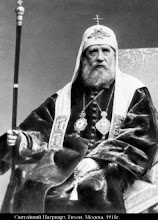
Церковные ВѢХИ

Extra Ecclesiam nulla salus. Outside the Church there is no salvation, because salvation is the Church. For salvation is the revelation of the way for everyone who believes in Christ's name. This revelation is to be found only in the Church. In the Church, as in the Body of Christ, in its theanthropic organism, the mystery of incarnation, the mystery of the "two natures," indissolubly united, is continually accomplished. -Fr. Georges Florovsky

ΟΡΘΟΔΟΞΙΑ Ή ΘΑΝΑΤΟΣ!

ΟΡΘΟΔΟΞΙΑ Ή ΘΑΝΑΤΟΣ!
§ 20. For our faith, brethren, is not of men nor by man, but by revelation of Jesus Christ, which the divine Apostles preached, the holy Ecumenical Councils confirmed, the greatest and wisest teachers of the world handed down in succession, and the shed blood of the holy martyrs ratified. Let us hold fast to the confession which we have received unadulterated from such men, turning away from every novelty as a suggestion of the devil. He that accepts a novelty reproaches with deficiency the preached Orthodox Faith. But that Faith has long ago been sealed in completeness, not to admit of diminution or increase, or any change whatever; and he who dares to do, or advise, or think of such a thing has already denied the faith of Christ, has already of his own accord been struck with an eternal anathema, for blaspheming the Holy Ghost as not having spoken fully in the Scriptures and through the Ecumenical Councils. This fearful anathema, brethren and sons beloved in Christ, we do not pronounce today, but our Savior first pronounced it (Matt. xii. 32): Whosoever speaketh against the Holy Ghost, it shall not be forgiven him, neither in this world, neither in the world to come. St. Paul pronounced the same anathema (Gal. i. 6): I marvel that ye are so soon removed from Him that called you into the grace of Christ, unto another Gospel: which is not another; but there be some that trouble you, and would pervert the Gospel of Christ. But though we, or an angel from heaven, preach any other gospel unto you, than that which we have preached unto you, let him be accursed. This same anathema the Seven Ecumenical Councils and the whole choir of God-serving fathers pronounced. All, therefore, innovating, either by heresy or schism, have voluntarily clothed themselves, according to the Psalm (cix. 18), ("with a curse as with a garment,") whether they be Popes, or Patriarchs, or Clergy, or Laity; nay, if any one, though an angel from heaven, preach any other Gospel unto you than that ye have received, let him be accursed. Thus our wise fathers, obedient to the soul-saving words of St. Paul, were established firm and steadfast in the faith handed down unbrokenly to them, and preserved it unchanged and uncontaminate in the midst of so many heresies, and have delivered it to us pure and undefiled, as it came pure from the mouth of the first servants of the Word. Let us, too, thus wise, transmit it, pure as we have received it, to coming generations, altering nothing, that they may be, as we are, full of confidence, and with nothing to be ashamed of when speaking of the faith of their forefathers. - Encyclical of the Holy Eastern Patriarchs of 1848

За ВѢру Царя И Отечество

За ВѢру Царя И Отечество
«Кто еси мимо грядый о нас невѣдущиiй, Елицы здѣ естесмо положены сущи, Понеже нам страсть и смерть повѣлѣ молчати, Сей камень возопiетъ о насъ ти вѣщати, И за правду и вѣрность къ Монарсѣ нашу Страданiя и смерти испiймо чашу, Злуданьем Мазепы, всевѣчно правы, Посѣченны зоставше топоромъ во главы; Почиваемъ въ семъ мѣстѣ Матери Владычнѣ, Подающiя всѣмъ своимъ рабомъ животь вѣчный. Року 1708, мѣсяца iюля 15 дня, посѣчены средь Обозу войсковаго, за Бѣлою Церковiю на Борщаговцѣ и Ковшевомъ, благородный Василiй Кочубей, судiя генеральный; Iоаннъ Искра, полковникъ полтавскiй. Привезены же тѣла ихъ iюля 17 въ Кiевъ и того жъ дня въ обители святой Печерской на семъ мѣстѣ погребены».
Showing posts with label Fasting. Show all posts

Monday, August 2, 2010

AUSSIE CARROTS, Orzo Stuffed Tomatoes, Stir-fried Spinach

Aussie Carrots

1 pkg. carrots
1 Tsp. curry
2 Tsp. water
1 1/2 tbsp. honey
1/2 tsp. ginger
1/2 tsp. chili powder (Hot)
2 Tsp. minced Garlic
2 finely minced serano peppers


Peel and slice carrots into quarters, 3 inches long.
Place in tin foil with all ingredients.
Wrap tightly and put on grill.
Let cook for 20 minutes.


http://www.cooks.com/rec/doc/0,1850,147178-225201,00.html


Orzo Stuffed Tomatoes

Vegetarian Recipe

Ingredients:
5 tablespoons extra virgin olive oil
8 beefsteak tomatoes
4 ounces orzo
8 black olives, stoned and finely chopped
2 tablespoons finely chopped fresh basil
1 tablespoon finely chopped fresh parsley
2 ounces freshly chopped garlic
Salt and black pepper
Fresh basil sprigs to garnish


Directions:
Brush a baking sheet with olive oil.
Slice the tops off the tomatoes and reserve.
If the tomatoes will not stand cut a thin slice off the bottom. Using a teaspoon, scoop out the tomato pulp into a strainer, but do not pierce the tomato shells. Invert the tomato shells onto kitchen paper, pat dry and then set aside to drain.


Bring a large saucepan of salted water to a boil.
Add the orzo and 1 tablespoon of the remaining olive oil and cook until tender, but still firm to the bite.
Drain the pasta thoroughly and set aside.


Put the olives, chopped basil, parsley and garlic into a large mixing bowl and stir in the drained tomato pulp.
Add the pasta to the bowl.
Stir in the remaining olive oil, mix together well, season to taste with salt and pepper.
Spoon the pasta mixture into the tomato shells and replace the lids.
Arrange the tomatoes on the baking sheet and bake in a preheated oven for 22 minutes.
Remove the tomatoes from the oven and allow to cool until warm.
Arrange on a serving dish and serve with the fresh basil sprigs.


Recipe makes eight servings Pasta Stuffed Tomatoes.


http://www.fitnessandfreebies.com/veg/pastawtomato.html


Stir-fried Spinach

Ingredients:
2 lb. spinach
2 t. salt
1-1/2 t. sugar
5 T. vegetable oil


DIRECTIONS:
Trim and wash the spinach.
Heat oil, put spinach in and stir-fry for 1 minute with high heat.
Add salt and sugar.
Mix well and serve.


http://www.english.china.com/zh_cn/livelife/chineserecipes/chineserecipes080506.htm


Plate, serve, enjoy.

Monday, June 21, 2010

Serbian Vegetarian Stuffed Cabbage Recipe - Posna Sarma

During Orthodox lenten periods, meat and dairy are strictly prohibited. For cabbage lovers, these vegetable sarma or posna sarma (where "posna" means Lenten or fasting) allow one to indulge in a favorite food while still following the Church's strictures.


Makes 6 servings of Vegetarian Stuffed Cabbage - Posna Sarma

Prep Time: 20 minutes
Cook Time: 1 hour
Total Time: 1 hour, 20 minutes


Ingredients:

•1/4 cup vegetable or canola oil
•2 onions, finely chopped
•3 carrots, peeled and finely chopped
•1 rib celery, finely chopped
•3 Cubanelle or sweet peppers, finely chopped
•2 cups long-grain rice, rinsed
•2 tomatoes, peeled and chopped
•Salt and black pepper to taste
•3 cloves garlic, finely chopped
•1 (3- to 4-pound) head cabbage
•1 (32-ounce) jar sauerkraut, rinsed and drained
•1 (8-ounce) can tomato sauce
•1 (10-3/4-ounce) can tomato soup


Preparation:

1.Heat oil in large skillet. Add onion and saute until translucent. Add celery, carrots, peppers and cook for 5 minutes.


2.Add rice, tomatoes, salt and pepper, and simmer for 5 minutes. Set aside to cool and mix in garlic.


3.Meanwhile, steam cabbage until leaves are limp and pull away easily. Continue to remove as many leaves as possible.


4.With a paring knife, remove tough ribs from leaves without damaging leaves. Reserve tougher outer leaves but don't use for rolling.


5.Heap 2 tablespoons vegetable filling on each leaf, fold top of the cabbbage leaf up over filling, then fold sides to the center, and roll away from yourself to encase completely. Repeat until filling is gone.


6.Heat oven to 350 degrees. Discard the cabbage core and coarsely chop any remaining cabbage except the tough outer leaves you have reserved.


7.Spread chopped cabbage on the bottom of a large casserole dish or Dutch oven. Add the sauerkraut.


8.Layer on the cabbage rolls, seam side down. Cover rolls with reserved outer leaves. Mix tomato sauce and soup with enough water to make a liquidy consistency. Pour over rolls until mixture is level with rolls but not over the top.


9.Cover casserole dish and bake 1 hour. Let sit 20 to 30 minutes before serving. Freezes well.

http://easteuropeanfood.about.com/od/maincourses/r/vegsarma.htm

Monday, June 14, 2010

Vegetable Casserole Recipe - Serbian Djuvece


This recipe for Serbian vegetable casserole or djuvece uses summer's bounty -- zucchini, tomatoes, carrots, celery, potatoes, onions and green pepper. The dish is started on the stovetop and then mixed with rice and baked. It makes a great Lenten dish or vegetarian main course.

Garlic isn't traditional, but I like to add it. You will probably need 2 teaspoons of salt because the rice and veggies really need it (Or you may want to try soy sauce or better yet prepare some onion soup mix as your broth and add it where the recipe calls for it), but use at your discretion.


Makes 6 to 8 servings of Serbian Vegetable Casserole - Djuvece

Prep Time: 30 minutes
Cook Time: 60 minutes
Total Time: 90 minutes


Ingredients:

•1/4 cup olive or canola oil or garlic infused oil
•2 large onions
•4 carrots, peeled and sliced 1/4-inch thick
•3 medium potatoes, peeled and sliced 1/4-inch thick (May substitute with cauliflower)
•2 medium zucchini, sliced 1/2-inch thick
•1 large diced green pepper
•3 ribs celery, sliced 1/4-inch thick
•1 bay leaf
•4 large, peeled, seeded and chopped tomatoes or 1 (16-ounce) can stewed tomatoes
•1 cup rinsed and drained long-grain rice
•Salt and pepper
•1 Large Portobello Mushroom sliced (Optional)


Preparation:

1.Heat oven to 375 degrees. In a Dutch oven, saute onion in oil until translucent. Add carrots, potatoes, zucchini, green pepper, celery and bay leaf, and cook 15 minutes, stirring frequently.


2.Add tomatoes, rice and salt and pepper, and stir well. Add enough broth (Vegetable or onion soup) or water to barely cover the vegetables. Place lid on Dutch oven and bake 45 minutes to 1 hour. Remove bay leaf and serve.

http://easteuropeanfood.about.com/od/serbianvegetables/r/djuvece.htm

Monday, June 7, 2010

Potato, Carrot, and Summer Squash Soup


30 minutes to make

Serves 4


Amount Per Serving

Calories: 220.8

Total Fat: 0.5 g

Cholesterol: 0.0 mg

Sodium: 1,358.8 mg

Total Carbs: 46.2 g

Dietary Fiber: 7.6 g

Protein: 6.9 g


Ingredients
--------------------------------------------------------------------------------
1 medium onion, chopped
5 cloves garlic, minced
3 baking potatoes, diced (May substitute with cauliflower)
1 large zucchini, cut into half moons
1 large carrot, sliced into rounds
1 28-ounce can diced tomatoes (Italian seasoned may be used)
4 cups vegetable stock
2 cups water
salt and lots of freshly ground black pepper
1 cup basil leaves, thinly sliced
6 oz curly kale, chopped


How to make it --------------------------------------------------------------------------------

Heat a deep pot over medium-high heat.

Add the onion, garlic, potatoes, zucchini and carrot.

Cook until softened and brown, about 7-8 minutes.

Add tomatoes, stock and water to the pot.

Season with salt and freshly ground black pepper.

Bring the soup up to a boil then turn it down to a simmer.

Cook for 10 minutes.

Add the kale and basil, cover and simmer 5 minutes.

Taste and re-season before serving.


http://www.grouprecipes.com/46293/potato-carrot-and-summer-squash-soup.html

Monday, May 31, 2010

Grilled Eggplant with Balsamic Vinegar

Grilled eggplant with a little balsamic vinegar and herbs and olive oil.


Cook Time: 15 minutes
Total Time: 15 minutes


Ingredients:

•1 large eggplant
•3 tablespoons olive oil
•2 tablespoons balsamic vinegar
•2 cloves garlic, very finely minced
•1 pinch each thyme, basil, dill, and oregano
•salt and freshly grated black pepper


Preparation:

Heat grill.

When grill is hot, slice eggplant about 1/2-inch thick.
In a small bowl, whisk together the olive oil, balsamic vinegar, garlic, herbs, salt, and pepper.
Brush both sides of the eggplant slices with the oil and vinegar mixture.
Place eggplant on the hot preheated grill.
Grill about 15 to 20 minutes, turning once.


http://southernfood.about.com/od/grillfruitveggie/r/bl30627e.htm

Tuesday, March 30, 2010

Mustard Greens

Mustard Greens

Have you ever tried mustard greens? Related to kale, cabbage, and collard greens, they are the peppery leafy greens of the mustard plant and are used frequently in Chinese, Japanese, and Indian cooking. I find them less bitter than kale or collard greens, and more peppery, like arugula. Just one taste of a raw leaf and you'll know it came from a mustard plant. Cooked, they taste a lot like spinach, but with more body. I recently discovered mustard greens at our local farmers market and they're his new love. I like them with a dash of dark sesame oil, but you could easily just cook them up with a little garlic and olive oil.

Mustard Greens Recipe

Ingredients
1/2 cup thinly sliced onions
2 cloves garlic, minced
1 Tbsp olive oil (May be substituted with vinegar or lemon juice.)
1 pound mustard greens, washed and torn into large pieces
2 to 3 Tbsp chicken broth or vegetable broth (vegetarian option)
1/4 teaspoon salt
1/4 teaspoon pepper
1/4 teaspoon dark sesame oil (May be substituted with soy sauce.)
Method
1 In a large sauté pan, sauté onions in olive oil over medium heat until the onions begin to brown and caramelize, about 5 to 10 minutes. Add the minced garlic and cook a minute more, until fragrant.

2 Add the mustard greens and broth and cook until the mustard greens are just barely wilted. Toss with sesame oil. Season with salt and pepper.

Serves 4.

http://simplyrecipes.com/recipes/mustard_greens/

Tuesday, March 16, 2010

On Prayer, Fasting and Bearing the Cross

On Prayer, Fasting and Bearing the Cross
By Archbishop Averky

A life of fasting, properly understood as general self-limitation and abstinence, to the annual practice of which the Church always calls us with the Great Lent, is really that bearing of the cross and self-crucifixion which is required of us by our calling as Christians. And anyone who stubbornly resists this, wanting to live a carefree, happy, and free life, is concerned for sensual pleasures and avoids sorrow and suffering - that person is not, a Christian.

Bearing one's cross is the natural way of every true Christian, without which there is no Christianity.


--------------------------------------------------------------------------------

Sincere prayer unites man and God. But nowhere can prayer be as fervent and effective as in God's temple, for there the Awesome Bloodless sacrifice is constantly offered "for all people and all things," there c ceaseless prayer is made on behalf of all the faithful, there "the very air is Holy," in the words of one of our devoutly wise bishops.

It was not in vain that our God-bearing Fathers from of old called the temple a "school of virtue."


--------------------------------------------------------------------------------

Money! Money! Power! Honor! ? these are the temptations which, unfortunately, many people are unable to resist.

This is the source of all the disputes, disagreements and divisions among Christians.

This is the root of people's forgetting the "one thing needed" which is proposed to us by the true Christian faith and which consists of prayer, acts of repentance, and sincere, unhypocritical charity to our neighbors. The Holy Church always calls us to this, but especially now, during the Great Lent!

What is required of us Christians is not some kind of "exalted politics," not lofty phrases and hazy philosophy, but the most humble prayer of the Publican: "God, be merciful to me, a sinner!", acts of repentance, and doing good to our neighbors, which proceeds from a pure heart.

And it is for the practice of all of this that the Church has established the Great Lent!

How powerfully, colorfully, graphically, and convincingly, with what ardent inspiration is all of this spoken of in the divine services of Great Lent!

No one anywhere has such a wealth of edification in this regard as do we Orthodox in our incomparable Lenten services, which, to their shame, the majority of Orthodox in our times do not know at all.


--------------------------------------------------------------------------------

Truly never before has the cross of each person who wants to be a true Christian been as heavy as in this time of the triumph of falsehood which we are experiencing.

Never before on this earth has there been such a huge number of people who freely and easily, without any shame, without any pangs of conscience "call evil good, and good evil; that put darkness for light, and light for darkness; that put bitter for sweet, and sweet for bitter!" (Isaiah 5:20).


http://www.stjohnthebaptist.org.au/articles/prayer.html

Tuesday, March 9, 2010

Russian Eggplant Spread

Russian Eggplant Spread (Also known as "Ikra," Poor Man's Caviar)

1 eggplant, (about 1 pound)
1 green pepper
1 onion, chopped
2 cloves garlic, finely chopped
1 tablespoon sugar
1 tablespoon lemon juice
1/2 tablespoon salt
1/8 tablespoon pepper
cocktail rye or black bread
1/4 cup tomato paste

Pierce eggplant 3 or 4 times with fork. Wrap green pepper in foil. Place eggplant and green pepper in shallow baking dish. Bake at 400F until eggplant is very soft, about 35 minutes. Cool.

Remove skin from eggplant and seeds from green pepper. Chop eggplant and green pepper. Sauté onion and garlic in water in 10-inch skillet over medium heat until onion is tender. Stir in eggplant, green pepper and remaining ingredients except bread. Heat to boiling. Reduce heat. Simmer, uncovered, stirring occasionally, 5 minutes. Place mixture in blender container. Cover and blend on high speed, stopping blender occasionally to scrape sides, until smooth, about 1 minute. Cover and refrigerate until very cold, at least 4 hours. Serve with bread.


http://www.aubergines.org/recipes.php?eggplant=1897

"Great Lent, Our Exile"

Hieromonk Seraphim (Rose)

"Great Lent, Our Exile"

"By the rivers of Babylon, there we sat down,
yea, we wept, when we remembered Zion."

In these words of the Lenten psalm, we Orthodox Christians, the New Israel, remember that we are in exile. For Orthodox Russians banished from Holy Russia, the psalm has a special meaning; but all Orthodox Christians, too, live in exile in this world, longing to return to our true home, Heaven. For us the Great Fast is a season of exile ordained for us by our Mother, the Church, to keep fresh in us the memory of the Zion from which we have wandered so far. We have deserved our exile and we have great need of it because of our great sinfulness. Only through the chastisement of exile, which we remember in the fasting, prayers, and repentance of this season, do we remain mindful of our Zion.

"If I forget thee, O Jerusalem"

Weak and forgetful, even in the midst of the Great Fast we live as though Jerusalem did not exist for us. We fall in love with the world, our Babylon; we are seduced by the frivolous pastimes of this Тstrange landУ and neglect the services and discipline of the Church which remind us of our true home. Worse yet, we love our very captors - for our sins hold us captive more surely than any human master - and in their service we pass in idleness the precious days of Lent when we should be preparing to meet the rising sun of the New Jerusalem - the Resurrection of our Lord Jesus Christ.

There is still time; we must remember our true home and weep over the sins which have exiled us from it. Let us take to heart the words of St. John of the Ladder: ТExile is separation from everything in order to keep the mind inseparable from God. Exile loves and produces continual weeping.У Exiled from Paradise, we must become exiles from this world if we hope to return. This we may do by spending these days in fasting, prayer, separation from the world, attendance at the services of the Church, in tears of repentance, in preparation for the joyful Feast that is to end this time of exile; and by bearing witness to all in this Тstrange landУ of our remembrance of that even greater Feast that shall be when our Lord returns to take home His people to the New Jerusalem, from which there shall be no more exile, for it is eternal.

Father Seraphim Rose.


http://www.russianorthodoxchurch.ws/synod/engdocuments/enart_archseraphimlent.html

Saturday, March 6, 2010

Spicy Vegetarian Chili

Spicy Vegetarian Chili

Those of you who have been reading Simply Recipes for a while probably sense (rightly) that my father is a committed carnivore. Thus you may appreciate that dad, spending an afternoon making this vegetarian chili with vegetables that he had bought at the farmers market that morning, would only put so much care into a meat-free chili, his dinner, if that chili were darn good. This vegetarian chili is that good. It's excellent. Spicy, flavorful, delicious. Of course my mother did have to convince dad that no, we didn't need steak in addition to the chili, the beans were full of protein. And no, neither did we need potatoes. We served the chili with French bread.


Spicy Vegetarian Chili Recipe
Print OptionsPrint (no photos)Print (with photos)
The level of spiciness will depend on how much chili powder, and how many jalapeños you put in the chili. If you like things on the mild side, start with the smaller amounts of both, and add to taste.

Ingredients
1 1-pound eggplant, cut into 1-inch cubes
Olive oil
2 yellow onions, chopped
3 cloves garlic, minced
2 medium zucchini, chopped
2 large red bell peppers, cored, seeded, diced
1 to 2 jalapeño peppers, seeded, finely minced (Taste and check the heat of the jalapeños. If very hot only use one, if mildly hot, use two. Wash hands with soap and water after handling. Do not rub eyes.)
1 28-ounce can Italian plum tomatoes, coarsely chopped, including liquid (or 2 pounds fresh plum tomatoes, peeled and chopped)
1 Tbsp ground cumin
1-2 Tbsp chili powder
2 Tbsp chopped fresh chopped oregano or 2 teaspoons dried
1 teaspoon fennel seeds
1 1/2 cup cooked white beans (1 15-ounce can, drained and rinsed)
1 1/2 cup cooked kidney beans (1 15-ounce can, drained and rinsed)
Zest of one lemon
3 Tbsp lemon juice
1 teaspoon sugar
1/3 cup chopped fresh cilantro (can sub parsley if you have an aversion to cilantro)
Salt and freshly ground black pepper to taste
Method
1 Preheat oven to 350°F. Scatter eggplant cubes in a shallow roasting pan and slather with 2 tablespoons of olive oil. Cover the pan with aluminum foil and bake for about 30 minutes, stirring once during the cooking. Remove from the oven and set aside.

2 In a large (5-6 quart) thick-bottomed Dutch oven, heat 3 tablespoons of olive oil on medium heat. Add the onions and cook until translucent, about 4 minutes. Add the garlic and cook until fragrant, about a minute more. Add the red bell peppers, zucchini, and jalapeño chili peppers. Cook for about 5 more minutes, stirring occasionally.

3 Add the tomatoes to the pot along with any liquid that may have been in the can (if using canned). Add oregano, cumin, and fennel seeds. Add chili powder to desired heat. Stir in the eggplant cubes (carefully as to not break them up), and simmer for 20 minutes over low heat.

4 Add the white beans and kidney beans, lemon zest, lemon juice, sugar, and chopped cilantro. Add salt and freshly ground pepper to taste. Simmer for 5 minutes.

Serve with sour cream (optional), grated cheddar cheese (optional), and chopped green onions.

Serves 8-10.


http://simplyrecipes.com/recipes/spicy_vegetarian_chili/

Friday, March 5, 2010

Comboschini (The Prayer Rope)

Comboschini (The Prayer Rope)
Meditations of a Monk of the Holy Mountain Athos

Preface
A few years ago, with the blessings of the very reverend Father Joseph, Abbot of the Xiropotamos Monastery of the Holy Mountain Athos, we reprinted, in a booklet, the most didactic article about the prayer rope, which had been published in "Agioritiki Martiria," a magazine issued by the Xiropotamos Monastery.

Due to the fact that the booklet proved very helpful and because of the pastoral needs of all the English speaking Orthodox brothers around the world, it was suggested that we should proceed and publish this booklet in English.

We have to thank the very reverend Father Joseph, Abbot of the Xiropotamos Monastery, for his offer and his love.

The prayer rope is not intended to be used only by monks, but it can also be used by laymen and, generally, by anyone who wants to pray to God. The prayer rope is not some kind of amulet with magic or exorcising powers, like those given to simple-minded people by magicians or mediums, worn on the wrist or round the neck. On the contrary, it is a purely Orthodox holy object used only for praying and nothing else. We use the prayer rope in order to pray secretly.

At this point we have to note something very important: there are many books that refer to the prayer. However, before we start following any rule or prayer, we must necessarily ask for the advice, the blessing and the spiritual guidance of our spiritual father, i.e. the Priest to whom we confess our sins. That is what the Holy Fathers have taught us for centuries, in order to avoid delusion and, thus, not to lose the right Orthodox path.

There are two ways we can pray using the prayer rope:

At any time of the day when we have free time, without being seen by anyone, secretly, we hold the prayer rope with our left or right hand and move from knot to knot with our thumb whispering simultaneously or meditating upon the prayer: "Lord Jesus Christ have mercy on me" or "Most Holy Theotokos save us".
At the time of our regular prayer, when we pray following the rule of prayer that our spiritual father has told us to follow, we hold the prayer rope with our left hand between the thumb and the index finger and move from knot to knot. At each knot we simultaneously do two things: i) with our right hand we make the sign of the cross over ourselves and ii) we say the prayer "Lord Jesus Christ have mercy on me". When we finish with all the knots of the prayer rope, we continue following the same procedure, for as many times as our spiritual father has told us to.
We hope that all our brothers and sisters in Christ will be helped by this little book, which is the result of the experience of an anonymous Monk of the Holy Mountain Athos. We also hope that everyone will use the prayer rope in the way our Holy Fathers have taught us, even if one lives in a society and not in a monastery.

—Thessaloniki, Greece Archimandrite Joseph

+ + +

Let us pause for a moment just to look at a little prayer rope, like this one made of black wool on Mountain Athos. It is a blessing from a holy place. Like so much that we have in the Church, it is a blessing prepared and given to us by a brother or father in Christ, a living witness to living tradition. It is black, the color of mourning and sorrow, and this reminds us to be sober and serious in our lives. We are taught that repentant prayer, especially the Jesus Prayer, can bring us what the Holy Fathers call joy-creating sorrow—in Greek "Harmolipi". We are sorry for our sins and our weakness and failings before God, our fellow men and ourselves; but in Christ, Who pours out His mercy and forgiveness on all who call upon His Name, this sorrow becomes a source of joy and comfort. This prayer rope is knotted from wool, that is, it has been sheared from a sheep, a reminder that we are rational sheep of the Good Shepherd, Christ the Lord, and also a reminder of the Lamb of God Who takes away the sins of the world (see: John 1:29). And the cross likewise speaks to us of the sacrifice and victory of life over death, of humility over pride, of self-sacrifice over selfishness, of light over darkness. And the tassel? Well, you can use it to wipe the tears away from your eyes, or, if you have no tears, to remind you to weep because you cannot weep.

Besides, from the Old Testament times, little tassels have been a decoration for sacred vestments, a reminder of the sacred tradition in which we participate when we use the prayer rope.

Prayer ropes are made in keeping with a tradition whose origin is lost in antiquity. Perhaps one of the earliest forms was simply gathering small pebbles or seeds and moving them from one spot or container to another as one said his prayer rule or did his rule of bows or prostrations. The story is told of a monk who decided to make knots in a rope, which he could use in carrying out his daily rule of prayer. But the devil kept untying the knots he made in the rope, frustrating the poor monk's efforts. Then an angel appeared and taught the monk a special kind of knot that consists of ties of interlocked crosses, and these knots the devil was unable to unravel.

Prayer ropes come in a great variety of forms and sizes. Most prayer ropes have a cross woven into them or attached to mark the "end", and also have some kind of marker after each 10, 25, or 50 knots or beads. There are many forms of prayer ropes, some knotted of wool or silk, or other more elegant or simpler materials. Others are made of beads or the dried flower of a plant called "Tears of the Mother of God".

The prayer rope is one of the items given to an Orthodox Christian monk at the time of tonsure: it is given to him as his spiritual sword with which he, as a soldier of Christ, must make war against our spiritual enemy, the devil. This sword is wielded by calling on the name of our Lord and God and Savior Jesus Christ in a plea for mercy on me a sinner. This prayer can be said in a shorter form, such as: "Lord Jesus Christ have mercy on me"; or in a longer form, as: "By the prayers of the Most Holy Theotokos and all the Saints, Lord Jesus Christ have mercy on me".

Other short prayers: the prayer of the publican: "God be merciful to me a sinner" (see: Luke 18:13), the prayer to the Mother of God: "Most Holy Theotokos save us", or other short prayers to the Guardian Angel, to individual saints or to all the saints can also be offered with the assistance of the prayer rope. A common form of such a prayer is: Holy Guardian Angel—or Saint (name)—pray to God for me. By changing the words of these short prayers and saying: "have mercy on us", or "pray for us", or by including the name or names of persons we want to pray for, we can also use the prayer rope for intercessory prayers. This also applies to those already departed this life: "Give rest O Lord to the soul of Thy servant."

When monks carry the prayer rope in their hands, it serves as a reminder of their obligation to pray unceasingly. In keeping with the commandment of the Holy Apostle Paul to "pray without ceasing". Anyone can keep a prayer rope in a pocket or some other discreet place where it can be easily used unnoticed when in situations where it is better to pray or remember prayer in secret, without attracting the attention of others. The prayer rope can also be placed over the head of our bed, in an automobile, with a small cross or icon, or in other appropriate places as a reminder of prayer and a kind of blessing and a holy and godly presence in our lives.

But now, let us discuss briefly the primary use for which this prayer rope was made. The whole purpose of the prayer rope is to assist us in offering our prayers before God and His Saints. In addition to serving as an external reminder and a blessing present with us, how can this little rope help us to pray? We can pray without a prayer rope, of course, and there are times when using the prayer rope may become a distraction for us in our attempts to concentrate in prayer. With that in mind, let us consider some ways in which the prayer rope can be of assistance.

There are times when our prayer is fervent and it is easy for us to pray. There are times when our thoughts are so distracted that we find it virtually impossible to concentrate on prayer. This is especially true when we try to keep a rule of prayer each day. Some days it goes very well, but other times—if not most of the time?—our efforts seem almost to be in vain. But because we are "creatures of habit", as the saying goes, it is very profitable for us to set apart a special and regular time (or times) during the day for prayer. The time in the evening before going to bed is a good time, as it is important to end the day with prayer. The morning, upon awakening from sleep, is also good, so as to begin the new day with prayer. Or a person may find other times during the day when he is able to be quiet and concentrate.

We are trying to establish a rule of prayer in our lives, not an exception, so we want to find a time when each day we can find some quiet in order to concentrate and turn the eyes of our soul towards God.

We may want to read some prayers form a prayer book as part of this rule, or offer prayers and find quiet for our souls in other ways, such as reading religious literature, reflecting over the events of the past day—"Anaskopisis" [1]—and so on. But one of the most effective ways to find benefit from a rule of prayer is to say a set number of the Jesus Prayer regularly each day. This does not have to be a large number, and it may take only fifteen minutes or so, but that will be the portion of our day that belongs to God, the little grains of salt that will add savor to our Christian life. This practice is now recommended by many physicians for the sake of a person's physical health, especially in overcoming stress. Better still, find such little pocket of time at various points throughout the day and regularly fill them with the precious treasures of prayer, a treasure no one can steal from you, that is laid up for you in heaven (see: Mat. 6:20).

In maintaining a consistent number of prayers as part of such a daily rule, a prayer rope can be quite helpful. With the prayer rope, you can offer a set number of prayers and concentrate on the words of the prayer as you offer them. After collecting your thoughts, take the cross on the prayer rope in your left hand, holding it lightly between the thumb and the index finger. Then, making the sign of the cross over yourself quietly, whisper the Jesus Prayer. As your thoughts become more concentrated, you may not need to continue crossing yourself or saying the prayer audibly. Other times, when concentration is difficult, use the sign of the cross and whispering as means to help keep your mind on prayer.

It is good to stand, with head bowed, in a humble position; some people like to raise their hands from time to time in their petitions for mercy. But others find it more helpful to sit or kneel, with head bowed, in order to concentrate. A lot depends on the individual and also on his health and upbringing. The important thing is to be able to keep still and concentrate on the words of the prayer as you repeat it.

Of course, a person has to fight off the temptation to "rush". For this reason, some people use a clock instead of a prayer rope as an external measure for their prayer rule. By using a clock, a person can devote a set amount of time to prayer, although he may not keep track of the exact number of prayer he says. But, then again, clocks with electronic beeps are quite a recent development, and keeping a loudly ticking clock that jangles the nerves with a loud alarm bell seldom proves to be a great boon to prayer. So much for traditional use of digital alarm clocks!

The prayer rope is also a convenient way to keep track of the number of bows or prostrations a person makes during his prayer rule. Making the sign of the cross over oneself and then bowing from the waist and touching the ground with one's fingertips, or bowing down on one's knees and touching the forehead to the ground are very ancient ways of offering prayers to God and His Saints. One can combine these bows or prostrations with the Jesus Prayer or any of the short prayers we have mentioned above. The physical action of bowing or kneeling can contribute to the fervor of the prayer and give expression to our supplication, as we humble ourselves before God. This is one way in, which we can carry out the apostolic command to praise God both in our souls and in our bodies. [2] Many people use the prayer rope when they lie down to sleep. After signing their bed with the cross, they take their prayer rope, bless themselves with the sign of the cross as they lie in bed, and quietly pray with the prayer rope until they fall asleep.

And waking up with the prayer rope still in your fingers or next to you on the pillow helps begin the new day with prayer. But ending the previous day with quiet prayer is an even better way to prepare for a prayerful beginning of the new day, not to mention preparing for the Eternal Day should we fall asleep that night in death. And others take their prayer rope in hand during idle moments, such as while commuting or traveling. At any time of the day, whenever you remember to do so, you can take a little prayer rope in your fingers, and the association of that action with the prayer you offer at other times will help you concentrate and offer some prayers during the course of the day whenever you may be, whatever you may be doing. And this is an important step towards fulfilling the commandment to pray without ceasing.

The holy bishop Ignaty Brianchaninov mentions that the lengthy services held in the Orthodox Church are also a good opportunity for praying with the prayer rope. Often there are times when it is difficult to concentrate on the words being read or chanted, and it is easier to concentrate quietly on one's own private prayers, be they extemporaneous prayers for some special need, repeating prayers or psalms that we know by heart, or repeating some short prayer, especially the Jesus Prayer, with the assistance of the prayer rope. In fact, this often helps a person concentrate better on the service itself, something mentioned by St. Seraphim of Sarov. Of course, when we are praying at the services, our prayer is joined to that of the entire Church.

We are constantly occupied by all kinds of thoughts that appear in our heads, and it seems we no sooner start to pray than we catch ourselves thinking about something else. Here again, the physical presence of the prayer rope in our fingers can help us catch ourselves and return to our task of prayer more quickly. Or, meeting up with one of the markers or with the cross on the prayer rope as we move it through our fingers remind us that we have been robbed of the prayers we intended to offer. And immediately we can offer our prayers anew without getting further entangled in our thoughts about how easily we get distracted from prayer to God.

Here we have touched on the great science of prayer, what the holy fathers have named the "art of the arts". There is a great and rich literature written by the great men of prayer from all ages that can help guide us in learning, with God's help, this greatest and most beneficial of all sciences. Regular reading the Holy Gospel, the lives of the saints and other devotional and spiritual literature can be

of great assistance. Such works as the Philokalia contain important and inspiring instruction and direction in learning to pray as a Christian, which is an essential aspect of being a Christian. Above all, however, one needs the grace of God in the Church, especially in communing the Holy Mysteries.

These are just a few introductory thoughts on how we can make good uses of a prayer rope. But the important thing is to start to pray. The prayer rope does not pray by itself, although some of them are so magnificent they may give that impression. Here is an important, traditional aid in offering prayers, and especially for a daily rule of prayer. But the important thing is to concentrate on words of the prayer, to offer heart-felt prayers to Jesus Christ, our Lord and God.

If this little prayer rope helps you to say a prayer or reminds you to pray or helps you in some way to become more prayerful, it will have fulfilled its purpose, it will have tied you more closely and more intimately with Christ our God, and also brought you closer to the Kingdom of God, for "the Kingdom of God is within you." (See: Luke 17:21)

Epilogue
We have to note, once more, that regarding any prayer rule about praying with the prayer rope or any other rule (fasting etc.), the first and the last word has to be said by our spiritual father, in order to avoid delusion, as the Holy Fathers have taught us.

+ + +


Some quotes on the Prayer "Lord Jesus Christ have mercy on me" from our Holy Fathers
In the First Epistle to the Thessalonians the Apostle Paul says: "Pray without ceasing".

St. John Chrysostom in his speech about sobriety and prayer, says the following: "Brothers, be always occupied with the intellectual prayer and do not move far away from God until you receive God's mercy and pity. Never ask for anything but for His infinite mercy and this is enough for your salvation. When asking for His mercy, cry aloud in entreaty with humble and contrite heart form morning to night and, if possible, during the whole night, saying unceasingly: Lord Jesus Christ, Son of God, have mercy on us".

St John Climacus says the following: "Win the enemies in jour mind with the name of God. You will not find any other weapon more effective than this! Similarly you will manage both to appease your passions inside yourself and to efface them with the aid of the prayer".

St. Seraphim of Sarov says: "When mind and heart are united in prayer and the soul is wholly concentrated in a single desire for God, then the heart grows warm and the light of Christ begins to shine and fills the inward man with peace and joy. We should thank the Lord for everything and give ourselves up to His will; we should also offer Him all our thoughts and words, and strive to make everything serve only His good pleasure."

St. Isichios writes about the prayer: "Through the constant remembrance and invocation to Jesus Christ, a holy condition is created in our mind. This happens, if we appeal to Jesus Christ with fervor, crying aloud towards Him in entreaty day and night, so that repetition leads to habit and habit becomes second nature!".

Saint Hieromartyr Cosmas Aetolos (+1779) says: "I advise you to make a Comboschini, all of you, young and old, and hold it in your left hand and cross yourselves with your right hand and say: Lord Jesus Christ have mercy on me'".... "I advise all Christians to make Crosses and Comboschinis and I pray to God to bless them, so they can keep them as amulets".

Endnotes
Anaskopisis: in the Fatherly sense of examination, of checking up on ourselves, in order to feel remorse for our sins and become better but also recognize the beneficence of God.
I Corinth. 6:20: you must praise God with your bodies and your souls, which belong to God".
This has been the complete text of the booklet Comboschini (The Prayer Rope): Meditations of a Monk of the Holy Mountain Athos. Published with the blessing of Abbot Paisios, St. Anthony's Monastery, Florence, AZ. Posted 8/21/2005.


http://www.orthodoxinfo.com/praxis/comboschini.aspx