
Tsar-Martyr
Nicholas II
by R. Monk Zachariah (Liebmann)
Contents: Introduction. Birth and early life. The death of Tsar Alexander III, the marriage of Nicholas and his coronation. The reign of Tsar Nicholas. Abdication and imprisonment. Martyrdom.
Miracles of the Royal Martyrs: Introduction. Novice Olga’s prophetic dream. The faith of the Tsar-martyr. An Eldress’ prophecy. Elder Anatole the Younger (Potapov) of Optina. Vision of St. Seraphim. The intercessory prayers of the New Martyrs. Rescue from the Red Army. Help in school examinations. Conversion of an atheist. A Bishop’s deliverance. The softening of hard hearts. A healing from Grand Duchess Maria. Heavenly hymns in the Ipatiev House. Sign over the Ipatiev House. Miraculous manifestations in Moscow. The Dream of Metropolitan Makary.
Some recent miracles. Glorification New Martyrs and Confessors August 2000 in Moscow. The Akathist miracle. Selected bibliography.
Introduction.
Few figures in history have been so misunderstood and maligned as the Tsar-Martyr Nicholas II, the last emperor of Orthodox Holy Russia. The modern "Western" mind tends to view history in a strictly political way. But with an Orthodox world view, history must be seen as the unfolding of the story of man’s redemption through the incarnation of our Lord Jesus Christ, His death on the cross for our sakes, and His Holy Resurrection. The rising and falling of nations, the development of culture — in short, all of history — can only be correctly analyzed in this context. With the murder of Tsar Nicholas, the Byzantine form of government, which places Christ at its head, ended, ushering in the present age of lawlessness, apostasy and confusion. His was a government in the tradition begun sixteen centuries earlier by St. Constantine the Great. That such an unthinkable tragedy as the Russian Revolution could take place attests to the truth of the scriptural warning that "Because iniquity shall abound, the love of many shall wax cold" (Matt. 24:12). This pious Christian emperor was surrounded by people, even among his own relatives, whose self-centeredness and petty worldliness had obscured the love of God in their hearts to the point that they failed to unite around their sovereign in his time of need. They thereby cleared the way for the revolutionary element — the enemies of God — to despoil the Holy Russian Empire and place instead a satanocracy whose aim was the annihilation of the remembrance of God from the face of the earth.
Much has been written through the years about the tragedy of the Royal Martyrs — some well-meaning, some disappointingly critical, some outright slanderous — but almost none from the viewpoint of the Orthodox Christian "measuring stick." We are presenting this short Life in an attempt to provide that viewpoint, and to encourage Orthodox believers to turn to Tsar-Martyr Nicholas and his family in prayer for their intercession before the throne of God.
Birth and early life.
Tsar-Martyr Nicholas was born in 1868 in St. Petersburg on May 6, the day upon which the Holy Church celebrates the memory of St. Job the Long-Suffering. And how prophetic this turned out to be, for Nicholas was destined to follow the example of this great Old Testament Saint both in circumstance and in faith. Just as the Lord allowed the Patriarch Job to suffer many things, trying him in the fire of calamity to test his faith, so was Nicholas tried and tempted, but he too never yielded and remained above all a man of God. His parents were the then-Tsarevich (heir) Alexander Alexandrovich and Grand Duchess Marie Fyodorovna. They were a good strong couple whose relationship was without quarreling or dissension.
Alexander was a firm and uncomplicated man who feared God and became one of Russia’s great Tsars, though his reign was short (1881-1894). Nicholas’ mother, formerly Princess Dagmar of Denmark, was a loving and supportive wife, and a mother who accepted her adopted faith, Holy Orthodoxy, into her soul and along with Alexander transmitted it to her children, building their house upon a rock. "And when the flood arose, the stream beat vehemently upon that house, and could not shake it: for it was founded upon a rock" (Luke 6:48).
On March 13, 1881, when Nicholas was not yet thirteen years of age, a tragic event occurred which shook the sensitive soul of the youth. This was the assassination of his beloved grandfather, Emperor Alexander II, the "Tsar-Liberator," who was responsible for freeing the serfs in Russia. On a Petersburg street, in broad daylight, a bomb was thrown which injured some of the guards but left the Tsar unhurt. With disregard for personal safety, he left his carriage and was attending to the injured when a second bomb was thrown, fatally wounding him and many others. He was rushed to the Winter Palace where he died in the presence of his grief-stricken family. Later, on the spot of the murder, there was built a magnificent church, Christ the Savior "Upon the Blood."
The activity of hateful revolutionaries was to plague Nicholas and his family throughout their lives. In 1888, while Tsar Alexander III and his family were traveling towards Kharkov, the imperial train was rocked by two explosions and derailed. Only the level-headedness and great physical strength of the Tsar kept the Royal Family from being killed.
Despite such difficult circumstances, Nicholas, now the Tsarevich, was being formed in all the Christian virtues. During his youth his kindness to others and selflessness impressed all who met him. While living frugally himself, he gave freely to those less fortunate. It is known that he often anonymously gave scholarships and other gifts through the agency of one of his childhood teachers.
The Tsarevich, at a young age, entered into military service, which formed him in manhood through discipline and responsibility. It was during this period, on a visit to Japan, that he was attacked by a Japanese policeman with a sword and injured. As the heir of the Russian throne, he could have easily had the policeman punished severely. But he chose instead to ignore the incident, preferring to turn the other cheek and forgive. This wound, to his head, was to cause occasional pain throughout the rest of his life. Concerning his time of formation it can be said, as was said of our Lord whom the young Nicholas strove to imitate, that he "increased in wisdom and stature, and in favor with God and man" (Luke 2:52).
The death of Tsar Alexander III,
the marriage of Nicholas and his coronation.
By 1894 the health of Nicholas’ father, Tsar Alexander, began to fail; and on October 20 he reposed under the loving hand of his confessor, St. John of Kronstadt. By this time Nicholas was already engaged to Princess Alix of Hesse (Germany); and they were married less than a month after Alexander’s repose. The Princess had been born and raised as a Lutheran and was very devoted to her faith, but she needed to convert to Orthodoxy in order to become Empress of the Russian nation. Being a highly principled woman, she did not take this as a light matter and at first resisted. But God in His loving kindness did not abandon her; and soon, after a number of meetings with an Orthodox Archpriest who expounded to her the Faith, she gladly accepted chrismation. Her conversion was anything but nominal. The depth of her embrace of Orthodoxy and the strength which it gave to her family was to be a spiritual reproach to the modern Russian nobility and to the "intelligentsia" who, listening to the spirit of Antichrist, had gradually become ashamed of their faith, considering it something "outdated."
The official coronation took place in May of 1896. The young Tsar and Tsaritsa spent the majority of their time in seclusion and intense prayer, preparing themselves for the awesome responsibility of governing, with God’s help, the largest nation in the world, which was the protector of the Orthodox Faith. The coronation of a tsar is no mere secular affair of state. As Bishop Nektary Kontzevitch has written, "The Tsar was and is anointed by God. This mystery is performed by the Church during the coronation, and the Anointed of God enters the Royal Doors into the altar, goes to the altar table and receives the Holy Mysteries as does the priest, with the Body and Blood taken separately. Thus the Holy Church emphasizes the great spiritual significance of the ‘podvig’ (struggle) of ruling as a monarch, equaling this to the holy sacrament of the priesthood.... He (the Tsar) is the sacramental image, the carrier of the special power of the Grace of, the Holy Spirit" (Bishop Nektary Kontzevich, "The Mystical Meaning of the Tsar’s Martyrdom," The Orthodox Word, Vol. 24, Nos. 5 & 6, p. 327).
As Tsar Nicholas was crowned, he knelt and prayed aloud, "Lord God of our fathers, and King of Kings, Who created all things by Thy word, and by Thy wisdom has made man, that he should walk uprightly and rule righteously over Thy world; Thou hast chosen me as Tsar and judge over Thy people. I acknowledge Thine unsearchable purpose towards me, and bow in thankfulness before Thy Majesty. Do Thou, my Lord and Governor, fit me for the work to which Thou hast sent me; teach me and guide me in this great service. May there be with me the wisdom which belongs to Thy throne; send it from Thy Holy Heaven, that I may know what is well-pleasing in Thy sight, and what is right according to Thy commandment. May my heart be in Thine hand, to accomplish all that is to the profit of the people committed to my charge, and to Thy glory, that so in the day of Thy Judgment I may give Thee account of my stewardship without blame; through the grace and mercy of Thy Son, Who was once crucified for us, to Whom be all honor and glory with Thee and the Holy Spirit, the Giver of Life, for ever and ever. Amen."
So it was that the new Tsar in all things placed God first, and therein was his treasure laid, "Where neither moth nor rust doth corrupt, and where thieves do not break through nor steal" (Matt. 6:20).
The reign of Tsar Nicholas.
The Royal couple settled into their life of responsibility and took the lead in setting an example of godliness and true pastoral care for their enormous flock. Nowhere was this more evident than in their love and care for the Holy Orthodox Church. They gave much money and support to monasteries and to the building of churches. The Tsar considered it his sacred duty to restore to Russia her ancient traditional culture, which had been abandoned by many of the "educated" class in favor of modern, Western styles. He encouraged the building of churches in the ancient architectural styles, rather than in the styles favored since the disastrous "reforms" of Tsar Peter I and Empress Catherine II. He commissioned the painting of large numbers of icons in the Byzantine and Old Russian styles, adorning many churches with them. In the words of Archpriest Michael Polsky:
in the person of the Emperor Nicholas II the believers had the best and most worthy representative of the Church, truly "The Most Devout" as he was referred to in church services. He was a true patron of the Church, and a solicitor of all its blessings.
During the reign of Nicholas II, the Church reached its fullest development and power. The number of churches increased by more than 10,000. There were 57,000 churches by the end of the period. The number of monasteries increased by 250, bringing their total up to 1025. Ancient churches were renovated. The Emperor himself took part in the laying of the first cornerstones and the consecration of many churches. He donated large sums for their construction from his private income. He visited churches and monasteries in all parts of the country, (venerating) their saints. The Emperor stressed the importance of educating the peasant children within the framework of church and parish and, as a result, the number of parish schools grew to 37,000 (Archpriest Michael Polsky, The New Martyrs of Russia, p. 112).
Christian literature flourished at this time. Excellent journals were published, such as "Soul-Profiting Reading," "Soul-Profiting Converser," "Wanderer," "The Rudder," "Russian Monk," and the ever-popular "Russian Pilgrim." The Russian people were surrounded by spiritual nourishment as never before.
There was no tsar in whose reign more saints were glorified (canonized) than that of Nicholas. His love of Orthodoxy and the Church’s holy ones knew no bounds; and he himself often pressured the Holy Synod to speedily accord fitting reverence to many of God’s saints. Among those glorified during his reign were: St. Theodosius of Chernigov (glorified in 1896), St. Isidore Yurievsky (1897), St. Euphrosyne of Polotsk (1909), St. Anna of Kashin (1910), St. Ioasaph of Belgorod (1911), St. Germogen (Hermogenes) of Moscow (1913), St. Pitirim of Tambov (1914), St. John (Maximovich) of Tobolsk (1916), St. Paul of Tobolsk (1917) and St. Sophrony of Irkutsk (1918). In addition, one of the most revered of Russia’s saints, Seraphim of Sarov, was glorified by the Church during the reign of this pious Tsar in 1903, at his insistence. At this time, Nicholas was made aware of the future apostasy and downfall of the Russian nation and Church through a prophetic letter written by St. Seraphim himself. The Saint had, shortly before his death in 1833, written this letter and addressed it "to the Tsar in whose reign I shall be glorified." He then gave it to Elena Motovilov, the young wife of N. I. Motovilov, who is now well known for recording his conversation with the Saint about the acquisition of the Holy Spirit. She kept that letter for seventy years and gave it to the Tsar at the glorification ceremony. While the exact contents are today unknown, it is nevertheless certain that St. Seraphim prepared Nicholas for the coming tribulations. Furthermore, on the return trip from Sarov, the Royal Family visited St. Seraphim’s Diveyevo Convent where Blessed Pasha (Parasceva) the Fool-for-Christ spoke to them for several hours; it is said that she foretold to them their own martyrdom as well as that of Holy Russia. They left her cell pale and shaken but resolute — they would accept with faith whatever Cod had prepared for them, esteeming the incorruptible crown of martyrdom higher than corruptible earthly crowns; electing to accept the cup of suffering offered to them by God Almighty, that by drinking of it they might offer themselves up as a sacrifice for their people.
The young Tsar, as a fervent lover of the Beatitudes of Christ, strove to emulate them all. He was truly meek, sought after righteousness, and was acknowledged by all who knew him as pure hearted. As desirous of peace, he made an unprecedented suggestion to the world early in his reign — that all nations come together and meet in order to cut down on their military forces and submit to general arbitration on international disputes. The result of his proposal, the Hague Peace Conference, was convened on May 18, 1899, and served as the precedent for the later League of Nations and United Nations. As a giver of mercy he was unparalleled in Russian history pardoning criminals, even revolutionaries; giving away vast quantities of his own land to alleviate the plight of the peasants; and countless other charitable deeds of which only God knows. And, of course, few mourned as he did, and few were persecuted unjustly as he was.
There soon began an endless succession of tragedies, even a small number of which would have broken a lesser man. But for the Tsar they only served to further refine the nobility of his soul. First there was the disastrous war with Japan of 1904-1905 during which most of the Russian fleet was lost. At this time also, sensing public disappointment with the defeat, the nihilistic enemies of Christ seized the moment and instigated mutinies, strikes, riots and assassinations. Here was a whole class of society who were, in the words of St. Paul, "…Lovers of their own selves, boasters, proud, blasphemers, disobedient to parents, unthankful, unholy, without natural affection, trucebreakers, false accusers, incontinent, fierce, despisers of those that are good, traitors, heady, high minded…" (2 Tim. 3:2-4). The last great prophet of Holy Russia, St. John of Kronstadt, who clearly foresaw the approaching catastrophe, repeatedly exhorted his countrymen to repent and return to their former piety and support their God-anointed ruler or face untold disaster, both here and in the world to come.
The year 1905 was to be a "rehearsal" for the bloody events which took place twelve years later. Encouraged by the traitors Lenin and Trotsky, a campaign of disorders was begun all over the Empire. Many high government officials were murdered in the streets, among whom, in 1905 was Nicholas’ uncle, the Grand Duke Sergei, husband of the Empress’ sister Elizabeth. This good woman later visited the assassin of her husband in the spirit of forgiveness and tried to induce him to repentance, for the salvation of his soul. She went on to enter monastic life, founding a sisterhood for charitable works, the convent of Sts. Martha and Mary. The nun Elizabeth was finally to share the same martyric end as the Tsar and his family.
In the midst of these troubles, in the summer of 1904, an event which should have been the cause of great joy was turned into tragedy when it was learned that the long-awaited newborn heir, Alexis, was born with the dread disease hemophilia, which was to afflict him horribly during the course of his all too short life. What pain of heart this caused the gentle ruler can scarcely be imagined. Yet this child, brought up in the love of Christ under the wise guidance of his parents, lived in imitation of the Savior and manfully endured his terrible sufferings in such a way that all who knew him were amazed. His agonies purified his young soul and he was, at the time of his martyrdom, a "sacrificial lamb" for his people.
After the disturbances of 1905-6, Russia entered into a period of great prosperity and moral renewal. With the wise and dynamic assistance of his Prime Minister, Pyotr Stolypin, Nicholas led the nation through a time of such growth — agricultural, economic, educational and industrial — that had the first World War not occurred, Russia would have undoubtedly become the leading nation of the world. But Satan, the enemy of our salvation, could not countenance such a threat to his plans. In 1911, during the performance of an opera in Kiev, at which the Tsar was also present, Stolypin was assassinated. Before he fell to the ground, he turned to his sovereign in the balcony and, blessing him with the sign of the Cross, said, "May God save him!"
Then, in 1914, Russia was forced to enter World War I. The peace-loving Tsar had no desire to go to war, but aggression against Orthodox Serbia by Germany left him no other honorable choice. It was from this war that neither the Royal Family nor Holy Russia herself would ever return.
As soon as the war broke out, the Empress and the four Grand Duchesses (Olga, Tatiana, Maria and Anastasia) became nurses (Sisters of Mercy); and hospitals were opened at Tsarskoe Selo, near the family’s residence, where wounded soldiers were brought. They worked long hours, diligently and tirelessly following the commandment of Christ to visit the sick, since "Inasmuch as ye have done it unto the least of these My brethren, ye have done it unto Me" (Matt. 25:30). The Tsar spent much of his time at army headquarters, personally overseeing the war effort and visiting the troops to encourage them.
At first the war went well, and the country was united heart, soul and body in patriotic fervor behind their Tsar. But soon, due to poor communications, low-level mismanagement and subversive treachery, problems arose in supplying the armed forces with ammunition and food; the Russian army began to suffer reversals and many men were lost. It was at this crucial time that the Bolsheviks, fueled by German money, went to work spreading discord among the troops and at home. The enemies of Holy Russia knew well that the greatest unifying factors in Russia were love of God and love for the Tsar, the visible symbol of the Orthodox Empire. By cutting off the head, they hoped to render the body powerless through fragmentation, thereby making it malleable to their evil intents. Through infiltration of the press, slanderous stories against the Royal Family were printed. The foreign press, hungry for scandal, printed unverified stories, many of which are still believed to this day. Even the Empress was accused of disloyalty and treason — she who was above reproach in her heartfelt love for her adopted land. Conspiracies began to take shape among court officials, the Duma (Parliament), the generals and the nobility, even including relatives of the Tsar. This, at a time when unity was more than ever needed. As Nicholas himself sadly wrote in his diary at that time, "All around me I see treason, cowardice and deceit."
At this point, many people began to accuse the Tsar of being "cut off" and aloof. But the Tsar and his family, surrounded by elements foreign to the spiritual atmosphere of their home life, by the political machinations of selfish people and by whole segments of society grown cold towards God, could not be blamed for safeguarding their pearl of great price. As Archimandrite Constantine of Jordanville has written, "Need one be amazed that the Tsar shut himself off? This was the chaste guarding of his spiritual personality from an alienated outer world, because not only the Tsar’s coworkers, but even his kinsmen turned out to be alien to him" (Archimandrite Constantine, "Guide to Salvation: For the 100th Anniversary of the Tsar-Martyr’s Birthday," Orthodox Life, 1968, No. 3, p. 4). It should also be noted that the Emperor and Empress were very trusting and believed deeply in the essential goodness of humanity, created in the image and likeness of God. What grief it must have caused them when they finally realized into what depths of spiritual depravity many of their subjects had fallen!
Abdication and imprisonment.
Finally, on March 3, 1917, isolated from his family, bereft of friends, Nicholas II, the Anointed Tsar of the last Christian Empire, abdicated the throne, pushed to this decision against his better judgment by his faithless advisors. But, he wanted to know, was this wanted by all the people? Yes, they assured him. It was not true, however, since at that time almost all of Russia outside of St. Petersburg was still behind him. But he did not know this. And so, after an entire night spent in prayer, he laid aside the crown for what he felt was the good of his country. Later, seeing the result of this decision, he was to regret it to his dying day. At the time he wrote, "I am ready to give up both throne and life if I should become a hindrance to the happiness of the homeland. There is no sacrifice that I would not make for the real benefit of Russia and for her salvation."
Though he no longer bore the responsibility of government, his first thoughts were for his nation, as he said to one of his officers, "Just to think that, now I am Tsar no longer, they won’t even let me fight for my country."
On this very day, a miracle took place that attested to God’s love for Russia. In the village of Kolomskoe, near Moscow, a woman had a dream in which she was told to locate a particular icon of the Mother of God. After much searching, it was discovered in the basement of the main church of this village, almost black with age and soot. When it was carefully cleaned, there appeared the "Reigning Icon" of the Theotokos, with the Mother of God depicted seated on a throne, her countenance both stern and sorrowful, the blessing Christ-Child in her lap. This icon soon thereafter miraculously renewed itself and the robe of the Theotokos was seen to be blood red, something which had been foretold also in the dream. Services were written to this icon and many people made the pilgrimage to venerate it. Healings, both of physical and mental infirmities began to take place before it. As it is well known that the Tsar had a particularly strong reverence for the Mother of God, it is believed by many that it was his fervent prayer to Her that caused Her to make Her mercy to the Russian people known through this miracle; that She would henceforth reign over Holy Russia, interceding for the faithful. (This icon was preserved and has been recently returned to the Kolomskoe church).
The Church reacted to Nicholas’ abdication by providing the country with its missing father-figure. For the first time since the reign of Peter I (who had abolished the patriarchate) the Synod, owing to this time of great need, elevated Archbishop Tikhon, a courageous confessor against the godless tyranny that was soon to descend upon Russia, to the patriarchal throne.
After the abdication, Nicholas made his way back to his family in Petersburg, all of whom were under house arrest like common criminals, and found all of his children ill. Alexis, Olga and Maria had the measles and were bedridden with high fevers; Tatiana and Anastasia both had painful ear abscesses, which left Tatiana temporarily deaf. Again the image of Job overshadowed him — all had been taken from him except his dear ones and his indomitable faith. He did not curse his fate, accepting all as the will of God, and did not even murmur against his captors who treated him with disrespect and even contempt. What greater example could the Russian people have asked for, or what nobler man could have led them as their king? Thus Christ’s lament over the chosen people was fulfilled in Holy Russia as well; "How often would I have gathered thy children together, even as a hen gathereth her chickens under her wings, and ye would not! Behold, your house is left unto you desolate" (Matt. 23:37-38).
The Royal Family was moved to Tobolsk in Siberia in August of 1917, as the provisional government began to collapse amidst Bolshevik ravings. Everywhere many Russians behaved as though in a trance, against their better instincts or even worse — as though possessed. The Tsar and his family remained in Tobolsk until the following April, taking comfort only in prayer and in each other. "In what consisted the meaning of their life? In fulfilling God’s commandments. Where could support be found? In prayer, in awareness of the providential hand of God stretched over it. It may have been that the only family experiencing complete calm and untroubled family happiness was the imprisoned Royal Family; so great was the adornment of its spiritual powers, so clear was its conscience, so near was God to it. This indeed was a ‘home church’ " (ibid., p. 5). Even in the midst of their persecution they had one great consolation — there were still those who loved them, true godly people all over Russia who prayed for them; and many were those who, in defiance of the authorities, would pause in front of the house of their captivity and, making the sign of the Cross, pray for the safety and well-being of their sovereigns.
Martyrdom.
In April of 1918, Tsar Nicholas and his family and faithful servants were transferred to Ekaterinburg by the now victorious Bolsheviks. There they spent three hellish months of psychological torture — and yet they all retained their inward calm and state of prayer, so that not a small number of their tormentors were softened by these valiant Christian strugglers. As Pierre Gilliard, the French tutor to the Tsarevich Alexis recalled, "The courage of the prisoners was sustained in a remarkable way by religion. They had kept that wonderful faith which at Tobolsk had been the admiration of their entourage and which had given them such strength, such serenity in suffering. They were already almost entirely detached from this world. The Tsaritsa and Grand Duchesses could often be heard singing religious airs, which affected their guards in spite of themselves."
"Gradually these guards were humanized by contact with their prisoners. They were astonished at their simplicity, attracted by their gentleness, subdued by their serene dignity, and soon found themselves dominated by those whom they thought they held in their power. The drunken Avdiev found himself disarmed by such greatness of soul; he grew conscious of his own infamy. The early ferocity of these men was succeeded by profound pity" (Pierre Gilliard, Thirteen Years at the Russian Court, p. 284). When this would happen, the inhuman Bolsheviks would replace the guards who had been so touched with crueler and more animalistic ones.
Seldom being allowed to go to church, they nevertheless nourished their souls with home prayers and greatly rejoiced at every Opportunity to receive the Divine Sacraments. Three days before their martyrdom, in the very house in which they were imprisoned, there took place the last church service of their suffering lives. As the officiating priest, Fr. John Storozhev related, "'It appeared to me that the Emperor, and all his daughters too, were very tired. During such a service it is customary to read a prayer for the deceased. For some reason, the Deacon began to sing it, and I joined him... As soon as we started to sing, we heard the Imperial Family behind us drop to their knees (as is done during funeral services), Thus they prepared themselves, without suspecting it, for their own death — in accepting the funeral viaticum. Contrary to their custom none of the family sang during the service, and upon leaving the house the clergymen expressed the opinion that they ‘appeared different’ — as if something had happened to them" (Polsky, op. cit., p. 122).
Finally, after midnight on July 4, 1918, the entire family, with their doctor and two faithful servants, was brought to the basement of the house of their confinement under the pretext of moving them once again. There they were brutally and mercilessly murdered, the children as well as the adults, under the cover of darkness — for "Men loved darkness rather than light, because their deeds were evil" (John 3:19). The Tsar was shot as he stood forward to defend his family. Tsaritsa Alexandra was able to make the sign of the Cross before she, too, fell. Amid screams, the children were shot, clubbed and bayoneted, in an act of indescribable brutality. There is evidence that the murders were ritualistic; strange symbols were found on the walls of the room where the crime took place. Thus ended the life of the gentle, Christ-like Tsar, as a sacrifice for the Orthodox Faith and for the Russian people, both of whom he so fervently loved and believed in.
This crime was the beginning of an inhuman bloodbath which left tens of millions dead, the Church in the grip of atheists and Holy Russia entirely unrecognizable. Now it is up to us to pray to the twice-crowned Tsar-Martyr Nicholas and his family to intercede before the throne of God that the sins of the Orthodox might be forgiven. And may our Lord Jesus Christ grant us the strength of faith to follow the example of these true servants of His.
Miracles of the Royal Martyrs.
Introduction.
Over the years various articles about Russia’s last monarch, Tsar-Martyr Nicholas II, have appeared in no less than six issues of The Orthodox Word (See "The Mystical Meaning of the Tsar’s Martyrdom," The Orthodox Word, nos. 142-143 (1988), pp. 311-316, 325-329). In present-day Russia, religious journals across the country feature articles on the Royal Martyrs, with a call for their canonization by the Russian Church. In America new books about them have appeared with great regularity over the last several years. The current year, 1998, marks the 80th anniversary of the bestial murder of the Romanovs, and public interest in them has not only not abated — it has increased enormously. Why is this?
For those in Russia the answer is not complicated. As it is with the spiritual life of an individual, so it is with a nation, especially if the nation is united by a spiritual bond: one cannot go forward unless one has properly dealt with the past. For a person attempting to lead a life in Christ, progress is not possible unless one comes to a recognition of his past sins and offers up heartfelt repentance to the Lord. His whole future will be tainted by the evil he has done unless he embarks upon the painful process of self-examination and, leaving no stone unturned, faces the acts and thoughts by which he has angered God and hurt his fellow man.
The great collective sin of the Russian land — seventy years of communist terror, the persecution of the Church of God, and the slaughter, torture and imprisonment of countless millions of believers — had at its foundation the slaying of the anointed sovereign. The Tsar, anointed with Holy Chrism at his coronation was, in the eyes of believers and atheists alike, more than a man. He was an earthly symbol of the Heavenly King, the protector and upholder of the Orthodox Church in Russia, and the heir of Byzantium. In killing him, the Bolsheviks were consciously striking at the heart of Russia or, more accurately, at its head.
Even before the fall of communism the Russian people, with a reawakened consciousness of their true heritage as a Christ-bearing nation, began to seek in the Tsar-Martyr a key to their own self-identity. They began to realize their imperative need to come to grips with the sin of regicide and to bring forth fruits of repentance for that which they allowed to happen. With the collapse of the soviet state this movement experienced a manifold increase. Icons of the Royal Martyrs began to appear everywhere — in monasteries, churches and home icon corners. The movement of national repentance has begun. But yet one more step is necessary. In view of the fact that Tsar Nicholas died as a martyr, he must be glorified by the Church in Russia as a saint. In the words of Bishop Nektary (Kontzevitch), "In order to have at least a small hope of removing the sin from the conscience of Russia it is necessary, besides our deep repentance, to canonize the Emperor as the head of all the Russian New Martyrs. After all, he accepted a martyric end for the Orthodox Faith, for the Holy Church, for his homeland" (See "The Mystical Meaning of the Tsar’s Martyrdom," The Orthodox Word, nos. 142-143 (1988), pp. 311-316, 325-329). Then, with the Russian people as a whole praying to their earthly king for his supplications before the Heavenly King, streams of grace can flow down upon Russia from on high, enabling her once again to carry high Christ’s banner before the world.
But this definitive step has not as yet been taken. Although a commission was formed to research this question some years ago, and although believers in Russia are almost unanimous in their desire to see this canonization, the hierarchs of the Russian Church have thus far been unable to come to a decision. While eight dioceses have already locally canonized the Royal Martyrs (including those of Ekaterinburg, Arkhangelsk, Kamchatka, Irkutsk and Belarus), a state of unanimity has not been reached. With this in mind Fr. Alexander Shargunov, a zealous Moscow priest, began to collect the testimony of believers from across the face of Russia — accounts of miraculous help received through the prayers of the Royal Martyrs. To this he added accounts of events that took place during the lives of the Martyrs which attest to their sanctity and high destiny as intercessors for Russia and for Orthodox Christians in general. These accounts have been released in several small volumes in Russia and are being collected and translated by the St. Herman of Alaska Brotherhood to be published in the forthcoming book, Touch Not Mine Anointed One: The Miracles of the Royal Martyrs.
The subject of the Royal Martyrs is not without meaning for Orthodox Americans. While politically and culturally we have been deprived of the true Christian expression inherent in the Byzantine model of government, as Orthodox Christians we are the heirs to the entire history of the Church, and her saints are our saints. Additionally, our modern, secular culture no longer has a proper understanding of the concept of fatherhood. We can see the disastrous results all around us. Tsar-Martyr Nicholas provides us with a much needed example of the traits of true manhood — in his role as defender of the Church, in his constant concern for the well being of his subjects, in his own life of prayer, in his raising of children so pure that they astounded even their father-confessor, and finally, in his dignity, steadfastness, long-suffering and spiritual might during the time of his imprisonment.
On the cover of this issue of The Orthodox Word is a recently painted icon, located on the iconostasis of the catholicon of the Sretensky Monastery in Moscow. It is named "The Opening of the Fifth Seal," and refers to the Book of the Apocalypse: "And when he had opened the fifth seal, I saw under the altar the souls of them that were slain for the word of God, and for the testimony which they held... And white robes were given unto every one of them; and it was said unto them, that they should rest yet for a little season, until their fellow servants also and their brethren, that should be killed as they were, should be fulfilled" (Apoc. 6:9-11). The Royal Martyrs are shown here already serving as intercessors for us before God, praying that He might strengthen us for the dark times ahead.
We present below several excerpts from Touch Not Mine Anointed One, taken from the many accounts that have come to light, which represent only a fraction of the actual witnesses to the sanctity of the Royal Martyrs. We have added other accounts not found in Fr. Alexander’s book, which have been communicated to us directly. It is hoped that all who read these accounts will add their prayers to those of so many pious believers in Russia for the speedy universal canonization of these grace-filled intercessors.
Monk Nicolas
Novice Olga’s prophetic dream.
(From a letter of Sergei Nilus to Hierodeacon Zosima, August 6, 1917)
Two weeks ago [in April of 1917] I had the occasion to spend some time in Kiev in the company of people of a high spiritual caliber. There, in Kiev, an abbess presented me with the opportunity of seeing an eldress of the Rzhishchev Monastery (below Kiev, along the Dnieper) and, in her presence, a fourteen-year-old novice, Olga Zosimovna Boiko. This barely literate village girl, on February 21 of this year, on Tuesday of the second week of Great Lent, fell into a deep sleep which continued, with short interruptions, all the way to Great Saturday — exactly forty days in all. During the course of this sleep — when she was awake and, during the last two weeks, even when she was asleep — this girl was nourished by Christ’s Holy Mysteries alone. On Great Saturday Olga awoke once and for all, got up, washed herself, dressed, prayed to God, went to her obedience on the cliros, and stood through the entire Paschal service without sitting down, despite attempts to persuade her. During this sleep others Olga had visions of life beyond the grave, and when she woke up she related what she had seen and they took it down. In Kiev I took notes from her words and from those other eldress, the main points of which I am now relating to you.
"On Tuesday of the second week of Great Lent, at five in the morning, Olga came to the chapel (where the Psalter is read) and, having made three full prostrations, turned to the sister whom she was to replace and said, ‘I beg your forgiveness; bless me, Matushka, I’m going to die...’ The sister replied to her, ‘God bless you... The hour is good. You would be fortunate to die in these times.’ After this Olga lay down on a bed in the chapel and fell asleep. Awakening after three days, she related the following, ‘A week ago I saw an angel in a dream who told me that in a week, on Tuesday, I would go to the chapel to die there, but he forbade me to speak of this dream. When I was walking to the chapel on Tuesday I saw what looked like a dog running on two paws, and I rushed into the chapel in fear. There, in the corner where the icons were, I saw the holy Archangel Michael and, to the side, Death with a sickle. I became frightened and crossed myself and then lay down on the bed, thinking that I would die. Death approached me and I lost consciousness...’ Then a holy angel came and led her through various light and dark places. I won’t describe all of Olga’s visions to you, since they are quite similar in many points to all visions of a like nature. I will describe to you only those things which are most important and have a connection with our times...
"...In a blinding light, on an indescribably wondrous throne sat the Savior and beside Him, at His right hand, our Emperor, surrounded by angels. The Sovereign was in full royal garb — in a bright white royal mantle and crown, with a scepter in his hand... And I heard how the martyrs were conversing among themselves, rejoicing that the last times were coming and that their numbers were increasing. They said that people would be martyred for the Name of Christ and for not accepting the mark and that churches and monasteries would soon be destroyed and those living in monasteries would be driven out, and that not only clergy and monastics would be martyred, but all who did not want to receive the mark and who would stand for the Name of Christ, for the faith, and for the Church...
"…On Wednesday evening, March 1, Olga awakened and said, ‘You will hear what will happen on the twelfth day (of her sleep). On that very day in Rzhishchev they found out by telephone from Kiev about the Emperor’s abdication. When Olga awoke on the evening of that day the eldress turned to her and nervously told her of this. Olga replied, ‘You only just found out, but where we are they’ve been speaking about this for a long time; we heard about it long ago. For a long time the Tsar has been sitting with the Heavenly King.’ The eldress asked, ‘What is the reason for this?’ Olga answered, ‘The same as it was for the Heavenly King, when they cast Him out, reviled Him, and crucified Him. Our Tsar,’ she said, ‘is a martyr...’ The sisters then felt pity for the Sovereign and said, ‘The poor, poor unfortunate sufferer.’ Olga smiled and said, ‘On the contrary, he’s the luckiest of the lucky. He’s a martyr. He’ll suffer here, but there he’ll be with the Heavenly King.’ This, for the most part, is the vision of novice Olga Boiko from the Rzhishchev Monastery in the diocese of Kiev."
The faith of the Tsar-Martyr.
(Orthodox Russia, 1967, no. 10, p. 4)
Alexander Petrovich Izvolsky, the Minister of Foreign Affairs from 1906 to 1910, wrote the following in his reflections about the armed revolt that broke out on the night of July 19-20, 1906, in Kronstadt:
"…On that day, July 20, when the mutiny had reached its culminating point, I was by the Emperor in Peterhof... The line of reinforcements could be seen from the window... We clearly heard the sound of the canons... I could not detect the slightest sign of agitation in his features... After the briefing the Emperor said: If you see me in such a calm state, this is because I have an unshakable faith that the fate of Russia, my own fate and the fate of my family are in the Lord’s hands. No matter what happens, I will bow before His will."
An Eldress’ prophecy.
(Anna Alexandrovna Vyrubova, Her Majesty’s Lady-in-Waiting, p. 171)
"In December of 1916, Her Majesty [Empress Alexandra] traveled for an emotional rest to Novgorod for a day, with two Grand Duchesses and a small suite. She visited field hospitals and monasteries and attended the Liturgy at the St. Sophia Cathedral. Before her departure the Tsaritsa visited the Yurievsky and Desyarina Monasteries. In the latter she visited Eldress Maria Mikhailovna in her tiny cell, where the aged woman had lain for many years in heavy chains on an iron bed. When the Tsaritsa entered, the Eldress held her withered hand out to her and said, ‘Here comes the martyr, Tsaritsa Alexandra!’ She embraced her and blessed her. In a few days the Eldress reposed."
Elder Anatole the Younger (Potapov) of Optina.
Elder Anatole said to Prince N.D. Zhevakhov, before his being named to the post of Assistant Ober-Procurator of the Holy Synod in 1916: "There is no greater sin than to oppose the will of God’s Anointed. Protect him, for the land of Russia and the Orthodox Faith are supported by him... But..." Fr. Anatole became lost in thought, and tears appeared in his eyes. With great emotion he finished his unspoken thought, saying, "The destiny of the Tsar is the destiny of Russia. If the Tsar rejoices, then Russia will rejoice. If the Tsar weeps, then Russia will also weep... Just as a man with his head cut off is no longer a man, but a stinking corpse, so also Russia without a Tsar will be a stinking corpse" (N. D. Zhevakhov, Recollections of the Assistant Ober-Procurator of the Holy Synod, vol. 1).
On another occasion Elder Anatole was visiting Moscow, on February 27, 1917. Everything had already become very bad and uncertain. An unbridled mob was rioting in the streets, and one couldn’t make out what they were talking and screaming about. What was happening? What was to come? But the Elder said, "There will be a storm. And the Russian ship will be smashed to pieces. But people can be saved even on splinters and fragments. And not everyone, not everyone will perish. One must pray; everyone must repent and pray fervently. And what happens after a storm?" Someone said that after a storm comes a calm. "So it is," said the Elder. "And there will be a calm." At this everyone said, "But there is no more ship, it is shattered to pieces; it has perished, everything has perished!" "It is not so," said Fr. Anatole. "A great miracle of God will be manifested. And all the splinters and fragments, by the will of God and His power, will come together and be united; and the ship will be rebuilt in its beauty and will go on its own way as foreordained by God. And thus this will be a miracle evident to everyone" (Orthodox Russia, 1970, no. 1, p. 9).
Vision of St. Seraphim.
(Abbot Seraphim, Orthodox Tsar-Martyr, 1920, p. 135-136)
"In May of 1917 in Sarov Hermitage, a respected elder-archimandrite recounted the following remarkable vision to me:
"At a time of his profound sorrow over the sufferings of the Royal Family, when he was praying for them with tears, he fell asleep during his prayers. He saw himself in Tsarskoe Selo, and over the Alexander Palace there stood a bright, radiant pillar that reached up to heaven. Then the elder went up to the palace, where he saw a wondrous vision. The Emperor was sitting at a desk, occupied with writing. Tsarevich Alexei Nikolaevich was sitting at another small table reading books. Close by, the Empress and her daughters were sitting and doing handiwork, and among them was the radiant Elder, St. Seraphim, the Wonderworker of Sarov, giving them spiritual instruction and consolation. When Elder Seraphim saw the archimandrite he went up to him and said, ‘Don’t be too grieved. Father, don’t be despondent; God will not abandon His chosen and beloved children. He has the power to snatch them away from evildoers, but He desires for them, not earthly happiness, but heavenly. It is easier for the Lord to send legions of angels to destroy all their enemies than it is for us to speak a word, but He only takes away their enemies’ reason, so that they destroy themselves. The Lord has sent me for a while to console, strengthen and protect the Royal sufferers, for the spirit is willing, but the flesh is weak, and they have need of our heavenly assistance in difficult moments of sorrow. Look at the resplendent light that emanates from the faces of the Royal sufferers — this is a sign that they are under God’s special care, as righteous ones. Just as, from the beginning of the world, the righteous have been vilified, wronged and slandered by iniquitous people — followers of the first liar and deceiver, the devil; so also have these righteous Royal sufferers been vilified, humiliated, slandered and wronged by evil people, instigated by the same universal evildoer who rose up against the righteous ones and against our Creator and God Himself, Christ, the Giver of life. Look at the face of the Empress and you will see that the light emanating from her face is brighter than the others — this is a sign that she has borne more slanders and false accusations than anyone, from followers of the universal slanderer.’ This vision made such a powerful impression on the archimandrite that when he related it he could not restrain his tears."
The intercessory prayers of the New Martyrs.
This vision was seen by the sailor Silaev of the cruiser "Almaz." It is related in Archimandrite Panteleimon’s book, The Life, Podvigs, Miracles and Prophesies of Our Holy Righteous Father John, the Wonderworker of Kronstadt.
"On the night after receiving Holy Communion, I had a terrifying dream. I was walking out into a huge clearing, which had neither end nor boundary; from above, a light brighter than the sun poured down, which I was unable to look upon. But this light did not reach the earth and was as if enshrouded in something that was neither mist nor smoke. Suddenly singing rang out in the heavens, so harmonious, so full of compunction: ‘Holy God, Holy Mighty, Holy Immortal, have mercy on us!’ It was repeated several times, and now the whole clearing was filled with people dressed in some kind of special garb. In front of everyone was our Tsar-Martyr in royal purple and a crown, holding a cup filled to the brim with blood. Beside him on the right was a handsome youth — the Tsarevich — in a dress uniform, also with a cup of blood in his hands. Behind them, on their knees, was the whole martyred Royal Family in white garments, and each of them held a cup of blood in their hands. In front of the Emperor and the Heir, on his knees, with his hands lifted up to the heavenly light and praying fervently, was Fr. John of Kronstadt. He was appealing to the Lord God as to a living Being — as if he saw Him — for Russia, which was wallowing in uncleanness. This prayer threw me into a sweat, ‘O All-holy Master, look upon this innocent blood, hear the groaning of Thy faithful children, who have not lost Thy talent; and by Thy great mercy distribute it now to Thy fallen chosen nation! Do not deprive them of Thy sacred chosenness; raise up in them the knowledge of salvation, stolen from them by the wise of this age because of their simplicity. May they be lifted up from the depth of their fall and soar on spiritual wings to heaven, and glorify Thy most holy Name in all the inhabited earth. The faithful martyrs implore Thee, offering their blood as a sacrifice to Thee. Receive it for the cleansing of the voluntary and involuntary transgressions of Thy people; forgive and have mercy on them.’ After this the Tsar lifted up his cup of blood and said, ‘O Master, King of kings and Lord of lords! Receive my blood and that of my family for the purification of all the voluntary and involuntary sins of my people, entrusted to me by Thee, and lead them up from the depth of their present fall. Thy justice is for all, but boundless is the mercy of Thy compassion. Forgive and graciously have mercy on all, and save Russia.’ Behind him, holding up his cup, the pure young Tsarevich with his child’s voice began to speak, ‘O God, look down upon Thy people who are perishing and extend to them the hand of deliverance. O All-merciful God, accept also my pure blood for the salvation of blameless children, who are being corrupted and destroyed, and accept my tears for them.’ And the boy began to sob, spilling his blood from the cup onto the earth. Suddenly the entire multitude of people, dropping to their knees and raising their cups heavenward, with one voice began to pray, ‘O God, righteous Judge, but good, merciful Father; receive our blood as an ablution for all the defilement that is being committed in our land, both rationally and irrationally, for how can a rational man do that which is irrational! And by the prayers of Thy saints who have shone forth in our land by Thy mercy, restore to Thy chosen people, who have fallen into the nets of Satan, the knowledge of salvation, that they might tear these destructive nets to pieces. Do not turn away from them to the end, and do not deprive them of Thy great chosenness; and may they rise from the depth of their fall and glorify Thy magnificent Name throughout all the inhabited earth and faithfully serve Thee unto the end of the ages.’ And again in the heavens, more touchingly than before, there resounded the hymn, ‘Holy God.’ I felt chills going up and down my spine, but I could not wake up. And finally I heard, sweeping across the heavens, the solemn hymn, ‘Gloriously hath He been glorified,’ continuously rolling from one end of heaven to the other. The clearing emptied in an instant, and it was as if it had become a completely different place. I saw a multitude of churches, and such a beautiful ringing of bells spread forth that my soul was filled with joy. Fr. John of Kronstadt came up to me and said, ‘God’s sun has risen over Russia once again. See how it dances and rejoices! Now there is a great Pascha in Russia; Christ has risen there. Now all the Powers of heaven rejoice, and you, after your repentance, have labored from the ninth hour and will receive your reward from God.’ "
Rescue from the Red Army.
(From Archpriest Michael Polsky, The New Martyrs of Russia, vol. 2)
In the Russian émigré press there was a report (in 1947) on how the Royal Family was called upon with boldness in prayer in a dangerous situation, when a Cossack regiment, having lost communication with their convoy and with the army, was surrounded by the Reds in the middle of a swamp. The priest, Fr. Elias, called all to prayer, saying, "Today is the memory-day of our Tsar-Martyr. His son, the young Tsarevich Alexei, was a soldier of the Cossack Ataman honor-guard. Let us beg them to intercede before the Lord for the salvation of the Christ-loving Cossack soldiers."
Fr. Elias served a moleben to "the Tsar-Martyr, Sovereign of Russia." The refrain of the moleben was, "Holy Martyrs of the Royal House, pray to God for us!"
The whole regiment sang. At the end of the moleben Fr. Elias read the dismissal, "Through the prayers of the holy Tsar-Martyr Nicholas, Sovereign of Russia; his Heir, the youth Alexei the Tsarevich, the Christ-loving soldier of the Cossack Ataman; the right-believing Tsaritsa-Martyr Alexandra and her children the Princess-Martyrs; have mercy upon us and save us, for Thou art good and lovest mankind."
To the objection that these holy Martyrs had not yet been glorified and that there had been no manifestations of miracles from them, Fr. Elias replied, "You’ll see how we’ll get out by their prayers... You’ll see how they’re glorified. You yourselves heard how the people glorified them — the people of God... And let the holy youth Tsarevich Alexei show you. Don’t you see the miracle of God’s anger at Russia for their innocent blood? ... You’ll see a manifestation through the saving of those who honor their holy memory. I direct you to read in the Lives of Saints where Christians, without any kind of glorification, built churches over the bodies of the holy Martyrs, lit lampadas, and prayed to them as to intercessors and protectors."
The regiment set out with the wonderful revelation of Fr. Elias. They walked through water up to their knees, up to their waists; they fell in up to their necks... They grabbed hold of the horses, pulled them out, and began walking again... And they got out... Forty-three women, fourteen children, seven wounded, eleven elderly people and invalids, one priest and twenty-two Cossacks — in all, ninety-eight people and thirty-one horses. They went straight out to the side of the swamp, a corner of which was occupied by Cossacks who were holding back the encircling movement of the Reds — straight into the midst of their own people. Among the local residents no one wanted to believe that they got out by that route. And the enemy did not hear the noise of their passing. In the morning the Red partisans were unable to locate the tracks of those who had been cut off, to see where they led. There had been people there, and now there were none!
Help in school examinations.
(The account of Svetlana Alexandrovna R.)
"The incident which I wish to relate does not in and of itself constitute anything special, but the consequences of it in our family were both unexpected and considerable.
"My nephew, on the eve of the commemoration of the murder of the Royal Family, was preparing for an examination in mathematics (algebra and geometry) and fell into complete despair. He could not adequately prepare himself for a grade of ‘excellent,’ but if he received any other grade he would not pass the competition for technical school. I persuaded him to rely on the will of God and on the intercession of the Tsar-Martyr and to go to the examination with the words, ‘Lord, have mercy.’ I myself, as I was able, begged the Lord at the Liturgy that, if it were His holy will, He would help my nephew, through the prayers of the Tsar-Martyr. With tears I implored the Tsar and all the members of his family to pray to the Lord, that He be merciful to us sinners. The point is that my mother and I had high hopes that, in the event of my nephew’s enrollment in technical school, he would have less time to ‘hang around’ in the street and participate with his friends in various indecent, evil activities. And something unbelievable happened — he drew a card with a theorem he didn’t know, and was bewildered. The examination passed as though in a dream. He did not remember how he answered, or what supplementary questions they asked him, but he nevertheless received the desired grade. This was a miracle for him, for me, and most importantly, for my mother, who in the recent past had not only been an atheist but, for fifteen years, had unfailingly made a scene every time I went to church. Nothing — neither words nor facts — could shake her active hostility towards the faith. Now she reveres the Tsar-Martyr and prays to him and to other saints of whom she knows — especially to St. Seraphim of Sarov — in life’s difficult situations, and perhaps even constantly. And she is even trying to convert my sister — her daughter — to the Faith."
Conversion of an atheist.
Here is another testimony, received from Monk Ippolit of the Zosima Hermitage (near Moscow):
"Before my entrance into the Monastery, as I recall, I brought a portrait of Emperor Nicholas II and one of his wife, Empress Alexandra Fyodorovna, to my parents. Since they were taught during the Soviet period to think of the tsars as despotic, my parents were puzzled that there could be talk of glorification, and looked with alarm at these two portraits, hung in a prominent place. My mother, educated as a woman of letters, immediately recalled ‘Bloody Sunday’ in 1905, the shooting of workers by Lensky; but, being a God-fearing woman from childhood, she restrained herself from too many opinions and only posed the question, ‘How can this be?!’ to herself. My father, by his own admission an unbeliever, did not spare his opinions, but since he had a grudge against the Communists at that time, he expressed sympathy for the fate of the Royal Martyrs. The nervousness of our domestic atmosphere, with various comments directed at the Tsar, aggravated the critical situation of my parents or, to be more precise, of my father. He was threatened with prison since he, through his simplicity and ignorance, had fallen in with a crowd of swindlers. They had already been indicted for a criminal act, interrogations had already taken place, and a date for the trial had been appointed. Then my father had a dream at night. The Tsar himself stood there in an officer’s uniform of the royal army with shoulder straps — he was tall, blue-eyed and radiant. He stood half-turned towards my father, and someone dressed in black said, ‘Venerate him and he will help you’ — and my father bowed down before him. He further recalled that the Tsar was surrounded by his family. After this dream my father and mother went to a small village church dedicated to the Archangel of God, Michael, and all the Heavenly Bodiless Hosts, and had a moleben served to the Royal Martyrs, which the parish priest agreed to serve, after first hearing about the dream my father had had. And what happened? About three or four days later there was a coup in Moscow, the infamous shooting at the White House. Immediately thereafter there was a coup in the regional government; and the head of the local government, who hated my father and wanted in any way possible to convict him and send him to prison, was replaced. The change of officials gave hope for my father to be treated with leniency. After a while the trial took place. My father was given one year of probation. Later he was given amnesty, and they dismissed his conviction — and out of six people convicted, his was the only dismissal.
"After this incident my fathers attitude towards the Tsar changed and even became reverent. Now that he had felt real help — he who until then had disparaged all things holy — he ran again, when he encountered ordinary difficulties, to him from whom he had seen this help — to Tsar Nicholas II and all the Royal Martyrs, and that’s the way it was. My father, a farmer, once found himself with nothing to sow. There were no seeds for planting and this threatened him not only with being left without money, but with having to give away all his possessions to settle his debt. Again he, together with my mother, had a moleben served to Tsar-Martyr Nicholas and all the Royal Martyrs. Immediately after this, the superior of a nearby monastery came to see my father at home and told him that he had an acquaintance who wanted to give him seeds for planting. All the land was planted — 370 acres."
A Bishop’s deliverance.
In the middle of the 1970s Archbishop Melchisedek (at that time Archbishop of Kurgan and Ekaterinburg) was the representative of the Moscow Patriarchate in Berlin. On one of his trips to his homeland he was carrying in his luggage a fairly large number of church books published abroad that dealt with the communist persecution against the Russian Church after the 1917 Revolution. At that time this could have been characterized by the government as the importation of anti-Soviet literature, with consequences corresponding to the articles of the criminal code.
In the Sheremetevo Airport the customs officials (for the first time after several years of the archbishop’s regular trips abroad) began to carry out a detailed search of his luggage. He had placed the books which were forbidden to be transported into the USSR in the suitcase with his church vestments, in his folded sakkos. If the books were discovered, then in the best case it would have ended with his being sent into retirement. He began to pray, and turned with particular zeal to Tsar-Martyr Nicholas II, whom he had long revered as a saint. The customs officials, without hurrying, inspected the suitcases, taking out each object. They also took out the sakkos with the heavy books concealed in it. They tapped the bottoms of all the suitcases and in the same way, without rushing, began to put everything back. He did not cease to pray to the Sovereign. The customs officials paid no more attention to the vestments with the books than to any other object in the Archbishop’s luggage.
The softening of hard hearts.
Recently a letter came to the radio station "Radonezh" from Claudia Petrovna Rozhina of Podolsk:
"Greetings, servants and soldiers of Christ; may the Lord save you and assist you to preach about the Lord. Bless me and my family, that all the members of my family might be pleasing to God, and that peace and Christian love might reign among us. Amen.
"I greet you, Patriarch Alexei and all the clergy with the Bright Resurrection of Christ. I wish you God’s mercy and health to pray for the whole depraved world!
"Christ is risen! In truth He is risen!
"It is very nice to listen to your program — there is much that we don’t know, but with God’s help the Lord reveals the truth to us through you. I wish to ask you — when will the Royal Family be added to the choir of the saints? I will describe my dream to you. A voice said to me, ‘Pray to the Royal Family.’ I answered, ‘I don’t know who they are, and I don’t know how to pray to them.’ The voice said, ‘Go to the priest Fr. Gennady, and he will instruct you.’ I came to him and told him. He told me their names, but he said that he didn’t know how to pray to them. The next night I heard the voice say, ‘Pray this way — Remember, O Lord, King David and all his meekness. Remember, O Lord, King Solomon and all his wisdom. Remember, O Lord, the murdered Royal Family and by their holy prayers have mercy on me, a sinner.’
"I began to pray to them; I was in a difficult situation, and with Gods help I got through it all. I have never had tears when I’ve prayed, but my Stony heart thawed and, glory be to God, I cannot pray to the Royal Family without tears, which means that they are praying for us. The Lord has given them the gift, through their prayers, to soften our stony hearts for the sake of their sufferings. Perhaps it is time for us to number them in the choir of the saints. I ask forgiveness of you and the Lord, that I have dared to write to you in this way, but it seems to me that if people will pray to the Royal Family, their hearts will thaw, with God’s help.
"I don’t know if it’s possible to read my letter to the whole world — ask a blessing. Farewell — sinful servant Claudia."
A healing from Grand Duchess Maria.
The following was received from a woman from Siberia, Nina Kartasheva:
" ‘The truth of things hath revealed thee to thy flock as a rule of faith, and a model of meekness...’ I’m reading the troparion to St. Nicholas as usual and recall the days of my childhood in the far northern Urals, in Verkhoturye. Both of my grandmothers had been exiled there in the 30s with their children, who later became my parents. I came into the world in a later, more peaceful time. There was no longer any overt repression, and no one considered my grandmothers as exiles. But during Khrushchev’s time the attitude towards the Faith had again become, to say the least, abusive; but if one were to speak more strictly and correctly, it was intolerant. However, regardless of that, in old Russian families the traditions, religious practices, and the Faith itself were preserved. The elderly Orthodox people of the settlement of the special-status exiles stood firm: ‘They won’t send us any further than Verkhoturye!’
"I was then still a young girl, a seven-year-old second-grader. It was December 5 (18), the eve of the Feast of St. Nicholas the Wonderworker. Our Church celebrates this great Saint twice a year, and in the common parlance these feasts are called Winter Nicholas and Spring Nicholas, December 19 and May 22, according to the new calendar. After school, after I had eaten dinner and played for a while, my grandmother seated me at the table under the icons to write out the Akathist to St. Nicholas for a sick aunt. Even now I vividly remember the thin notebook and its horizontal lines; on the back cover was printed the solemn oath of the young pioneer. I remember my porcelain inkwell, painted with gold butterflies, and its little lid, and my pen with its wonderful #12 nib. I neatly and painstakingly wrote the prayerful words and hurried just a little bit, because soon the children would be coming for me so that we could go skating and jumping through the snowdrifts together. But I rushed painstakingly, so that my grandmother would be satisfied and let me go. In the morning she and I would be going to church, and I was afraid that she might forbid such a worldly amusement.
"The children arrived when I had finished writing the thirteenth kontakion and had begun writing the prayer. I asked them to wait until I was done. The fidgety Lyuba poked her nose into the notebook, ‘What are you writing?’ I turned away, ‘Something ... my grandmother needs it.’ But the children had read the word ‘Prayer.’ In school the teachers and youth leaders had already explained to us that there was no God. The most politically conscious of them began to tease me, and the most advanced one, Tanya B., made her ink-stained fingers into a figushka (a rude gesture — trans.) and pointed them at St. Nicholas in the icon, ‘Here! Look! I’m not afraid of your old fogey gods! What do you think — will he cut off my hands, feet and ears? So there!’
"Blotting what I had written and closing the notebook, I blinked with confusion, glancing at the solemn oath of the Young Pioneer. My grandmother came in from the other room, stern but dear. She took the notebook and looked at what was written in it. The children quieted down and edged towards the door, ‘Come on out, we’re going to run around behind the sheds.’ But my grandmother wouldn’t let me go. I was ashamed to tell her about Tanya’s outburst. My grandmother would have considered even the word ‘figushka’ to be wild and unseemly on my lips, which, of course, it would have been.
"We were in Church on Sunday. I stood right by the icon of Winter Nicholas — in this icon the Saint is painted in a miter, whereas in the Spring icon he has nothing on his head. In the church I liked the Winter Nicholas — it was more majestic. But at home I liked our Spring Nicholas, with his high forehead and its receding hairline and the dear features of his face. I stood by the icon and couldn’t figure it out — was Tanya a good or bad girl? I somehow didn’t consider her to be either bad or good, but if she didn’t believe in God it was because she was ‘advanced,’ and therefore I decided that it was possible to pray for her.
"On Monday Tanya came to school with her arm in a sling. They had left us the other day to take a walk behind the sheds, and some courageous boys were jumping off the shed roofs into the snowdrifts there. The girls, who had been educated in ‘equal rights,’ decided to test their nerve. Tanya at that time dreamed of becoming an astronaut and jauntily jumped first from the roof into a snowdrift, but quite unsuccessfully. The girls brought her home and told her mother what she had done at our place before the icons. Her mother then told off our teacher, ‘See, God punished Tanya — though it’s all right, since it’s not a fracture but a dislocation. What’s the matter with you, Olga Nikolaevna, that you sic the children on God? Is He bothering you?’ Tanya’s mother, Aunt Marusya, was a straightforward and ingenuous woman. Tanya is now a respected mother of two children. Her husband’s name is Nicholas, and she always says, ‘I’ve believed in God since the second grade, and I’ve never doubted.’
"In the second grade I was really my grandmother’s granddaughter. I loved her very much, and therefore I simply could not anger her in any way. That would have been unnatural, while to be obedient was easy and simple. And that’s how it was until the eighth grade. And then there came the most frivolous age, when the boys were paying me a lot of attention and I became very interested in apparel, dances, movies, and books on adult subjects. On top of that there was, as they say, ‘the tyranny of peer pressure.’ And my circle of school-friends looked upon my grandmother as a ‘holdover from the dark past.’ My classmates already had modern hairstyles and were wearing their skirts above the knee. No one yet dared in the eighth grade to wear makeup, but they were already trying to wear pants. I myself wore old-fashioned dresses and a braid with a black, also old-fashioned, ribbon. After all, fashion did not exist for my grandmother, and her dresses were of an old-fashioned cut, down to her ankles. They were of black wool in the winter and of staple-cloth in the summer, with a cream-colored collar clasped with a brooch. But she was a grandmother, and I was a young woman, and I wanted different-colored dresses!
"Now it was again December 18, the eve of the Winter Nicholas. My grandmother was getting ready for church. We were to leave together for the city by bus, but once there I set off for music school, while grandmother went to the nuns, who lived next to the church in a little wooden house. They were secret nuns, nuns in the world, as was my grandmother. I was told to come to them after my lesson at the music school, to go to the services in church; afterwards my grandmother would decide whether to keep me there to spend the night or to send me home. By the school she parted with me, ‘Well, my child, come to pray!’
"Now, in my mature years, it would not really be so indiscreet to say that at the dawn of my tender youth, at fourteen or fifteen years of age, I was probably a good-looking girl, and this hindered me from remaining within my grandmother’s sphere of influence. Even the teacher of musical literature, a student-teacher from the Sverdlovsk conservatory, favored me with special attention and conversations. He read me the fashionable poets Yevtushenko, Voznesensky and Akhmadulina, and said that realistic art was ‘Stalinist stuffiness.’ He told me about Picasso and was exasperated at the ‘mediocrity’ of our Russian wooden houses with their carved window sills and their frames in the form of a cross, ‘How much better Italian windows are!’ And when I timidly objected that we have a severe climate and that Italian windows would let the cold in, he insisted that beauty was more important than warmth. But I loved our native beauty, even in our lacy window-casings, and therefore I held out against his weak explanations... Was it in the conservatory that they had fostered in him such xenophilia and scorn for his own culture? He himself was an ordinary Russian boy, although then he seemed to me to be very grown-up and intelligent.
"That day he said to me, ‘Wait, I’ll walk you to the bus.’ I was frightened, ‘You don’t have to, I’m going to see my grandmother.’ ‘And where is your grandmother? Doesn’t she live with you?’ ‘She’s with friends today.’ It felt awkward for me to let him know what was going on, but the young teacher was not afraid, even of my grandmother, and his intentions were most honorable, so we left school together. I was already a final-year student, and was considered to be almost an adult. Teachers were quite highly regarded in the provinces and so, of course, I didn’t dare tell the teacher that he need not accompany me.
"The teacher and I approached the outskirts of the city, where the cemetery rested under the snow, and where the lone open church glimmered. Beside it were two little houses. In one lived the widowed priest, and in the other lived the nuns. My grandmother saw me from the window and came out to the gate. She was in her black klobuk (Formal monastic head-covering — trans.) and I was horrified, that now everyone would know that she was a nun. My grandmother recognized the teacher — she knew all my teachers and classmates. She greeted him and asked, ‘Have you come to pray too, Valery Nikolaevich?’ Poor Valery Nikolaevich blushed, and I felt how ashamed he was for himself and for me — that I was so outdated and went to church with my grandmother. He muttered something and clumsily took his leave. And I, among the dear old pious women, suddenly felt sad and depressed. I saw myself through the eyes of Valery Nikolaevich as someone not up-to-date, who didn’t understand Voznesensky or Picasso. ‘Grandma, I’m not going to church. I’m going home.’ My grandmother was displeased, and I saw it, but I persisted. She let me go.
"At home, without my grandmother there, my father and stepmother acted like children! The television blared, and Papa’s hunting dog, Burka, leapt about in the kitchen, although in my grandmother’s presence she didn’t even peep at the porch. I stood in front of the mirror. ‘Outdated... old-fashioned...’ I thought. From the mirror a frightened, thin girl looked at me; not so old-fashioned, but so it seemed to me. And suddenly, all at once, something broke loose and changed within me. Up to that moment I had always felt an aspiration upward, heavenward, as if I had been holding on to a big, shiny balloon on which was written ‘Jesus Christ’ and ‘Mother of God.’ This great invisible balloon had lifted me up above the earth, and I had always felt joyful and light! ... And now it was as if I had let go of that balloon and was falling heavily to the earth.
"I went skating. They let me go, of course. The settlement for special-status exiles was by that time just a regular village. The timber-mill stood on a picturesque spot. The Aktai River flowed into the Tura with its rocky, forested banks, through knolls and fields. Not far off, in a former convent, was a sanitarium for children. It was always merry there — in the winter there was a skating rink with music, and in the summer there were volleyball, swings and croquet. My stepmother worked at the sanitarium and therefore they let me onto the grounds, even with my friends. But on that day there was an ice-skating competition there, and I decided to go skating at the homemade village rink. It was also on the Aktai River and young boys skated there. I wasn’t allowed to walk there, since there were ice-holes. But that day I didn’t remember that I wasn’t allowed.
"I skated in a very ‘modern’ style and imagined that I was like a championship figure-skater whom I liked very much on television. I got a running start, twirled in the air and quite skillfully, it seemed to me, flew backwards — right into an ice-hole! Was I scared and terrified? I don’t know. It was like a sudden burn, only in the water! They pulled me out and ran with me to a club nearby. I had only enough presence of mind to know that I needed to dry myself off by the round Dutch oven. Then the woman who worked as a guard there came, gasped and sent a girl to my home. My parents were more frightened than I was. They changed my clothes and bundled me up. At home they gave me tea with raspberries, but by morning I was sick. My grandmother was at church and arrived only towards evening. It was twice as bad without her, and until she came I was delirious and asked to be given a balloon with the words ‘Jesus Christ’ and ‘Mother of God’ written on it. Only when I took my grandmother’s hand, as if it were the string of my shiny balloon, did I calm down.
"I was ill for some time before I recovered, but as a result and a reminder I came down with pneumonia once every year after that, although in a milder form. Most often it happened on the Winter Nicholas, which was not a good sign. And so it lasted not for one or two, but for about ten years. By that time I had already married and my dear, unforgettable grandmother was no longer in this world. That year, in the spring, I had sat in a draft and once again became very ill. But I stayed on my feet for a long time, until I collapsed. It was May 19, the birthday of the Emperor New Martyr Nicholas. This day is underlined in my diary. To my sorrow I was absolutely alone at home — my husband was away on business, my relatives were far away, and there was no one to help me. But I needed help, since I couldn’t even get up to answer the doorbell. Something lifeless, dead and frightful pressed me down. My spirit grew weak and I was succumbing... I was feverish and thirsty. In the morning I felt a little better and came to. There was a smell of lilacs, birds were singing, and my fever was almost gone. There was something heavy covering me on top of the blanket. An old-fashioned officer’s coat with eagles on the shoulders! Lord! Where did it come from?! A girl, about seventeen years old, was sitting in the armchair, quietly reading in a wonderfully deep voice the Akathist to St. Nicholas out of my notebook, which I immediately recognized. ‘I’m hallucinating!’ I was frightened. I didn’t know this girl and no one — not even my niece from Leningrad, if she were here — could read the Akathist in such a manner. This unknown girl did not have modern pronunciation, but like my grandmother pronounced her ‘ch’ and ‘shch’ like someone from old Petersburg. Certainly, I was hallucinating! But for some reason I asked, ‘Where did such a strange coat come from?’ ‘It’s my Papa’s,’ — the girl replied. And who are you?’ ‘Maria.’ ‘Which Maria?’ ‘A nurse.’
"I looked at her round face and big gray eyes. There was something admirable and meek in her appearance. Her dress was simple, light blue, and there was a fresh lilac branch in the vase. ‘Give me something to drink.’ She came to me with a cup of warm milk. I asked, ‘Is this part of my hallucination?’ ‘Dostoyevsky said that there are no hallucinations or madness. It’s just that in exceptional circumstances people also see the other world.’ I drank the milk, and it was warm and tasty.
"Today you’ll recover completely. Papa said so. Today is his birthday, and his nameday is in three days. This is a present to you from him. And I’ll sit with you. Do you want me to read the service again?’ ‘No! Read something else, something secular and merry, and then the service...’
"The wonderful voice changed from low, soothing tones to crystal-like heights, and she read me a funny story about a young lady with a lace umbrella and a frilled skirt... Was it Chekhov? I could in no way recall such a story. It was only in the 1890s, when books by Nadezhda Teffi appeared, that I recognized it! But back then, God knows, I had only seen Teffi’s name barely mentioned in Soviet publications of other authors. I had not read a single work by this brilliant writer. The story ended. For some reason I didn’t dare ask her to read me any more; I had somehow begun to believe in my merciful guest. She arose. Above the head of my bed there hung (and still remain) my grandmother’s icons of the Savior and the Mother of God. The girl stood before the icons and I knelt in bed, ‘Lord Jesus Christ, Son of God, save us and have mercy on us sinners. Most Holy Mother of God, save us.’
"Then I fell asleep and awoke healthy and refreshed. I was alone in the room. But the lilac branch was still in the vase with its wonderful scent, and it hadn’t been there before my illness. The lampada was burning although I hadn’t lit it; I didn’t even have any oil. I usually bought menthol oil from the pharmacy, had it blessed by the priest in church and lit the lampada on feast days. But that year menthol oil had disappeared from the pharmacies, and the lampada had not been lit for three months.
"But the most incredible and precious proof that I, the bad and sinful one, had been favored by a visitation from the other world was my grandmother’s prayer rope! The prayer rope was real, and I still have it at home. At that moment it was hanging on the corner of the icon of the Savior. And it was that very prayer rope which we had put in my grandmother’s coffin and buried her with! The little tassel on the cross, made of green yarn, had rotted, but the prayer rope itself had not fallen apart, and later I re-strung it and gave half the beads to my priest. When my aunt came to see me six months later and saw the prayer rope she turned pale with fright and then began to cry, begging me to give it to a church to avoid temptations, because signs like this bring misfortune. I have had plenty of troubles and temptations, but I won’t part with the prayer rope. I wasn’t about to tell anyone about it then or I would have been considered crazy, but all those close to me and my priest believed me and prayed with me. My illness passed without a trace, and the doctors were delighted when they checked my lungs.
"I have a firm belief that it was through the prayers of my grandmother that I had been healed in such a miraculous way. Isn’t it a miracle? I believe that it was due to her prayers to St. Nicholas the Wonderworker and the Royal New Martyrs, whom she had always honored. She and I had gone twice on a pilgrimage to what was then called Sverdlovsk [now Ekaterinburg], to the Ipatiev House [where the Royal Family was killed]. The first time was on July 4/17, on the anniversary of the murder of the Royal Family, and the second time was on May 9/22, the spring feast of St. Nicholas. People gathered at the Ipatiev House secretly, at night, because during the day the police would drive them away. I was a little girl, but I remember everyone praying quietly and telling a great number of stories of grace-given help. One young man wept and related how he’d had a revelation in a dream that the Emperor-Martyr was interceding for him before God, and that soon afterwards he had been released from prison, where he had landed innocently, through slander. The terrible Ipatiev House was probably destroyed by Satanists because the Russian people commemorated their Sovereign there, and because the Sovereign himself prays for (and will always pray for) his Holy Russia.
"Now that this decisive time has come, we have even more assurance that the Lord will not be mocked. The Ipatiev House was destroyed, but we remember everything, as we remember that Ekaterinburg was shamefully called Sverdlovsk. And we remember much, not even knowing how, having been deprived of the truth by force. We remember it through some genetic memory, through our souls. You can’t deceive the soul, and it will understand — even in today’s half-truth, because the soul lives by the Holy Spirit.
"From faraway Australia I recently received a blessing from Alexandra Filipovna Kuzminskaya — an icon of the Royal New Martyrs. In the icon’s margins stand the four Grand Duchesses, like white angels: Olga, Tatiana, Maria and Anastasia. When I stand before this icon I always involuntarily think of how everything is providential, even our misfortunes. It was providential that millions of Russians at the beginning of this century found themselves in exile. Thanks to this, Russian Orthodox churches are everywhere! On every continent the Divine Liturgy is now served in the language spoken by St. Alexander Nevsky and St. Dimitry Donskoy... And Russia, the Great Martyr, is now going through a second acquisition of faith, a saving acquisition at a time when the whole earth is spinning unbalanced through time and space, ready to overturn and burn with the sins that overflow the measure of patience. It is being held back from disaster only by holy prayers offered to God for peace, love and goodness, prayers to soften the evil hearts of mankind.
"May God help us. Forgive me the daring with which I have written this story. I have written it down as it happened, without invention, without embellishing anything. This is how it happened. I have truthfully and sincerely told about the little things in which the great become manifest. May the Lord save you, dear reader.
"P.S. After having reread what I have written I was tempted to make certain corrections and abridgments to make my story more literary and complete. Certainly, the fact that my grandmother’s prayer rope had been brought to me from the other world is too incredible. From the viewpoint of artistic credibility this paragraph should have been thrown out. Nevertheless I have not chosen artistic credibility, but a fact from life. This is how it happened. Indisputably, from the literary perspective, Grand Duchess Maria should have been replaced by Olga or Tatiana because Maria was never a nurse, and the reading of Teffi spoils the plot. But this is not a plot, and I have not written a literary work; I have only put down everything as it happened. And since it was said ‘Maria,’ and ‘A nurse,’ I dare not change anything, no matter how incredible or unpolished it seems. Maria’s pale blue dress was simple, without an apostolnik (A head-covering worn by nuns, leaving only the face exposed. They were also worn by nurses in pre-revolutionary Russia — trans.). In my icon of the Royal New Martyrs, Maria is also depicted not dressed as a nurse, like Olga and Tatiana, but in the white dress of a Grand Duchess. The dress is covered with a pale blue mantle. She is standing on the Sovereign’s side, below Olga. On the Empress’ side stands Tatiana, and below her the youngest, Anastasia, dressed exactly like Maria, except that her mantle is pale pink.
"Real life is always much more miraculous and incredible than anything writers or poets can think up. Certainly each one of you, I know, has had his own mystical experiences. And this healing was not the only incident in my sinful life when I, walking ‘as through the midst of many snares’ of the enemy, have unexpectedly received a fearful, mysterious warning or merciful support.
"O Lord, don’t leave us weak and sinful ones. Save us and have mercy on us by the prayers of the Theotokos and all Thy saints."
Heavenly hymns in the Ipatiev House.
This story was told to Archbishop Melchizedek, who had then been the hierarch of Ekaterinburg for many years. At the time of the fall of the Soviet government in 1990, an old woman came to his office. Although she was not a believer, she felt that she was going to die soon and said that she had something she wanted to tell him.
After the death of the Tsar and his family, the Ipatiev House had been turned into the "Museum of the Workers’ Revenge," to commemorate the death of the family. This woman, Anna, had been the night guard in the museum for several decades, and although the rest of the house was open during the day for visitors, the basement — the site of the family’s murder — was always kept barred and locked. No one, including the guards, ever went down there. Anna told the Archbishop that many times during her years of working there she would be startled at night to hear beautiful singing and see light streaming from the basement door. She said that the singing was as of many voices, and definitely church music. She would often creep up to the door to listen but was too frightened to go into the basement to look. She did not tell anyone, since she knew that if she reported such things she would be dismissed and possibly arrested. Archbishop Melchizedek asked Anna if she would sign an affidavit attesting to the truth of her story, but she refused, saying that she was too afraid of the KGB to sign anything that might get her in trouble.
Sign over the Ipatiev House.
(Russian Herald, 1995, nos. 11-14)
"This letter is written to you by the Cossack Vladimir. I would like to tell you about a manifestation (sign) that took place at the moment that the cross was set up on the site of the Ipatiev House, where the Tsar and his family were killed. On October 5, 1990, at about 11 a.m.-12 noon, crushed stone was brought in a truck. The weather turned gloomy. The whole sky was filled with dark clouds, without any clear areas, and snow fell sporadically. The cross was taken from the vehicle and placed on the ground and then set in place. One of those present, Alexei by name, went off to one side to take a look at how the cross had been set up, and whether it was leaning. Suddenly Alexei said, ‘Look up!’ We all raised our heads, and a sort of tremor or fear passed through our bodies. Above us — that is, directly above the cross — the heavens parted and a ray of light fell upon the cross from a round clear spot in the sky. The sun was not visible, and the opening in the clouds was rotating to the right; and on the earth, around the cross within a radius of 150-300 feet, there was a circle illumined by this ray of light from the heavens, and no snow was falling. All this continued for about thirty to forty minutes, while the cross was being set in place and fixed with concrete, and then the opening in the clouds closed up. The light disappeared. Up to thirty people were present at this time. (All at that moment were unbelievers.) When we asked a priest about this manifestation later, he replied that this was obviously a sign. The majority of us came to belief in God after this.
"I ask you to sign this just a Cossack from the village of Kamenskaya."
Miraculous manifestations in Moscow.
(Received from Thaddeus Bens, Moscow representative of the Valaam Society of America)
In September of 1997 Alla Dyakova of Moscow was given a large copy of an icon of the Tsar-Martyr by the St. Herman Brotherhood. On May 6/19, 1998 a procession was held in Moscow to commemorate Tsar Nicholas’ birthday. At this time the icon began to emit a strong fragrance. More than a hundred people witnessed this. One week later the icon was still emitting a fragrance and a moleben was served before it.
The second testimony concerns another large copy of the same icon, which had been received from the St. Herman Brotherhood by Fr. Juvenaly, the head priest of the St. Nicholas Almshouse in Ryazan. (Fr. Juvenaly is now building a church in honor of the Tsar-Martyr.) Fr. Juvenaly gave this icon as a blessing to a Moscow surgeon, Dr. Oleg Ivanovich Belchenko. On August 23/September 5, 1998 the icon began to exude a fragrant scent. The next day, a Sunday, Dr. Belchenko took the icon to the Sretensky Monastery in Moscow and showed it to Fr. Nicander, who was serving a moleben at the time. The icon was placed on an analogion at the side-altar dedicated to St. John the Forerunner, and an akathist to the Royal Martyrs was sung. Afterwards all those present smelled the strong fragrance coming from the icon. After the service Fr. Nicander took the icon into the main altar where it remained for three weeks and continued to emit its fragrance. Then Dr. Belchenko took the icon back to his home, but many people began to hear about the miracle and wished to venerate the icon. Since his home was too small, he took it to Alla Dyakova’s flat on October 16/29. An akathist to the Tsar-Martyr has been sung there each day since then. Up to twelve people (both clergy and laymen) visit her each day to venerate the icon.
On October 25/November 7 — Demetrius’ Saturday, as well as the anniversary of the bloody Bolshevik Revolution — Alla Dyakova phoned me and said that myrrh was streaming along the front edges of the case covering the icon. Alla said that she and Dr. Belchenko had been sitting and talking in her flat when the icon began emitting an extremely strong fragrance. A cloth had been placed around the top and along the sides of the icon case. When the doctor went over to the icon, he fell to his knees when he saw that myrrh was streaming down both sides of the front of the case. The size of the case itself is 15 by 17 inches. There were four streams on the right side of the case and two on the left. The streams did not flow straight down, as one would imagine. They originated in their respective corners at the top of the icon case and zigzagged downwards, moving closer and closer to the Tsar as they flowed.
I went to Alias flat, where I met Hieromonk Longinus and another monk from the Moscow metochion of the Solovki Monastery. We all witnessed this myrrh on the icon case. Even when it was wiped off with cotton, drops began forming again. The flow of myrrh on that day began at 12:28 p.m. and lasted until 4 p.m. The fragrance has continued since that time.
The dream of metropolitan Makary.
"I saw a field. The Savior was walking along a path. I went after Him, affirming, ‘Lord I am following you!’ And He, turning to me, replied, ‘Follow Me!’ Finally we approached an immense arch adorned with stars. At the threshold of the arch the Savior turned to me and said again, ‘Follow Me!’ And He went into a wondrous garden, and I remained at the threshold and awoke.
Soon I fell asleep again and saw myself standing in the same arch, and with the Savior stood Tsar Nicholas. The Savior said to the Tsar, ‘You see in My hands two cups: one which is bitter for your people and the other sweet for you.’
The Tsar fell to his knees and for a long time begged the Lord to allow him to drink the bitter cup together with his people. The Lord did not agree for a long time, but the Tsar begged importunately. Then the Savior drew out of the bitter cup a large glowing coal and laid it in the palm of the Tsar’s hand. The Tsar began to move the coal from hand to hand and at the same time his body began to grow light, until it had become completely bright, like some radiant spirit.
At this I again woke up.
Falling asleep yet again, I saw an immense field covered with flowers. In the middle of the field stood the Tsar, surrounded by a multitude of people, and with his hands he was distributing manna to them. An invisible voice said at this moment: "The Tsar has taken the guilt of the Russian people upon himself, and the Russian people is forgiven" (Fr. Seraphim Rose, "Tsar-Martyr Nicholas I1," The Orthodox Word, Vol. 4, No. 4, pp. 152-153).
The next two miracles took place in Serbia in the 1920’s:
The Serbian people loved the Russian Tsar with all their heart. On March 30, 1930, there was published in the Serbian newspapers a telegram stating that the Orthodox inhabitants of the city of Leskovats in Serbia had appealed to the Synod of the Serbian Orthodox Church with a request to raise the question of the canonization of the late Russian Emperor Nicholas II, who was not only a most humane and pure hearted ruler of the Russian people, but who also died with the glory of a martyr’s death.
Already in 1925 there had appeared in the Serbian press an account of what happened to an elderly Serbian lady who had lost two sons in the war and whose third son, who had disappeared without a trace, she considered also to have been killed. Once, after fervently praying for all who had been killed in the war, the poor mother fell asleep and saw in a dream the Emperor Nicholas II, who told her that her son was alive and was in Russia, where he had fought together with his two dead brothers. "You will not die," said the Russian Tsar, "until you see your son." Soon after this dream, the old woman received news that her son was alive, and within a few months after this she joyously embraced him alive and well when he returned from Russia.
On August 11, 1927, in the newspapers of Belgrade, there appeared a notice under the headline, "Face of Emperor Nicholas II in the Monastery of St. Naum on Lake Ochrid." It read as follows:
The Russian painter S. F. Kolesnikov was invited to paint the new church in the ancient Serbian Monastery of St. Naum, being given complete creative freedom in adorning the interior dome and walls. While completing this, the artist thought of painting on the walls of the church the faces of fifteen saints, to be placed in fifteen ovals. Fourteen faces were painted immediately, but the place for the fifteenth long remained empty, since some kind of inexplicable feeling compelled Kolesnikov to wait for a while. Once at dusk he entered the church. Below, it was dark, and only the dome was cut through with the rays of the setting sun. As Kolesnikov himself related later, at this moment there was an enchanting play of light and shadows in the church, and all around seemed unearthly and singular. At this moment the artist saw that the empty oval which he left unfinished had become animated and from it, as from a frame, looked down the sorrowful face of Emperor Nicholas II. Struck by the miraculous apparition of the martyred Russian Tsar, the artist stood for a time as if rooted to the spot, seized by a kind of paralysis. Then, as he himself describes, under the influence of a prayerful impulse, he leaned the ladder against the oval, and without marking with charcoal the outline of the wondrous face, with brushes alone he made the layout. He could not sleep the whole night, and, hardly had the first daylight appeared than he went to the church and in the first morning rays of the sun was already sitting high on the ladder, working with such a fever as he had never known. As he himself writes, "I painted without a photograph. In the past I several times saw the late Emperor close up, while giving him explanations at exhibitions. His image imprinted itself in my memory" (Ibid., pp. 153-155).
The following vision was seen in 1971 by a certain Basil, a spiritual son of Archbishop Leonty of Chile of blessed memory, who had reposed that same year, at the time when the church was discussing the glorification of the New Martyrs of Russia:
At the beginning of this dream I saw myself in a huge temple not built by human hands. On the right kliros for quite a distance was a huge crowd of people dressed in white; I could not make out their faces. Around me there was a quiet, heartrending singing, although I couldn’t see anyone there. Then both sides of the altar swung open and from them began to come out holy hierarchs and monks, fully vested in gentle blue vestments: among them I could recognize only St, Nicholas the Wonderworker of Myra in Lycia. From the door near me, among the passing bishops, Vladika Leonty passed by and stopped near me, saying, "You, brother Basil, were called and you did come. You know we have a great celebration here today!" "What kind of celebration, Vladika?" I asked. And he continued, "The heavenly glorification of the Tsar-Martyr!" And having bowed to me slightly, he continued on his way to the cathedral (in the center of the church).
Finally, the holy doors of the altar opened, and out of them came the Tsar-Martyr, looking just as he appears on his official portraits during the first years of his reign — that is, very young. He was dressed in the Tsar’s royal mantle, as during his coronation, and he wore the emperor’s crown on his head. In his hands he held a large cross, and on his pale face I noticed a slight wound, either from a bullet or some blow. He passed by me at an even pace, descended the step of the ambo, and went into the center of the church. As he neared the kathedra, the singing increased in volume, and when his foot touched the step of the kathedra, it became so loud that it seemed that a whole world of people had gathered and were singing with one breath (Ivan Andreyev, Russia’s Catacomb Saints, pp. 602-603).
Then, there is this recent occurrence in 1988, also giving evidence of the sanctity of the Tsar-Martyr. In Switzerland, an Orthodox believer, Claude Lopez, wrote concerning a commemorative coin of the Tsar. He, having great veneration for the New Martyrs, especially the Tsar, had placed the coin in his icon corner, along with an icon of the Royal Martyr with a halo. One day he noticed moisture on the coin and discovered that it was exuding a quantity of fragrant myrrh, which had flowed into the box in which it was kept. This obvious miracle continued until October of 1988, and resumed briefly during the autumn of 1989.
Finally, there is this testimony of a man from Spain:
I am 48 years old. I am Spanish-born from Barcelona. My name is Mateo Gratacos Vendrell. When the things I am going to mention happened, I was not a member of the Orthodox Church. Now, through God’s mercy, I’ve become a member (August 1989). During four years I had had a pain in the loins and in the belly on the right side. I consulted various doctors and went through the usual routine (x-rays, ecography, etc., and analyses).
All the results were negative. It was deduced that my pain was psychosomatic (psychological). To calm me down, I was treated through acupuncture and laser, but in vain; my pain was still there. I was desperate.
One night as I was experiencing again acute pain, I started reading. To mark my page I had put a portrait of Tsar Nicholas (his icon, in fact). I looked at the icon and he (the Tsar) looked at me. I started asking him to pray to Christ our Lord; for having suffered during the last days of his life, he would have compassion. I accepted the pain that I had but I could not accept the fact that I was "mad," because I knew that my pains were real.
On the next day, after that very night, as I was on my way to a job, a client who is also a friend of mine asked how I was and upon knowing that I was still suffering, he asked whether I had consulted Dr. P. I answered no. He told me to go and see him on his behalf. I went there on the next day.
When he examined me he said that there was nothing psychosomatic; I had an invisible (on the radio) kidney stone. I underwent a "natural treatment" and the stone went out naturally after one month.
During this period of time I prayed to the Lord to remember me because of my love for the Tsar. I promised to Tsar Nicholas that I would distribute and make known his icon as a "moleben" for the mercy he showed to the poor man who suffered for four years and saw his problem solved in less than a month through his intercession. Thank you Saint Nicholas II, I am very thankful.
Mateo Gratacos Vendrell
5 Sept., 1989 Barcelona, Spain
Some Recent Miracles.
Miracle of the Myrrh-Streaming Icon of Tsar-Martyr Nicholas II.
The intercessions of the Royal Martyrs Tsar Nicholas and Family, continue and we are spiritually uplifted to hear about these miracles. Prayers are answered through these loving Royal Martyrs the Passion-bearers of Russia.
This particular miracle happened on behalf of Alexander Vytegov, who at age eighty-seven was healed of blindness in front of the myrrh streaming icon of Tsar Martyr Nicholas II, in June of 1999 in Moscow, Russia.
In 1984, Alexander was diagnosed with an eye disease in which cells in the center of the retina begin to die off. Doctors could do nothing to help him, and within a few years his correctable vision was reduce to less than thirty percent. Alexander had been an atheist for many decades and had habitually referred to Tsar Nicholas as "Bloody Nicholas," a period of his life that he now regrets.
In his early seventies, he began reading a borrowed Bible to round out his grasp of history. 'I was caught up in it, and finally started to understand.' After obtaining his own copy of the Gospels, Alexander was further drawn to Christ and the Church. A few years later, he suffered a major heart attack, underwent emergency surgery and recovered. Convinced that he had been saved through the intercession of the Mother of God, Alexander became a practicing Orthodox Christian. In 1999, he heard Fr. Alexander Shargunov speaking on Radio Radonezh about people who had been healed through the intercession of the Tsar-Martyr.
Learning that the myrrh-streaming icon was in the Church of the Holy Trinity on Khoklovksy Lane in Moscow, he went there on June 2 to attend a moleben. After the service,
Alexander made his way to the priest, Fr. Alexy Uminsky, asking to be healed of his blindness. Fr. Alexey answered, 'If you want to be healed, pray to Tsar-Martyr Nicholas with me. Alexander describes what happened next:
'Father Alexy led me over to the icon of Tsar-Martyr Nicholas and placed my face right on the icon, holding my head down with his hand. Then he covered my face with a towel to my face that had myrrh on it from the icon and began to pray. I don't know what prayer he recited, because my hearing is poor. Then he raised my head and covered my face with the towel containing the myrrh and pressed the towel to my eyes with his fingers three times, while saying another prayer. A few days later I had to write something. It was June 9th. Before then I had to write from memory, because I couldn't see the lines. I had to write letter by letter, and if I got distracted, I never knew which letter to write next...but then, my Lord-I still can't believe it-I could see! I could see everything! I could see the lines, and the letters. I can't believe it even now, but I really see. After this healing I know once and for all that the Tsar truly prays for those who love him and the Lord helps people through his prayers. The Lord is long-suffering. How long He waited for me-and in the end, He didn't reject me.'
Miracle Of The Child Martyr Grand Duchess Maria.
Grand Duchess Maria Romanov was the daughter of Tsar Nicholas II and Tsarina Alexandra, and was the sister of Grand Duke Tsarevich Alexis, Grand Duchesses Olga, Tatiana, and Anastasia. To both the Tsar and Tsarina each of their children was indeed a blessing from God, and each child along with their parents were a strength to one another! The Royal Child Martyr Grand Duchess Maria, the third daughter, born in 1899, was strong broadly-built and good looking, with light gray eyes. She could paint and draw, and played the piano competently. She was fond of children and inclined to domesticity, and would have made an excellent wife and mother. Maria had the rare quality of being perfectly happy in any surroundings, even when the family was imprisoned in both Tsarskoye-Selo and Tobolsk. For this reason she was chosen by her parents to accompany them when they were force to separate from the family and embark upon their last fateful journey to Ekaterinburg. Precious in the sight of the Lord is the death of His saints!
Miracle on Behalf of Tsar Martyr Nicholas II for a Childless Mother.
The following information comes from a book "Miracles Of Royal Martyrs," published in St. Petersburg, Russia.
"One of our parishioners, Yelena D. recounts of how she was childless for many years. She sought advice of different doctors, but they could hold out no hope.
"Her prayers were particularly often addressed to the Holy Royal Martyrs of Russia, not only because of her deep reverence for them, but also because she remembered the miraculous bestowal of the Royal successor upon them after many years of holy matrimony.
"Once in her dream, she had a vision of the Tsar himself, in a blooming apple orchard, who, amid the blossoming trees, his face radiant uttered the words of consolation, which she could not remember. However, when she woke up, his words were perfectly clear. She was to give birth to a child.
"Today, she already has two children."
A Cure From Drugs & Alcohol.
This is the story what happened to me in 1995. I tell it here because I feel it is important to tell. I pray that I may be able to tell this story with honesty and respect to the Holy Tsar Martyr Nicholas.
I was an alcoholic and a drug addict from 1979 to 1995. I never had a "Life." When I was about 16 years old my life crashed!
I have always felt a mystical attraction to Russian history, religion and people. It developed into a serious obsession for many years with everything old Russian! Alongside with a serious obsession with drugs and alcohol.
I studied the Russian Imperial Family, the political system and so on. But I was always drunk or high. I ruined myself spiritually, mentally and physically. The human degradation is unimaginable to nonalcoholic!!! The living misery we go through!
Year after year with no hope at all. Only this little pathetic and dirty drug/alcoholic death. No education -no dignity — no faith! Nothing but pain for 16 years!
In 1995 I met some good people who suggested to me that I try to approach alcoholism as a spiritual disease. Three months sober I went to Russia on a pilgrimage to see Tsarskoe Selo and other important historical places.
While traveling in Russia, I still had a terrible urge to drink — like a ice cube in the stomach that would never melt! I an a friend I had known for 17 years went to Holy Divine Liturgy in the small Palace church by the Alexander Palace.
There I was taken away by the atmosphere in this old church where the Tsar and Tsarina used to come and pray. It was of very old people and the Holy Divine Liturgy was a fantastic spectacle to both of us.
I went to the Ikonostasis of the Holy Saint Nicholas The Miracle Worker and prayed. I would have prayed to The Holy Tsar Martyr Nicholas, but in lack of the presence of his Icon, I sent to the Icon of St. Nicholas!
I prayed for Russia — prayed for an old woman begging outside who looked like my grandmother — prayed for our journey home and for my mother and grandparents. In my heart I prayed to The Tsar Martyr in the very Church where he and his beloved Family used to come and pray.
My praying sort of snowballed and I spent two hours praying by this Ikonostasis.
I cannot find the words — especially in another language than my own — to describe what happened to me.
I had a Holy Experience there and then!! The essence was, that God loved me so much, that even the stones would cry if I went back to drinking — and that the urge would be lifted from me, if I committed myself to try to live a spiritual life. And to change from self-destruction, because God created me — I was His creation. Therefore it was a sin the way I treated myself... I suddenly knew that the Holy Angels cry every time an alcoholic dies from this demonic obsession.
In that second something inside me was transformed.
When I went outside — my friend looked worriedly at me and asked "what on earth had happened?" I said I didn't know — but it was Heavenly and it felt good!
The miracles didn't stop at that! The Tsar Martyr also helped me on our way back from Russia. The train was stopped by some extremely aggressive and annoying boarder guards (not in Russia). They searched everything and wanted us to empty all our bags. They accused us of trying to smuggle narcotics!
The officer gave me a hard time, until he started searching my shoulder bag, in which I had a small statue and an Icon of The Tsar Martyr. When he put his hand in the back and started searching, he suddenly stopped and looked me in the eye. I could see had his hand on the package with the Tsar Martyr's statue and Icon.
I prayed that he would stop, because if he found the statue and Icon, we would be in worse trouble. He didn't find it — he looked me dead in the eyes, stopped the search, and left the compartment, without harassing us further. Very strange, as he had emptied all my bags, except this one...
When I came home to Denmark I felt a great need to say "thank you" on a daily basis. There was no possibility to join the Russian Orthodox Church at that time!
Four years has gone by since then. I have never felt the urge to drink again. Not once!!! I have not had one drop of alcohol or touched drugs since March 27, 1995. It is not necessary — I have stopped fighting the curse — and Our God lifted it from me, when the Tsar Martyr interceded for me!
I was never religious in my beliefs or actions, and was not brought up as a church going person. The last thing I expected was a Holy Saint interceding on my behalf! But I was searching and I had an open heart at that moment — and I could hear God's voice — just this once in my life!
The day in Tsarskoe changed everything! The reason why I have such great love for The Holy Royal Family of Russia should now be obvious!
I prayed and waited for years — and so last I met an Orthodox Father. He came right out of the blue and is an Orthodox Priest, staying temporarily in my city. He is a very good Priest and helps me very much by our talks and by sharing about Orthodox Spirituality.
God has restored me to sanity by the intercession of The Holy Tsar Martyr. I have even been given back my intellectual and human skills that I had lost completely. I can now manage to continue my education.
Glory Be To God!
Many people have said to me that it was "myself" that removed the urge to drink. But why then, couldn't I remove it by praying at home? Why couldn't I think myself out of the problem if that was true? Why did I have to pray about it?
I know what happened — I was there! It was the Tsar Martyr Nicholas who interceded for me.
Now this is the short version of my story. It is a miracle invoked by The Holy Tsar Martyr! Everybody had given me up for dead — many many years ago. Today The Holy Tsar Martyr still helps me in my earthly life, and I am extremely grateful, and pray that I may be worthy of carrying his honorable name.
During the last four and half years I have suffered injury and illness and been through surgery. I never felt like drinking again. I have found something much more powerful than alcoholism.
But I need to keep in spiritually fit condition. Prayer keeps me going through the rough times. This story is why I love The Orthodox Church. To me there is no doubt that this could happen to anyone who with a sincere heart asks The Holy Saints to intercede on his behalf to Our Lord Jesus Christ. It can happen to anyone, who is ready to try to practice the virtues instead of the destructive sin. Prayer saved my life.
This year, I came in contact with the Russian Orthodox Church in Exile, that I couldn't get in contact with back then. Perhaps God finds me ready now? After four years of waiting and praying for guidance in this matter.
The Orthodox Church of Copenhagen is the only one in Denmark, and was built for the Imperial Russian Family to use when they were in Denmark.
I enjoy very much living with praying and reading. But most of all I enjoy the new and better outlook on life, that I have been given — for free! I am so very grateful that I have had The Tsar Martyr interceding for me.
I even had the great honor and spiritual joy to have my humble House Chapel blessed and dedicated to The Holy Tsar Martyr Nicholas.
Not many of the things I am occupied with today, reminds me of my old life. My life is made up from both secular and Orthodox reading, physical exercise, prayer and building my new life in general.
I am still very grateful to those people, who back then suggested to me that I find a spiritual solution to my alcoholism. I pray that I may never forget where I came from, and that my relief was not something to be taken for granted. Without those people I would certainly have perished in a terrible way.
Not everybody is as fortunate as I have been and my heart bleeds for those who suffer without a hope!
My Baptism has been fixed for the date of The Holy Tsar Martyr Nicholas' day of Holy Martyrdom. It is a great honor for me, and I pray that I may be worthy of this...
Glorification New Martyrs and Confessors August 2000 in Moscow.
From 13-16 August 2000, the Synod of Bishops of the Russian Orthodox Church in Moscow, Russia, gave it's approval or blessings for the glorification, and canonization for Emperor Tsar Nicholas II, Empress Alexandra, Grand Duke Tsarevich Alexis, Grand Duchesses Olga, Tatiana, Marie, and Anastasia. The actual Holy Canonization for the Imperial Romanov Family took place on 19-20 August 2000, at Christ the Savior Russian Orthodox Church, in Moscow, Russia.
In addition to the Royal Martyrs of Russia, as Passion-Bearers, the same council of the Bishops gave it's blessings for the glorification and canonization for 860 martyrs and confessors in addition decreed the church wide veneration of 230 local saints of these two categories. Besides this, nine holy hiearchs, holy righteous persons, and venerable persons, and 34 martyrs from the Valaam Transfiguration Monastery who perished at the hands of newly converted Lutherans in 1578 were enrolled in the canon of saints. In addition, church wide veneration was decreed for the venerable Iov and Anzersk (a local saint of the Solovki Monastery) and thirteen Elders of Optino Monastery (also spelled Optina) who also had been local venerated saints previously.
The final procedure for the act of glorification and holy canonization for the above mentioned, took place on the evening of the feast of our Lord's Holy Transfiguration, 19 August, and completed on 20 August, by His Holiness Patriarch Alexis II, and the Synod of Bishops at the Cathedral of Christ the Savior, in Moscow, Russia. In addition on the morning of August 20th the Cathedral of Christ the Savior was consecrated.
On the second day of Council of Bishops of Russian Orthodox Church in Moscow, Russia on 14 August 2000, the jubilee bishop's council made the decision to glorify for churchwide veneration a list of passion bearers, confessors, martyrs, and saints. At the present time 146 bishops are participating in the sessions. The below indicated where canonized on August 19-20, 2000 at the Cathedral of Christ the Savior, in Moscow Russia. The last memorial service was held, proceeded by the Great Vigil of Vespers and Matins on the evening of 19 August 2000. It was during the Matins service that the actual holy canonization's took place, the revealing of the holy icons took place in the center of the Cathedral.
Then on Sunday 20 August 2000, the Cathedral of Christ the Savior was consecrated, and the Holy Hierachal Divine Liturgy was then celebrated, along with His Holiness Patriarch Alexis II, and the Synod of Bishops of the Russian Orthodox Church, in Russia, and also in attendance visiting Eastern Orthodox Hierarchs from around the world, and during this Divine Liturgy the singing of the Tropar, and Kontakion of those canonized was sung in prayer after the small entrance with the Holy Gospel. This now finalized the act of glorification, and holy canonization.
Please humbly keep in mind that in the years to come more names will be added to the list of Russian New Martyrs, Confessors, and Saints in Russia.
Holy Tsar-Martyr Nicholas, pray to God for us!
The Akathist Miracle.
I write to you to tell you about a miracle that happened because of the prayers of the Tsar Martyr Nikolaj.
It happened on August 21st. 2000 in Moscow outside "Hram Hristos Spasitel" while my friend and I were waiting outside the Church to get in for the Canonization of the New Martyrs and Confessors.
We had forgotten to buy tickets, and the rain was pouring down. We tried to plea with the young policemen who guarded the entrance, but they would not let us in. Others who also had not tickets were also waiting in the rain. The fortunate ones, who had their tickets went pass us, and hastened to get inside the Church.
It was about 10 o'clock in the morning, we had been standing in the rain for maybe an hour, and we were becoming despondent. There was nobody who could help us. I had come all the way from Denmark to witness the Canonization of the Tsar martyr and the New Martyrs and Confessors of Russia.
And here I was outside in the rain — unable to attend this solemn spiritual event!
I am named after the Tsar martyr and I was baptized on the day of his martyrdom. I felt a deep sorrowful feeling in my heart, and I lifted up this my unclean and sinful heart in prayer to the Tsar-Martyr.
"Please pray for me before the Throne of God, I am loyal to your honourable memory to my last day, I beg you humbly from the depths of my heart to help me witness your honourable and much-deserved canonization. Help me that my journey has not been in vain."
Shortly after, a man made eye-contact with me from a little afar. He smiled to me, and when he saw that I nodded back, he walked right to me, looked me dead in the eye, and asked "Are you a priest"? "No" I answered, but he continued: "Let us sing the Akathist to the Tsar Martyr Nikolaj anyway". He also had not ticket.
We began singing — first we were only 3-4 people, but soon many more joined in the singing, and we stood in the ran singing the Akathist louder and louder. People kept passing by to get inside the Church.
Suddenly — right after we finished the 5th Ikos, a policeman approached us and made a sign to us. He waved us in! The policemen let us in through the gate without tickets or paying anything! I felt as if I was lifted up by an invisible hand, and was carried over the pavement, over the pools of water and right past all the check-points with policemen — nobody bothered us and we were not even searched when entering the Church!
Right after we passed through the gates, the policemen closed the gates again, and unfortunately many more people went in vain to the Canonization. I even heard about a Russian priest, who came all the way from USA, but had no ticket and he had to leave again, without getting in.
I am so full of gratefulness and I am spiritually happy and uplifted, that again the Prayers of the Tsar-Martyr invoked a miracle in my life. Glory to God for his honourable Martyrs and Saints.
Holy Tsarist Martyrs! Pray before God's Throne for us little sinners!
Nikolaj Vester in Denmark
Selected Bibliography
Andreyev, Ivan. Russia’s Catacomb Saints, Platina, California: St. Herman of Alaska Press, 1982.
Buxhoeveden, Baroness Sophie. The Life and Tragedy of Empress Alexandra Fyodorovna. London and New York: Longmans, Green & Co., 1918.
Gilliard, Pierre. Thirteen Years at the Russian Court. London: Hutchinson & Co.
Graham, Stephen. Russia in Division.
Undiscovered Russia, London: John Lane Co.
Letters of the Tsaritsa to the Tsar, 1914-1916. New York: McBride & Co., 1924.
Lyons, Marvin. Nicholas II, The Last Tsar. New York: St. Martin’s Press, 1974.
Nicholas II: Letters of the Tsar to the Tsaritsa. Ed. by C.E. Vulliamy, tr. by A.L. Hynes. New York: Gordon Press, 1976.
Orthodox Life, periodical, Jordanville, New York, articles in the following issues: 1951, No. 1; 1955, Nos. 5, 6; 1966, No. 4; 1968, No. 4; 1981, Nos. 4, 5; 1982, Nos. 2, 4, 5; 1988, No. 4.
Orthodox Word, The, periodical, Platina, California, articles in the following issues: 1968, No. 4; 1974, Nos. 3, 4; 1983, No. 6; 1988, Nos. 5, 6.
Polsky, Archpriest Michael. The New Martyrs of Russia, Montreal: Brotherhood of St. Job of Pochaev Press, 1972.
Trewin, J.C. House of Special Purpose, New York: Stein & Dav, 1975.
Vorres, Ian. The Last Grand Duchess. London: Hutchinson & Co., 1964.
Vyrubova, Anna. Memories of the Russian Court. New York: Macmillan & Co., 1923.
Wilton, Robert. Last Days of the Romanovs. London: Thornton Butterworth Ltd., 1920.
http://www.fatheralexander.org/booklets/english/nicholas_ii_e.htm


 Moscow, November 26, Interfax - The meeting between the Moscow Patriarch and the Pope is getting nearer each day, the Russian Orthodox Church said.
 Kishinev, November 25, Interfax - Professor of the Moscow Theological Academy Protodeacon Andrey Kurayev believes the marginal Society of Blessed Matrona of Moscow led by Archpriest Anatoly Chibrik is backed by the Western political circles.
 Moscow, November 22, Interfax - Russia's Foreign Ministry rejected allegations by the U.S. State Department that there exists inequality between religious communities representing different faiths in Russia.

 TBILISI, November 25 (Itar-Tass) -- The congress of the People’s Assembly of Georgia closed on Thursday by adopting a resolution of no confidence in the authorities. According to organizers, the congress, which took place in the square in front of the Parliament of Georgia and Rustaveli Avenue gathered about 15 thousand demonstrators. During the congress the avenue remained closed to traffic.
 DUSHANBE, November 25 (Itar-Tass) -- The Russian military base in Tajikistan is an important factor of stability in the region and proof of mutual confidence between the two countries, Prime Minister Vladimir Putin declared at Russo-Tajik talks on Thursday.
 DUSHANBE, November 25 (Itar-Tass) -- Russia and Kyrgyzstan should bring their partnership to a normal, business course, Prime Minister Vladimir Putin declared at a meeting with Kyrgyz President of the transitional period Rosa Otunbayeva on Thursday. "We welcomed the Kyrgyz parliamentary election, and hope that the work on the formation of a new government will be completed soon," Putin said.
 Polish politicians have welcomed a draft statement on the Katyn massacre being discussed by Russia’s State Duma.
 Prior to the WWII celebrations, Russia’s president Dmitry Medvedev has handed over official papers from the investigation into the Katyn massacre to the acting President of Poland, Bronislaw Komorowski.
 Correspondence archives of the last Russian imperial family will be put up for sale in Geneva on December 6.


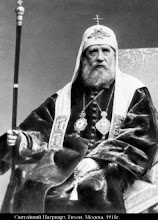


 Posts


